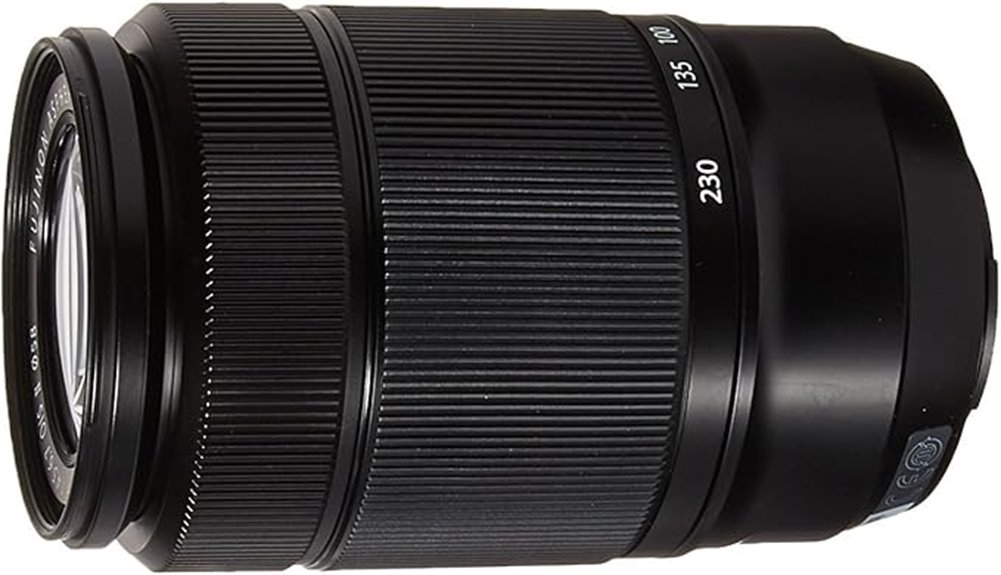
You’ll get a compact, budget telephoto that gives 76–350mm equivalent reach with a variable f/4.5–6.7 and about 3.5 stops of OIS, making handheld long-reach shots practical. AF is quiet and mostly reliable on static or moderately moving subjects but struggles with erratic action. Center sharpness is acceptable while corners soften at the long end and occasional lateral CA appears. Build and low-light performance are basic; continue for detailed specs, tests, and buying checks.
Some Key Takeaways
- Affordable, lightweight telephoto for Fujifilm X bodies, offering 76–350mm full-frame equivalent reach.
- Variable f/4.5–6.7 aperture limits low-light performance and background blur compared with pro lenses.
- Approximately 3–4 stops of OIS enables usable handheld shots at the long end.
- AF is quiet and generally quick on X-series cameras but struggles with fast, erratic subject tracking.
- Renewed units carry a 90-day limited warranty; inspect optics, mechanics, and included accessories on arrival.
Quick Verdict: Who This Renewed XC50-230mm Is Best For
If you need an affordable, lightweight telephoto for occasional wildlife, sports, or travel shots on a Fujifilm X body, the renewed Fujinon XC50-230mm delivers a practical reach and steady results thanks to its 76–350mm equivalent range and ~3.5-stop OIS. You’ll appreciate its compactness and quiet AF for beginner birding and casual sports sequences, and its focal length supports budget portraiture at longer distances despite modest aperture. Expect competent stabilization and sensible optics for distance subjects, but accept limited low-light performance, softer corners at tele end, and basic build quality. It’s a pragmatic, cost-conscious choice, not a professional workhorse. Consider using compatible lens adapters to explore mounting options and expand compatibility with other camera systems.
Core Specs at a Glance: Focal Range, Aperture, Optics, Weight, and Warranty
Although compact, the Fujinon XC50-230mm packs a useful 50–230mm range (76–350mm full-frame equivalent) that gives you true tele reach in a lightweight package; its variable f/4.5–6.7 aperture keeps the barrel small but limits low-light use and depth-of-field control at longer focal lengths. Optics: 13 elements/10 groups with one aspherical and one ED element—adequate for distant subject clarity but not class-leading. OIS claims ~3.5 stops. Physical notes are critical: listed item weight shows a clear weight discrepancy (0.01 ounces is erroneous), so verify actual mass before purchase. Filter compatibility: 58 mm. Warranty: 90-day limited. This lens is aimed at photographers who value telephoto reach for wildlife and sports shooting.
Real-World Performance: Autofocus, Stabilization, and Image Quality Tests
Having covered the specs and physical quirks, we now examine how the XC50-230mm performs in real shooting conditions—focusing on autofocus speed and accuracy, OIS effectiveness, and image quality across the zoom range. You’ll find AF generally quick and silent on most X-series bodies, locking reliably on static and moderately moving subjects, though tracking fast erratic motion lags. OIS delivers about 3–4 stops of handshake suppression, usable handheld to the long end. Resolution is acceptable centrally but softens at telephoto extremes; you’ll notice mild focus breathing when racking focus and occasional lateral chromatic aberration in high-contrast edges that needs correction. For shooters working with high data-rate files, pairing this lens with cfexpress memory cards can streamline workflow and buffer clearing during continuous bursts.
Use-Case Breakdown: Wildlife, Sports, Travel, and Everyday Telephoto Shooting
When you need reach without breaking the bank, the Fujinon XC50-230mm proves a pragmatic choice for wildlife, sports, travel, and everyday telephoto work, but it carries clear limitations you must weigh. You’ll get usable reach for distant wildlife and casual sports with 3.5-stop OIS and competent AF, but slow maximum apertures limit subject isolation and high-speed performance. For travel and landscape compression it’s compact and lightweight, delivering compressed vistas at long end. Telephoto portraits are achievable but background blur is modest; expect softer corners wide open. Use it for budget-conscious assignments, not pro-level action or low-light critical work. Perfect Tripods recommends pairing lenses with lightweight tripods for steadier telephoto shooting when reaching for distant subjects.
Buying Checklist for the Renewed Model: What’s Included, Condition Expectations, and Warranty Considerations
If you’re considering the renewed Fujinon XC50-230mm, confirm exactly what’s included, what “certified refurbished” covers, and the warranty limits before you buy. You should verify included items—lens, front/rear caps, hood—and check accessory authenticity against manufacturer specs. Expect packaging variability: many units ship in generic boxes after the refurbish process. Inspect optics for cleaning quality, mechanical smoothness, and AF response on receipt. Note the 90-day limited warranty and confirm the seller’s return policy for defects or damage. Document serials/UPCs and photograph condition immediately to support claims if issues appear. Also consider whether the seller offers certified refurbishment details so you understand who performed the work and what tests were run.
Some Questions Answered
Does This Lens Accept Teleconverters or Extender Accessories?
No, it generally won't accept teleconverters; there's no official teleconverter compatibility and optical/design limits make reliable results unlikely. You can use mount adapters to fit third‑party extenders, but you'll lose autofocus performance, increase aberrations, and further reduce effective aperture and stabilization. If you need greater reach, you'd be better off using a native tele lens or a higher-resolution body with cropping. Test any adapter/extender carefully before relying on it.
Is the Focus Ring Manual Override or Focus-By-Wire?
It's focus-by-wire, not true mechanical manual override. You get electronic control that simulates manual rotation; the ring offers a manual feel simulation but relies on the camera's AF system and firmware. That means you'll experience limited tactile feedback, possible lag, and variable response across camera bodies. If you need precise, direct mechanical focusing for critical manual work, this lens won't provide it—you'll depend on the electronic interface for accuracy.
How Does Weather Resistance Compare to Fujifilm XF Telephotos?
You’ll find the weather resistance is weaker than Fujifilm’s XF telephotos; this lens lacks robust weather sealing and sacrifices weather sealing for lower build quality. You’ll get basic dust and splash tolerance only if you’re cautious, but it won’t match the full gasketed mounts or metal construction of higher-end XF telephotos. You’ll need to avoid heavy rain and harsh environments or add extra protection to preserve long-term reliability.
Are There Color or Cosmetic Differences in Renewed Units?
Yes—you can see minor cosmetic variations and occasional color fading on renewed units. You’ll get lenses that were cleaned and inspected, but small scuffs, superficial paint wear, or faint fading on edges and the hood can remain. Functionally they’re tested; optical and mechanical performance isn’t compromised. If you need pristine finish, insist on seller photos or a return policy; otherwise expect acceptable, serviceable cosmetic variations.
Can It Be Used for Video Autofocus and Continuous Tracking?
Yes — you can use it for video autofocus and continuous tracking, but temper expectations. Its autofocus performance is quick and mostly silent, so it handles routine subject shifts well. Tracking reliability is decent for moderate motion and well-lit scenes, yet it can struggle with fast erratic subjects or low light due to slower aperture and tele zoom design. For demanding cinema tracking, you’ll want faster, more advanced lenses.