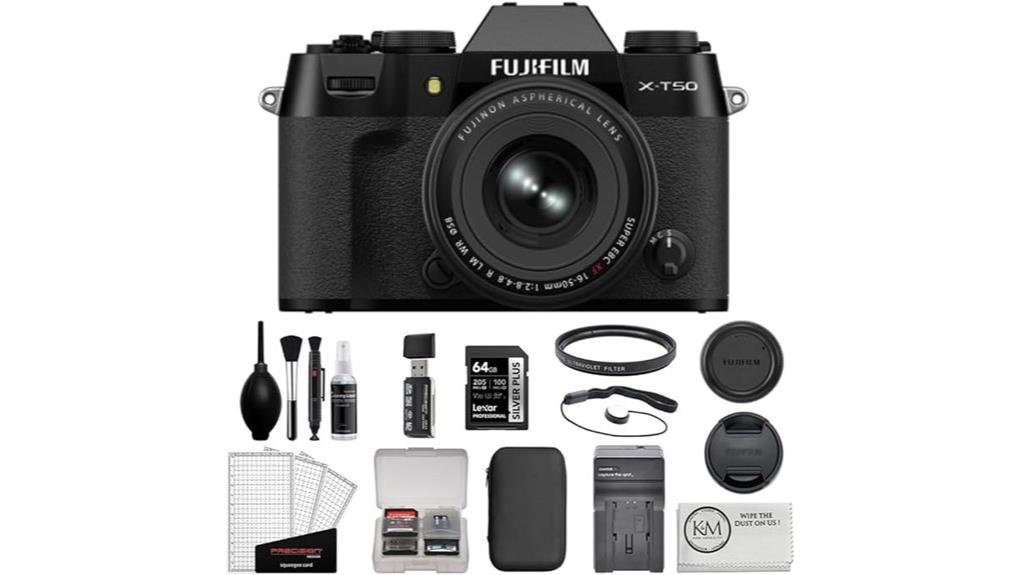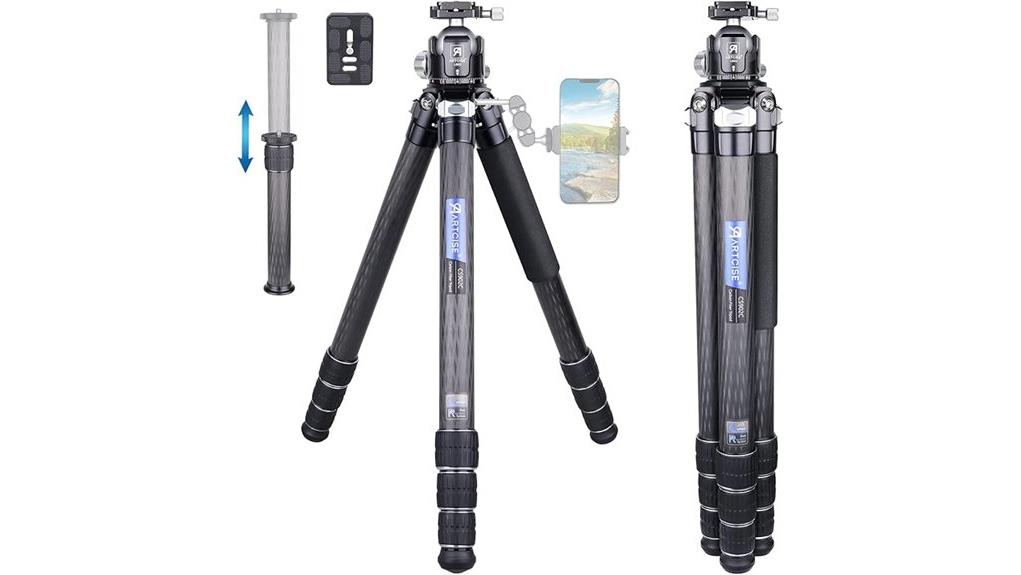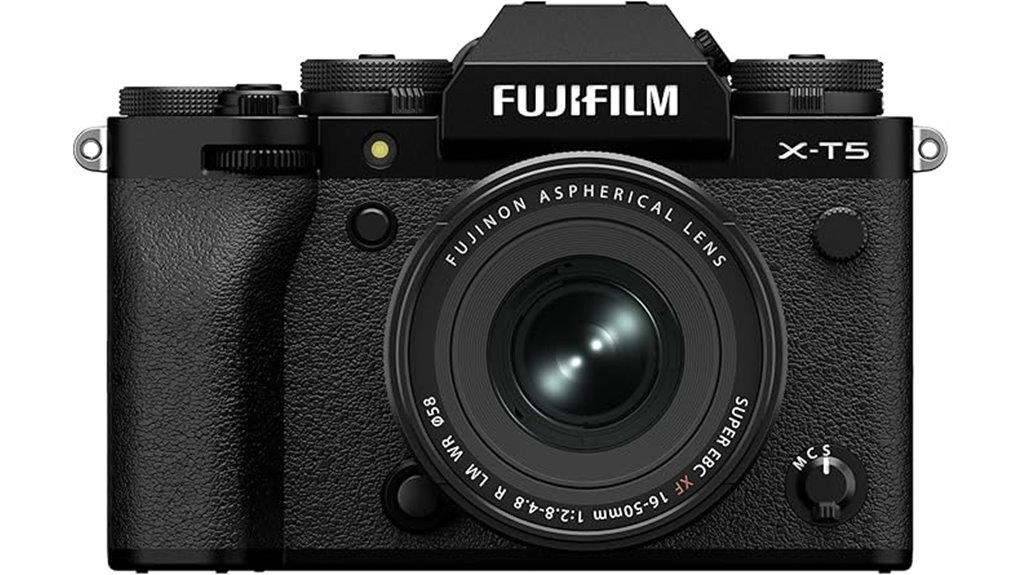
You’ll get a compact, high‑resolution hybrid that solves the resolution‑vs‑portability tradeoff: the X‑T5 packs a 40.2MP APS‑H X‑Trans sensor, 7‑stop IBIS, and 6.2K/10‑bit internal video in a light X‑mount body. Stills are detailed with optional 160MP Pixel Shift; AF is fast but can hesitate on tricky subjects. The XF16‑50mm kit is handy but optically modest; plan for fast cards, spare NP‑W235s, and heat/record limits if you want full pro flexibility — more specifics follow.
Some Key Takeaways
- 40.2MP APS-H X‑Trans sensor delivers studio-grade detail and optional 160MP Pixel Shift for static subjects with tripod discipline.
- Robust hybrid video: internal 6.2K 4:2:2 10‑bit or external 12‑bit ProRes/RAW, but plan for heat, storage, and recorder needs.
- IBIS up to 7 stops and compact body solve resolution-versus-portability for travel, portrait, and run‑and‑gun hybrid work.
- AF is fast and reliable with 425 PDAF points for most shoots, though subject tracking can hesitate in very challenging scenes.
- Kit XF16‑50mm is compact and versatile but trades optical edge sharpness and aperture speed for portability; consider primes for critical work.
Who Should Buy the Fujifilm X-T5 Kit and What Problems It Solves
While the X-T5 looks like a traditional rangefinder, it’s built for experienced photographers and hybrid shooters who need high-resolution stills and serious video in a compact body. You’ll want this kit if you’re a portrait photographer needing fine detail, dynamic range, and reliable AF for tethered or studio work. Travel vloggers will value the compact form, tilting screen, and robust codec options for on-the-go capture. It solves resolution-versus-portability tradeoffs and replaces bulky full-frame rigs when weight and lens ecosystem matter. Expect technical strengths: high-res capture, solid IBIS, fast shutter options, and professional video output for hybrid workflows. It’s an excellent choice for users invested in the mirrorless camera ecosystem who want versatile, portable gear.
Fujifilm X-T5 Key Specs at a Glance (Sensor, IBIS, Shutter, Video)
Because you need high-resolution stills and pro-level video in a compact body, the X-T5 centers on a 40.2 MP X-Trans CMOS 5 HR APS-H sensor that delivers up to 10-bit stills and a 160 MP Pixel Shift mode, pairs that sensor with up to 7 stops of in-body stabilization, and offers both a 1/180,000 sec electronic shutter and a mechanical option up to 15 fps—while video goes to internal 6.2K 4:2:2 10-bit and external 12-bit ProRes/RAW outputs for demanding hybrid workflows. You get class-leading high resolution shooting, robust IBIS, and true professional codecs. Silent shutter behavior is usable but watch rolling shutter and exposure nuances at fastest rates. Perfect Tripods recommends matching the X-T5 with a stable tripod platform to maximize image sharpness and take full advantage of its high-resolution capabilities.
Real-World Stills Performance: Resolution, Dynamic Range, Autofocus, and Pixel Shift
You've already seen the X-T5's headline specs; now let's look at how they perform for stills in practice. You’ll get sharp 40.2MP output that resolves fine detail across good lenses, and the 160MP Pixel Shift delivers genuinely higher microtexture for static subjects—workflow demands strict tripod discipline. Native dynamic range is competent around seven stops; shadow recovery is usable but highlight headroom is limited. Autofocus is fast and predictable with 425 PDAF points, though tracking challenging subjects can show occasional hesitation. Color fidelity out of camera is excellent for skin tones; noise performance at base and medium ISOs remains impressively low. The kit options and accessories available cater well to enthusiast photographers looking to build a capable mirrorless setup.
Video Workflow and Monitoring: Internal 6.2K 10-Bit, External RAW, and Codec Choices
Tackle video workflow with a clear plan: the X-T5 gives you internal 6.2K 4:2:2 10-bit recording for high-quality deliverables and the option to feed 12-bit ProRes RAW or Blackmagic RAW over HDMI for maximum grading latitude, so decide early whether you’ll prioritize compact internal files or external RAW flexibility. You’ll manage data rates, card speed, and recorder compatibility; choose internal 10-bit for efficient delivery and external RAW for heavy Color Grading. Monitor Calibration becomes non-negotiable for accurate exposure and skin tones. Inspect codecs for pipeline ease, transcoding cost, and storage—then lock settings and stick to them. For consistent color-critical work, invest in Monitor Calibration to ensure what you see matches the final output.
XF16‑50mm Kit Lens: Strengths, Limitations, and When to Upgrade
While the XF16‑50mm kit lens gives you a convenient, compact zoom that covers useful wide-to-standard focal lengths, it’s a purpose-built compromise—lightweight mechanics and a modest f/2.8–4.8 aperture prioritize portability over ultimate optical performance. You’ll appreciate size, weather resistance, and fast linear motor AF for run-and-gun work, but lens sharpness falls short of premium primes, especially wide-open and toward the edges. Expect visible zoom distortion at extreme focal settings and some chromatic aberration. Upgrade when you need consistent corner resolution, better microcontrast, wider constant apertures, or when corrective cropping undermines your workflow. For travel photographers who favor compact gear and stability, pairing the kit lens with a lightweight tripod can significantly improve image sharpness and composition control.
Battery, Storage, and Shooting Logistics: Cards, Recording Limits, and IBIS Impact
Moving from lens choices to the practicalities of long shoots, you need to plan power and storage with the X-T5’s demanding sensor and video features in mind. You’ll monitor battery longevity closely: 6.2K/4:2:2 10-bit recording, IBIS operation, and high-resolution RAW drain cells fast. Carry multiple NP‑W235 spares and a charger; expect reduced runtime when IBIS is active. For card management, use UHS‑II or V90 media; prioritize sustained write speed over capacity to avoid dropped frames. Record durations hit internal limits—manage clip length, heat, and buffer by alternating formats and disabling unnecessary stabilization when feasible. Keep Shooting emphasizes choosing the right spare camera battery and accessories to stay powered through extended sessions, especially when using NP‑W235 batteries.
Practical Verdict: Ideal Use Cases, Alternatives, and Final Buying Recommendation
Because the X-T5 blends very high-resolution stills, robust IBIS and serious video specs into a compact body, it’s best suited for hybrid shooters who need studio-grade detail and on-location moviemaking without hauling a larger cinema rig. You’ll excel at landscape timelapse and event documentary work where 40.2MP files and 7-stop IBIS preserve detail and stability. For street photography and travel vlogging, the size and autofocus are strong, though APS-H crop and lens choices matter. Consider alternatives: X-T4 for lower-res budget, full-frame Sony A7C II for low-light, or pair with faster primes if motion priority dominates. This kit is particularly appealing to photographers who also want access to DSLR-related gear like tripods, filters, and camera bags tailored for interchangeable-lens systems.
Some Questions Answered
Is Weather Sealing Comprehensive for Shooting in Rain or Dust?
Yes — you can shoot in light rain and dusty conditions, but don’t treat it as fully waterproof. The sealed body and gasket protection defend joints, dials, and ports against moisture and particulates, offering robust splash and dust resistance. You’ll still avoid prolonged exposure, submersion, or heavy downpours; use additional rain covers for sustained wet environments. Regular maintenance and drying are required to preserve seals and long-term reliability.
Can the X-T5 Sync With Studio Lighting for Flash Photography?
Yes — you can sync the X-T5 with studio lighting. It supports Flash sync via hot shoe and standard sync speeds; you’ll use high‑speed sync for faster shutters. You can also control flashes with Wireless triggers over radio or optical systems; some advanced triggers offer TTL and HSS compatibility. Be critical about timing: electronic shutter can conflict with sync, so use mechanical/shutter or proper HSS settings to avoid partial illumination.
What Third-Party Batteries and Chargers Are Recommended?
You should pick reliable third‑party cells and chargers like Wasabi Power for spare NP‑W235 batteries, RAVPower PD chargers for fast USB‑C charging, and Anker USB power banks for on‑field top‑ups. For studio or high‑duty use, consider a Nitecore V mount solution with a compatible adapter for extended runtime. Check true capacity, OEM‑style contacts, overcurrent protection, and firmware compatibility before buying; test battery health and charging temps regularly.
Are There Firmware Limitations When Using Legacy Manual Lenses?
Yes — firmware can limit functionality with legacy manual lenses. You’ll need proper adapter compatibility for flange, aperture control, and CPU passthrough; without it the camera can’t communicate EXIF or enable lens-based corrections. Focus confirmation may work via focus peaking and magnification, but AF assist or in-body lens metadata can be unreliable until firmware improves. Critically test each adapter/firmware combo and update camera firmware to maximize manual-lens support.
How Does the Camera Perform for Astrophotography Long Exposures?
You’ll get strong long-exposure results: High ISO performance is excellent thanks to the 40.2MP BSI sensor and 7-stop IBIS, reducing noise and enabling cleaner night frames. Pixel Shift isn’t usable for star movement, but 160MP multi-shot helps for static deep-sky targets. Star tracking compatibility is solid—use external trackers or interval modes with long exposures and electronic shutter. Watch thermal noise and battery drain; plan for RAW and long-exposure noise reduction.