You’ll find 3,000W e-bikes deliver strong, controllable low-end torque (around 100 Nm) with lighter weight, better thermal behavior, and practical sustained hill speed, while 5,000W systems give higher peak acceleration but add mass, heat and cooling needs and harsher power spikes. Expect trade-offs in battery size, range and serviceability—3,000W often hits better real-world range per Wh and quieter operation. Keep going and you’ll get detailed comparisons on climb ability, thermal management, and fit-for-purpose recommendations. in this context, consider the 9000w electric bike performance review, which indicates a substantial leap in power and speed capabilities, enabling riders to tackle more challenging terrains with ease. Users often report remarkable responsiveness and stability at higher speeds, making it ideal for adventurous commuting or off-road experiences. Additionally, this level of performance typically stresses the importance of enhanced battery management systems to ensure longevity and efficiency during extended rides.
Some Key Takeaways
- 3000W systems (like QL2000PRO) deliver strong, controllable low-end torque (~100 Nm) with ~40–45 MPH peak and better rideability than 5000W spikes.
- 5000W setups offer higher top-end power but require heavier components, aggressive cooling, and produce more noise and heat.
- Battery capacity and management (e.g., 60V 32Ah, certified chargers, BMS) determine real-world range, longevity, and charging reliability.
- Frame, suspension, and fat tires on heavier e-bikes improve stability and comfort but increase curb weight and affect handling.
- Dual hydraulic brakes, proper pad selection, and thermal-aware electronics are essential for safety at sustained high speeds.
How 3,000W vs 5,000W Ebikes Differ for Real-World Riding
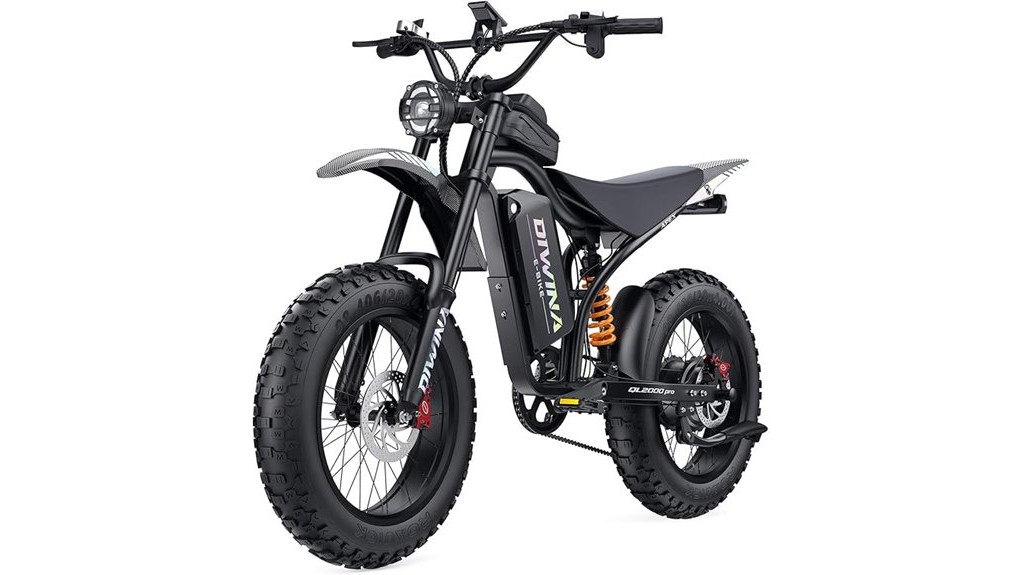
When you’re comparing a 3,000W motor like the one in the QL2000PRO to a 5,000W unit, you’re really looking at differences in usable acceleration, sustained climb ability, and regulatory/practical constraints rather than just raw numbers. You’ll notice torque delivery profiles matter: the QL2000PRO’s 100 Nm gives strong low-end thrust without the control issues a 5,000W spike can introduce. You’ll assess legal compliance limits, especially speed and watt caps in various jurisdictions. Expect higher noise levels and greater thermal management demands from 5,000W systems, plus heavier components and more aggressive cooling strategies. These high-performance motors are ideal for riders who love off-road adventures and need robust motor performance.
Powertrain Deep Dive: Motor, Battery, Range, and Charging Trade-Offs
Having contrasted a 3,000W hub‘s controllable torque and thermal behavior with higher‑power alternatives, let’s examine how the QL2000PRO’s motor, battery, and charging choices interact to shape real-world range, performance, and maintenance trade-offs. You get a 3000W brushless hub delivering ~100 Nm and 40–45 MPH peak; that torque aids climbs with less drivetrain stress than mid-drive setups. The 60V 32Ah (1920 Wh) removable pack offers ~47 miles throttle-only, ~100 miles with pedal assist and >1000 cycles if managed properly. Prioritize battery longevity: moderate discharge, correct storage, and certified charger compatibility to avoid BMS faults and thermal wear. For extended outings, consider carrying spare ebike batteries to ensure uninterrupted rides and more flexible range options.
Handling and Comfort: Frame, Suspension, Tires, and Weight Limits
Although the QL2000PRO’s lightweight aluminum frame keeps mass down for nimble steering, its 90.2 lb curb weight and 330 lb payload limit define the baseline handling envelope you’ll experience; combined with a 20 x 4.0-inch fat tire platform and dual suspension, the bike balances stability and compliance across mixed terrain. You’ll notice frame comfort comes from geometry and the thickened shock-absorbing saddle, which reduce rider fatigue. Front hydraulic fork and rear coil shock tune mid-frequency impacts while the 4.0-inch tires deliver tire compliance and low rolling resistance on soft surfaces. Expect predictable steering, increased traction, and a controlled, compliant ride. This bike pairs well with floor stands designed for outdoor ebike riders to keep it secure when not in use.
Safety, Controls, and Stopping Power: Brakes, Electronics, and Lights
Because reliable stopping and clear controls are non-negotiable at higher speeds, the QL2000PRO pairs dual hydraulic disc brakes with a 3.5″ smart LCD and a dedicated BMS to give you precise modulation, real-time system feedback, and protective electronics oversight. You get consistent brake modulation from dual calipers and vented rotors sized for the bike’s mass and speed profile. The smart LCD displays speed, battery state, and fault codes so you can monitor thermal or electrical limits. Lighting placement is deliberate: a 12W LED headlight aligned to minimize glare and a 2-in-1 tail lamp with integrated turn signals for rear visibility. For riders who spend a lot of time outdoors, choosing the right brake pads can improve performance and safety by matching pad compound to riding conditions and rotor type, especially when prioritizing ebike brake pads for durability and modulation.
Who Should Buy Which Model and Final Buying Checklist
If you need sustained high-speed commuting, aggressive hill-climbing, or frequent long-range trips, the QL2000PRO fits those use cases with its 3000W peak motor, 1920Wh battery, and up to ~100 miles with pedal assist; casual riders who want occasional electric boost or lighter urban use should consider lighter, lower-powered alternatives. You should choose QL2000PRO if you’re a long distance commuter seeking high torque and battery capacity, a trail rider needing suspension and fat tires, or an urban commuter who values speed and load capacity. Budget buyers should evaluate weight, recharge time, warranty, and service network before buying. This model is ideal for outdoor riders who prefer step-through ebikes designed for adventure-ready use.
Some Questions Answered
Can I Ship the Battery on Airlines or Across State Lines?
No — you can’t ship that 60V 32Ah battery on airlines and you’ll face strict shipping restrictions across carriers. You’ll need UN-approved packaging, hazardous-goods labeling, and transport paperwork showing UL2849 certification, watt-hour rating, and state-of-charge limits. Ground interstate freight may accept it under dangerous-goods procedures; passenger airlines generally forbid it. Consult the carrier’s dangerous-goods guide and a certified shipper to guarantee compliance before sending.
Are Replacement Batteries Available Separately?
Yes — replacement batteries are available separately from the manufacturer and authorized dealers; you’ll find the 60V 32Ah pack listed as a service part. Check battery availability before purchase and confirm shipping restrictions. Note warranty transfers vary: warranties typically stay with the original purchaser unless explicitly transferable, so verify warranty transfers and service terms when ordering a spare battery to make certain coverage and compatibility with your bike’s BMS and electrical connectors. When reviewing 2000w electric bike user feedback, many users express satisfaction with the bike’s performance and battery life. However, some customers have noted issues with the electrical connectors and compatibility with third-party components. It’s crucial to take these factors into account when purchasing additional accessories or replacement parts. When considering the 2000w electric bike specifications for adults, it’s crucial to assess the bike’s range, weight capacity, and charging time to ensure it meets your riding needs. Additionally, understanding the features such as motor power and battery type can significantly enhance your overall riding experience. Make sure to research compatible accessories and safety gear to fully enjoy your new electric bike.
How Loud Is the Hub Motor at High Speed?
You’ll hear moderate noise at high speed—roughly noticeable wind plus motor whine, not deafening. The noise level rises near the 40–45 MPH peak; tonal whine increases with load. Vibration feedback is present through the frame and handlebars, especially on rough surfaces and under full throttle, but dual hydraulic discs and fat tires damp some input. Expect audible motor pitch and low-frequency vibration rather than harsh rattling. The TST electric bike performance review emphasizes the balance between speed and comfort, highlighting its ability to maintain stability despite vibrations. As the bike accelerates towards its limits, the improved aerodynamics and robust design contribute significantly to its handling. Riders can expect a smooth experience even as they push the boundaries of performance.
Is the Bike Legal to Ride on Bike Paths Locally?
Probably not universally. You’ll need to check local regulations and path classification: many bike paths restrict electric bikes by motor power, top speed, or throttle use. This model’s 3000W peak (40–45 MPH) and throttle-only capability exceed typical e-bike class limits, so it’s often classified as a motorized vehicle. Verify municipal codes and specific path signage; obtain permits or use lower-power/mode options where allowed to comply. When considering a model like the 500w peak motor performance review, it’s important to note that power levels can significantly impact usability and compliance. Riders should also keep in mind that performance reviews often highlight variations in real-world conditions, which may affect battery life and range. Ultimately, understanding these aspects will help ensure a safer and more enjoyable riding experience.
What Maintenance Schedule Keeps the Warranty Valid?
You must follow the manufacturer’s maintenance schedule to keep the warranty valid: perform regular servicing every 3 months or 1,000 miles (whichever comes first), including battery inspection, motor checks, brake bleed and pad inspection, drivetrain lubrication, and electrical diagnostics. Rotate tires every 2,000 miles and after off-road use; include tire rotations in service records. Keep receipts, log dates/mileage, use authorized service centers, and avoid unauthorized modifications to preserve warranty coverage.