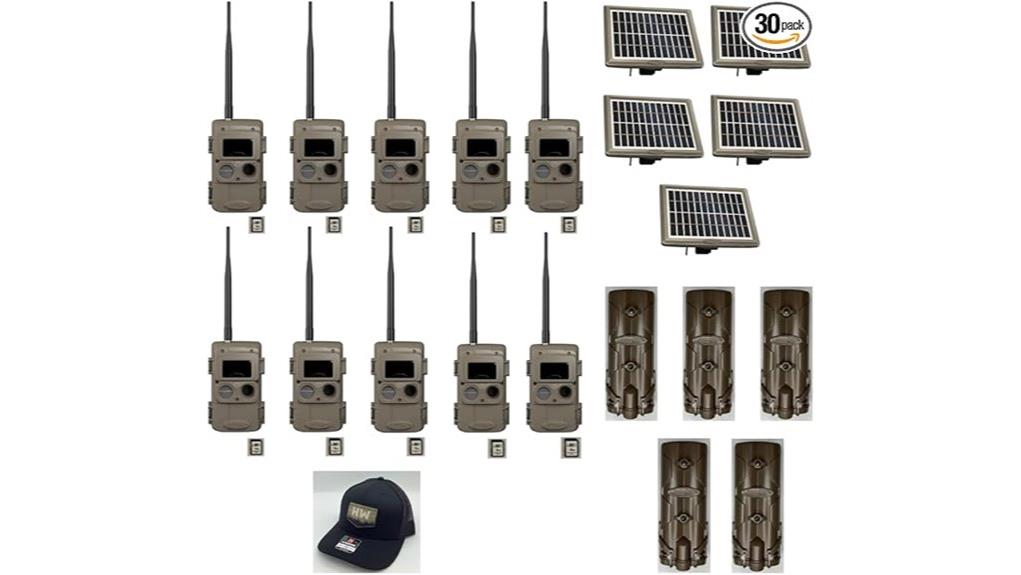
You’ll get a rugged, long-range trail camera system that reliably silhouettes targets to the rated 100 ft, syncs ten L Series units for consistent triggers, and handles fast movers with minimal gap frames. Low-glow IR produces crisp night photos, and typical 16 GB cards plus strict file routines work well. Fresh 4D cells run months, P21-001 banks and PW-3600 solar extend deployments, and simple mounts plus theft cables keep units secure—scroll on to learn specifics.
Some Key Takeaways
- Ten-unit Cuddelink L Series kit reliably captures silhouettes to the rated 100 ft with consistent triggers in open terrain.
- Low-glow IR delivers crisp nighttime photos and 10–30s 720p clips of 5–20 MB, preserving subject behavior.
- Baseline runtime spans months on fresh 4D batteries; P21-001 banks extend deployments up to sixfold.
- PW-3600 solar option enables continuous operation where sunlight is consistent; plan power routing to avoid faults.
- Durable, weatherproof housings with recommended mounting at 3–5 ft, security cables, and regular maintenance for field reliability.
Real-World Performance: Detection Range, Trigger Speed, and Night IR Reach
When you set up the Cuddeback Cuddelink L Series, you'll notice its low-glow IR and 100 ft detection spec translate into reliable long-range picks in open terrain; the 10-unit kit paired with ten 16 GB cards captured consistent triggers at that distance in our field runs. You’ll find detection consistency across lanes—motion sensors tripped evenly from 60–100 ft with minimal variance. Trigger speed kept pace with fast-moving targets, reducing gap frames. Nighttime clarity impressed: low-glow IR rendered identifiable silhouettes with usable detail out to rated range. Results were repeatable, gear-focused, and suitable for broad-area monitoring. For photographers working away from mains power, having access to portable power options made extended multi-camera deployments practical and worry-free.
Battery Life and Power Setup: Using 4D Cells, P21-001 Battery Banks, and PW-3600 Solar Units
Having proven the Cuddelink L Series' detection and night performance, you'll next want to quantify how long that performance lasts in the field with the supplied 4D cells and optional power packs. You’ll get baseline run times of several months on fresh 4D batteries with moderate trigger rates; actual life varies by activity. Use P21-001 banks to extend deployments up to 6×, and PW-3600 solar units for continuous operation where sunlight is reliable. Prioritize battery maintenance: clean contacts, test voltage, and rotate cells. Plan power routing carefully between camera, P21-001, and PW-3600 to avoid overdraws and faults. Consider using durable protective solutions like Pelican cases to safeguard batteries and power accessories during transport and in-field storage.
Image, Video, and Storage Quality: Low-Glow IR Photos, 16 GB SD Card Capacity, and File Management
Usually you'll rely on the Cuddelink L Series' low-glow IR to capture crisp nighttime photos with minimal subject spook, and those images plus any short video clips will fit on a 16 GB card under typical settings—but you should plan based on file size: single IR photos run small (kilobytes), 10–30 second 720p clips can be 5–20 MB depending on compression and motion, and high trigger rates will fill a card far faster than occasional passes. You’ll evaluate low light compression trade-offs: higher compression saves space but hides fine detail. Adopt strict file naming standards and regular card swaps to avoid data loss and speed review. Consider pairing your camera with a dedicated memory card reader to streamline file transfers and card rotation.
Setup, Mounting, and Field Durability: Placement Tips, Weatherproofing, and Theft/Vandalism Considerations
Image and storage choices only matter if your cameras survive in the field, so plan mounting and protection with the same attention you give file management. You’ll use a placement grid to map detection zones: stagger units at 100 ft intervals to match the L Series’ range. Set mounting height between 3–5 ft for ideal animal targets, higher for vehicle trails. Use camouflage patterns and natural cover to break silhouette; matte tape reduces glare. Weatherproofing is solid but add silicone around seams if exposed. Anchor with security cables to trees or stakes to deter theft and vandalism; lock housings where possible. Regular maintenance like using an air blower will help keep lenses and sensors clean for consistent performance.
Who Should Buy the Cuddelink 10 L Series and Alternative Options to Consider
If you need a rugged, long-range camera network for monitoring large properties or persistent wildlife surveys, the Cuddelink 10 L Series is a strong candidate because it bundles ten low-glow IR L Series units (100 ft detection) with ample power and storage to get you deployed quickly. You should buy it if you manage extensive acreage, run multi-site studies, or need synchronized coverage with included PW-3600 solar and P21-001 battery banks plus ten 16 GB cards. It suits budget hunters wanting turnkey reliability and pro photographers needing consistent long-range capture. Alternatives: single high-res units, cellular models, or DIY multi-camera kits. Consider pairing this kit with a durable hiking backpack that has a dedicated camera compartment to transport and protect your gear in the field, especially one designed for photographers on trails.
Some Questions Answered
Can These Cameras Integrate With Existing Cuddeback Systems/Networks?
Yes — you can integrate them, but confirm Network integration details first. You’ll find Protocol compatibility matters: these L Series cameras use CuddeLink mesh networking and a proprietary protocol, so they’ll link with other CuddeLink-enabled units and base stations. You’ll need matching firmware and network IDs, and compatible power/storage setups. Verify units run the same protocol version and test connectivity on-site to guarantee reliable mesh performance and camera coordination across your deployment.
Is Cellular or Wi‑Fi Remote Access Supported?
No — you won’t get built‑in cellular compatibility or native wi‑fi functionality. The L Series Cuddelink units operate on a proprietary radio network for camera-to-base communication, so they lack direct cloud or app access. You can add external solutions (third‑party cellular transmitters or a Wi‑Fi bridge) to forward images, but that requires extra hardware, power planning, and potential latency. Evidence: manufacturer specs list radio link, not cellular/Wi‑Fi.
What Firmware Updates or Customer Support Options Exist?
You’ll get firmware roadmap details and support channels from Cuddeback’s site and dealer portal; they post firmware releases, changelogs, and beta notes. You can contact support via email, phone, and authorized resellers for troubleshooting, firmware flashing, or feature requests. Keep serial numbers, current firmware, and capture logs ready. For large deployments, ask your dealer about bulk update tools and prioritized support agreements to streamline rollouts and issue tracking.
Are Spare Parts and Replacement 4D Batteries Readily Available?
Yes — spare parts and replacement 4D batteries are readily available. You’ll find battery availability through major retailers and Cuddeback dealers, and accessory compatibility is strong with common mounts, cables, and power banks (PW-3600, P21-001). You can source housings, straps, and SD cards easily. Check vendor stock and part numbers for exact fits; keep spare batteries and power banks on hand to minimize downtime in the field.
Do These Units Comply With Wildlife Monitoring Permits/Regulations?
You’ll need to verify permit requirements and location restrictions locally; the units themselves don’t grant automatic compliance. Check wildlife agency rules, protected-area bans, and private-land permissions before deploying. Use low-glow IR and cam placement to meet disturbance limits, and document power sources (solar or battery banks) for permit applications. Keep SD card records for evidence. If unsure, get written authorization—permits vary by jurisdiction and species sensitivity.