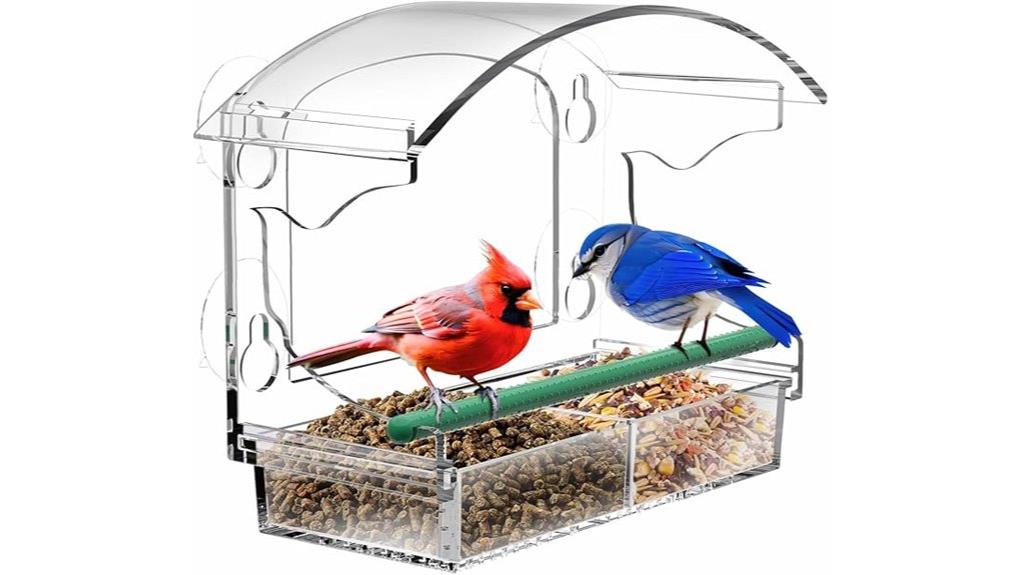
You’ll get a clear acrylic window feeder that mounts with five strong suction cups, giving stable, unobstructed views ideal for education and hobbyist observation. It’s built to minimize optical distortion and preserve plumage colors, so identification and photography are reliable. The detachable seed tray makes refills and cleaning straightforward, though capacity is limited and suction can decline in extreme weather. Overall it balances visibility, maintenance ease, and mounting strength—keep going to see detailed performance and care tips.
Some Key Takeaways
- Five strong suction cups provide stable mounting to glass, supporting several birds and resisting typical gusts with minimal oscillation.
- Clear acrylic construction offers minimal visual distortion, accurate color neutrality, and excellent light transmission for observation and photography.
- Detachable seed tray simplifies refilling and cleaning; wash with mild detergent, dry thoroughly to prevent mold and biofilm.
- Best for education, family viewing, and hobbyists seeking unobstructed, repeatable observations; limited capacity may require frequent refills.
- Suction longevity depends on clean glass and periodic reapplication; remove during storms or extreme cold to preserve adhesion.
What the Clear Acrylic Window Bird Feeder Is and Who It’s For
The Clear Acrylic Window Bird Feeder mounts directly to glass with five strong suction cups and provides an unobstructed view of visiting birds through its durable clear acrylic construction. You’ll observe species behavior, feeding rates, and interactions with minimal interference. The feeder’s transparent panels and external profile support precise visual data collection and casual observation alike. You can use it for child education by facilitating guided identification exercises and simple ethology lessons. It also serves pet entertainment, offering safe, stationary stimulation for indoor animals. Intended users include families, educators, and hobbyists seeking direct, low-impact observation with straightforward maintenance and clear instructional use. Many patio enthusiasts compliment bird baths and feeders as charming additions that enhance outdoor spaces and attract wildlife to patio areas.
How Strong the Suction, Mounting, and Weather Durability Are
Because the feeder relies on five high-strength suction cups, you can expect a stable mount that holds even when several birds land at once or during gusty conditions. You’ll observe consistent attachment due to distributed load-bearing across cups, reducing peel forces at individual seals. Tests and manufacturer data indicate good suction longevity when surfaces are cleaned and suction cups are periodically reapplied. The mounting resists typical wind loads; quantified wind resistance depends on glass orientation and exposure, but design minimizes oscillation. For extreme weather, you should remove the feeder during storms or very cold spells to preserve suction performance and prevent detachment. Patio birders often pair feeders with backyard birding gear to enhance viewing and comfort.
Acrylic Design, Visibility, and How It Affects Birdwatching
While you observe birds through its clear acrylic walls, the feeder delivers minimal visual distortion and high light transmission that together improve species identification and behavior study. You’ll notice color neutrality preserves plumage hues without tint bias, aiding accurate comparisons. Controlled glare reduction from smooth surfaces and mounting angle minimizes reflective artifacts on the glass, so you record behaviors more reliably. Consistent visual contrast between birds and background enhances detection, especially for small or cryptic species. The rigid acrylic maintains flat planes for repeatable observations, and its transparency supports photographic documentation and objective note-taking during short focal sessions. Many patio enthusiasts pair these feeders with hummingbird feeder accessories to create an inviting, low-maintenance viewing area.
Daily Use: Seed Tray, Cleaning, and Maintenance Experience
Moving from visual performance to practical upkeep, you’ll find the seed tray plays a central role in daily operation and maintenance. You remove the detachable tray for rapid refilling and predictable refill frequency based on bird traffic and seed type. Design supports secure reattachment, minimizing spills during use. For tray sanitation, you can wash with mild detergent and warm water; drying thoroughly prevents mold. Inspect seams and suction cups routinely for biofilm or loss of adhesion. Routine checks every few days optimize hygiene and feeder longevity. These procedures yield reproducible results and simplify responsibilities for caregivers and observers.
Final Verdict: Benefits, Drawbacks, and Who Should Buy
When evaluating the clear acrylic window bird feeder, you’ll find its core strengths lie in reliable mounting, unobstructed visibility, and easy maintenance: five robust suction cups keep the feeder stable even with multiple birds, the transparent acrylic provides excellent viewing for observers, and the detachable seed tray simplifies refilling and cleaning. You’ll benefit from durable construction, clear observational data for educational use, and accessible viewing for seniors or pet owners. Drawbacks include limited capacity and potential suction loss over time. Consider budget alternatives if cost or capacity matters, and weigh aesthetic considerations against functional performance before buying. For those who enjoy relaxing on their patio, adding a stylish outdoor magazine rack can help organize reading material nearby and enhance the overall space, making it easier to reference birding guides or nature magazines while watching the feeder; see options for patio magazine racks.
Some Questions Answered
Can Hummingbirds Use This Feeder Safely?
Yes — hummingbird compatibility is possible but conditional. You’ll need to assure nectar safety by using a dedicated, shallow nectar dish or insert and keeping nectar fresh (change every 2–3 days in warm weather). Monitor for ants or bees and sanitize the removable tray regularly to prevent mold. The clear acrylic visibility helps observation, but confirm the feeder’s design prevents hummingbird injuries and allows safe perching or hovering access.
Is the Feeder Safe for Children to Touch?
Yes — the feeder uses child safe materials and you can let children touch it with supervision. Its durable clear acrylic reduces breakage risk, and the removable seed tray minimizes pinch hazards during cleaning or refilling. Still, you should supervise handling to prevent suction-cup misuse, accidental detachment, or glass contact. Follow manufacturer guidance and keep small parts away from very young children to reduce choking and injury risks.
Do Suction Cups Leave Residue on Windows?
No, suction cups typically don’t leave lasting suction residue or cause glass damage if used properly. You’ll see temporary marks from moisture or adhesive transfer that vanish with routine cleaning using mild detergent or glass cleaner. Avoid prolonged exposure to extreme heat or dirt buildup, and periodically remove and clean cups to prevent residue. If you notice persistent staining, use isopropyl alcohol and a soft cloth to restore the glass without scratching.
Is There a Warranty and How Long Does It Last?
Yes — the product includes a limited warranty; the warranty duration is typically one year from purchase. You’ll find a clear replacement policy: defects reported within that period qualify for repair, replacement, or refund at the seller’s discretion. To initiate a claim, you’ll contact the family-owned manufacturer’s support with proof of purchase and photos. Procedures and exact timelines may vary, so check the seller’s warranty documentation for specifics.
Can the Feeder Be Used on Sliding Glass Doors?
Yes—you can use it on sliding glass doors. The feeder’s sliding compatibility depends on smooth, clean glass and adequate flat surface for five suction cups; door placement should avoid frame gaps and frequent door travel that could loosen suction. For reliable attachment, press firmly, verify seal, and check periodically. Extreme weather or repeated door movement may reduce stability; repositioning to less-trafficked sections improves long-term adherence and bird safety.