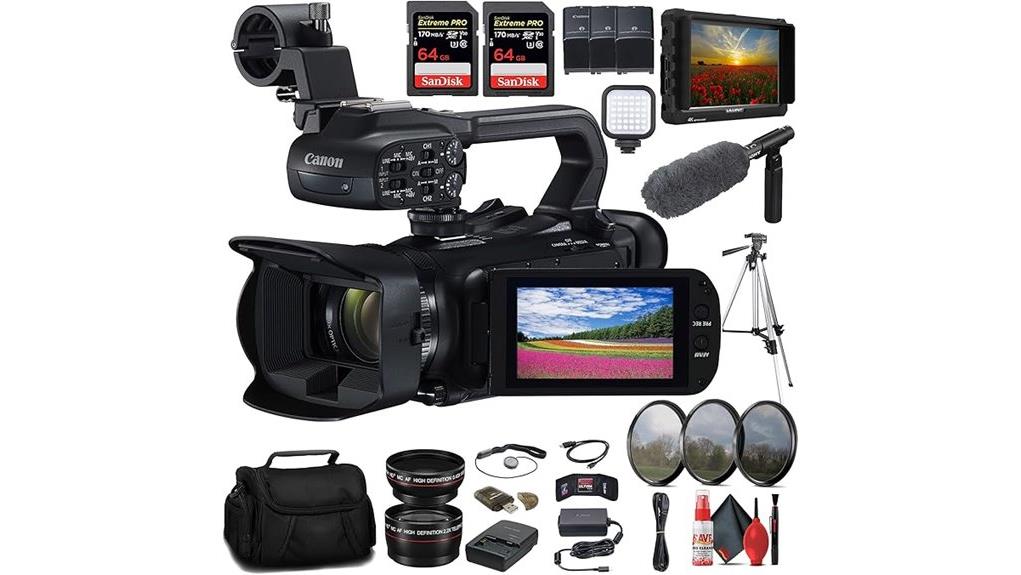
You’ll get a ready-to-shoot 4K ENG rig with a 1/2.3" CMOS and DIGIC DV 6 delivering UHD 3840p, plus a 20× optical zoom and combined optical/electronic stabilization for steady run‑and‑gun work. Pro XLR inputs, clean preamps, dual SD slots, and included monitor, mic, spare batteries and PD charger speed production and extend shooting. Low‑light noise and occasional AF hunting at long reach are the main caveats — keep going for full specs and workflow tips.
Some Key Takeaways
- Delivers true UHD 4K with a 1/2.3" CMOS sensor and DIGIC DV 6, suitable for broadcast and web workflows.
- 20× optical zoom and combined stabilization preserve detail and steady handheld shots across focal lengths.
- Dual XLR inputs, clean preamps, and included shotgun mic support professional ENG audio with pad and phantom options.
- Bundle accessories (monitor, spare batteries, PD charger, dual SD cards, tripod) streamline on-set workflows and extended shoots.
- Performs well in typical light but shows increased noise and occasional autofocus hunting in very low‑light conditions.
Real-World Performance: 4K Video, Zoom, Stabilization, Low-Light, and Autofocus Tests
When you push the Canon XA60 into real-world shooting, its 1/2.3" CMOS sensor and DIGIC DV 6 processor deliver clean UHD 4K at up to 3840 vertical pixels, with the 20× optical zoom preserving detail across focal lengths while eight-bladed iris rendering helps maintain pleasing highlights; you’ll get solid stabilization from the combined optical/electronic system for run-and-gun work, though performance naturally softens in very low light compared with larger-sensor cameras and noise becomes noticeable as ISO rises. You’ll notice minor zoom breathing at long focal lengths and occasional autofocus hunting in low-contrast scenes; tweak AF modes, use manual focus when needed. Consider pairing the XA60 with on-camera LED lights to brighten scenes and improve color rendering in dim environments on-camera LED lights.
What’s in the Bundle and Why Each Item Matters for Pro Workflows
Although the XA60 body is the package’s core, the bundled accessories transform it into a ready-to-shoot kit for professional workflows. You get a monitor, shotgun mic, spare batteries, PD-capable charger, dual fast SD cards, tripod, and lens accessories (wide, tele, filters) that expand framing and control. The monitor and cards speed review and offload; batteries and charger guarantee long shoots; tripod and LED stabilize and light scenes; mic offers basic directional capture. Together they reduce gear gaps, cut setup time, and enable workflow optimization from capture through transfer, so you can focus on composition and delivery. Adding an external monitor is especially useful for ensuring accurate framing and exposure when using external camera monitors.
Audio, I/O, Livestreaming, and Monitoring: How the XA60 Handles Sound and Connectivity
Connect your sound and monitoring ecosystem without compromise: the XA60 puts pro-grade I/O and flexible monitoring front and center with dual XLR inputs (mic/line selectable) for balanced audio, compatibility with shotgun models like the included Sony ECM‑VG1, and user-assignable controls for quick gain and routing adjustments. You’ll appreciate isolated channels, pad and phantom support, and clean preamps for ENG and run‑and‑gun setups. Monitoring options include a bright 3.5" touchscreen and tiltable OLED EVF, plus mini‑HDMI output for external displays. USB Type‑C offers UVC livestreaming (video only) to PCs and mobile devices for low‑latency remote workflows. For shooters focused on improving on-camera audio, pairing the XA60 with essential shotgun microphone gear like shock mounts and wind protection can significantly reduce handling noise and wind interference essential gear.
Usability for Professionals: Ergonomics, Battery Life, Media Workflow, and Metadata Features
Because you'll be holding and running the XA60 for long shoots, ergonomics and power management are designed around professional workflows: the handgrip, top handle with user-assignable buttons, and clearly laid-out controls let you operate one-handed or from a tripod without hunting for dials. You’ll appreciate the logical button layout and tactile feedback; reach frequently used controls without changing grip. Battery life from BP‑820s gives roughly two hours per cell; swapping spares is straightforward via the rear door. Media workflow is efficient: dual SD slots, XF‑AVC/MP4 choices, and clear menu depth keep clip management and metadata tagging fast and predictable. For mirrorless camera enthusiasts, this bundle includes essential accessories that complement the camcorder’s workflow and ergonomics, making it a strong fit for essential gear needs.
Who Should Buy This Bundle (Use Cases) and Alternatives to Consider
When you need a compact, walk-and-talk 4K rig that’s ready out of the case, this Canon XA60 bundle delivers — you get pro-grade XLR audio, long optical zoom, dual SD slots and a full set of accessories (monitor, shotgun mic, extra batteries, tripod) that remove common production bottlenecks and let you start shooting news, documentaries, corporate video, and event coverage immediately. You should buy it if you work run and gun: ENG, corporate events, or solo documentary shoots needing reliable autofocus, long zoom and XLR. Consider mirrorless hybrids for indie filmmaking or super-telephoto cams for dedicated wildlife videography. This kit pairs well with field monitors to improve focus accuracy and exposure monitoring on location.
Some Questions Answered
Does the XA60 Support Internal ND Filters or Only External Filters?
It doesn't have internal NDs, so you’ll rely on external filters and filter adapters. The XA60 uses a 58mm front thread for screw-on filters and accepts 58mm wide-angle/telephoto attachments included in the bundle. You can mount neutral density or specialty glass via those adapters or a matte box on the tripod setup. For variable ND or quick stops you’ll want quality external NDs and secure filter adapters to avoid vignetting and maintain image quality.
Can the Camcorder Record Multicam Timecode Sync Across Units?
No — the XA60 doesn’t support built-in multicam timecode relay across units for synchronized recording. You’ll rely on external timecode generators or slate-based syncing in post to achieve frame alignment. Use external LTC/word clock solutions or a dedicated timecode box feeding each camera’s audio input, then verify frame alignment in NLEs. The camera’s metadata and OSD help, but true hardware timecode relay isn’t native.
Is There Built-In GPS or Geotagging for Recorded Clips?
No — there’s no built-in GPS, so you won’t get automatic GPS absence compensation. The XA60 doesn’t embed Location metadata natively in recorded clips. You’ll need to add geotags externally via a GPS logger, smartphone app, or post‑production software that merges timecode/timestamps with GPS tracklogs. Use the camera’s timecode/clock accuracy and sync it to your GPS device for reliable Location metadata injection during ingest.
Can the Lilliput Monitor Be Powered Directly From the XA60 Batteries?
No — you can’t power the Lilliput monitor directly from the XA60 batteries. The monitor and camcorder use different power interfaces and voltages, so battery compatibility isn’t direct. To run the Lilliput from the XA60 power, you’d need a proper power conversion solution (DC coupler or regulated converter) that matches the monitor’s input specs and safely converts the camcorder battery output. Use rated cables and test under load.
Are Firmware Updates User-Installable via USB or Require Service?
You can install firmware updates yourself via USB—Canon provides downloadable firmware files and a USB/SD installation method—so service isn’t required. You’ll follow Canon’s firmware installation instructions to copy the update to a card or connect by USB, then run the update on the camera. Check update frequency on Canon’s support page; firmware installation timing depends on release cadence and your need for bug fixes or feature additions, so monitor regularly.