You’ll like the Canon PowerShot SX280 if you want a pocketable 20× zoom that gives sharp daytime JPEGs and steady handheld video, but don’t expect strong low‑light or high‑ISO performance from its small 1/2.3‑inch sensor and DIGIC 6 engine. Handling is straightforward and Wi‑Fi works once set up, though battery life is modest and the fixed LCD limits awkward angles. It’s a great travel grab‑and‑go with trade‑offs you’ll want to understand further.
Some Key Takeaways
- 12.1MP 1/2.3" sensor with DIGIC 6 delivers strong daylight JPEGs but limited low-light performance.
- 25mm-equivalent lens with 20x optical zoom and optical stabilization excels for travel and handheld telephoto.
- Compact, pocketable black plastic body with logical controls but small buttons and non‑articulating 3" LCD.
- Usable ISO up to ~400–800; expect grain and aggressive noise reduction beyond that and on long zooms.
- Good value for casual shooters seeking reach and portability; consider tripod, spare battery, or mirrorless alternatives.
Camera Overview: Key Specs, Sensor, Processor, Zoom, and Physical Features
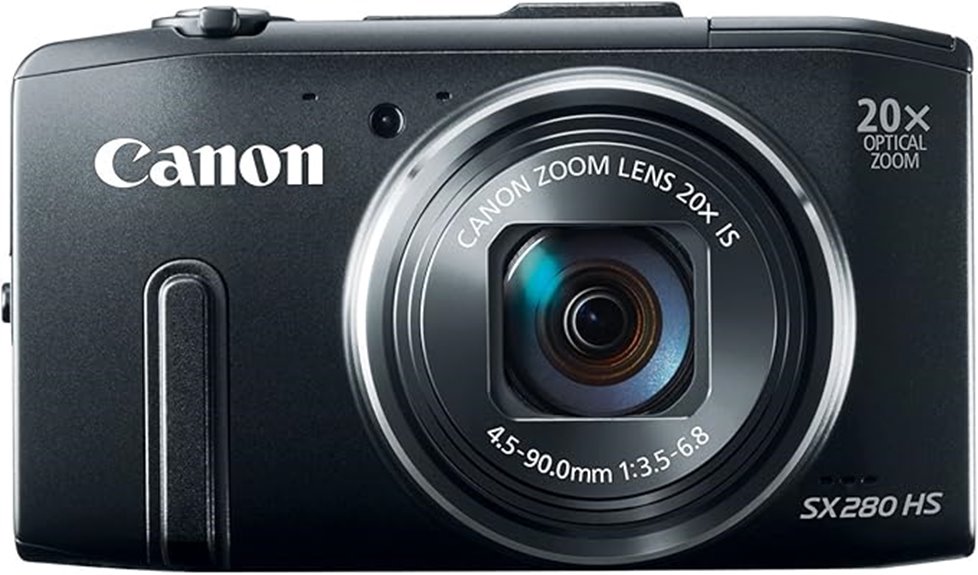
While it’s compact enough to slip into a jacket pocket, the Canon PowerShot SX280 packs a lot: a 12.1MP 1/2.3-inch CMOS sensor driven by a DIGIC 6 processor, a 25mm-equivalent wide-angle lens with 20x optical zoom and Optical Image Stabilizer, plus a 3-inch LCD in a renewed black body. You’ll find the combo sensible: sensor and processor balance detail and speed without pretending to be a prosumer tool. Build is plastic but solid; controls are straightforward. Battery life is modest, so you’ll carry spares. Accessory compatibility is limited compared with interchangeable-lens systems, but usable for casual travelers. This model is particularly well-suited for mirrorless camera enthusiasts looking for a compact travel-friendly complement to their gear.
Real-World Image and Video Performance: ISO, Stabilization, and Low-Light Notes
Frequently, the SX280 punches above its spec sheet in daylight, delivering crisp, well-detailed JPEGs at base ISO, but its limitations show as you push sensitivity or zoom. You’ll find usable results to ISO 400–800; beyond that high ISO grain creeps in, softening fine detail and forcing aggressive noise reduction. Stabilization helps handheld tele shots and video, but stabilization limits appear at long focal lengths or slow shutter speeds—expect occasional blur or judder. In low light you’ll rely on wider angles, faster shutter, or a tripod; don’t expect miracles from the small sensor despite Canon’s DIGIC 6 tweaks. For cleaning and maintaining optimal lens performance, consider using lens cleaning solutions designed for camera optics.
Usability and Connectivity: Handling, Controls, LCD, Wi‑Fi, and App Workflow
On balance, the SX280 feels compact and straightforward in hand: controls are logically placed and the grip is secure enough for one-handed use, but small buttons and a non-articulating 3-inch LCD limit quick adjustments and awkward angles. You’ll appreciate the clear button layout for basic shooting, though the touchscreen absence forces reliance on tiny keys. Wi‑Fi setup with Canon’s app is convenient once connected, but menu responsiveness is occasionally sluggish. Battery life is modest, so plan spares for day trips. Overall it’s usable and portable, but tactile compromises and middling responsiveness curb its versatility. Consider protecting that 3-inch LCD with a screen protector to guard against scratches and fingerprints.
Who the SX280 Is Best For and Practical Shooting Scenarios
Given its compact handling, modest battery life, and straightforward controls, the SX280 suits casual shooters who want more reach than a smartphone without the bulk of an interchangeable-lens camera. You’ll appreciate the 20x zoom and 25mm wide end when you’re a travel enthusiast framing landscapes, markets, or architecture without changing lenses. Street shooters will like its discreet profile and quick start-up for candid scenes, though low-light performance and battery limits temper long evenings. Use it for day trips, family events, and short video clips; don’t expect professional speed, deep low-light capability, or extensive customization. Consider pairing the camera with a travel-friendly tripod to stabilize long zoom shots and time-lapses, especially when exploring tripod options.
Buying Advice: Price, Refurbished Considerations, Alternatives, and Final Recommendation
While the SX280 won’t match modern compacts on every metric, it still offers strong value if you prioritize reach and portability. If new units pop up, expect low street prices; you’ll get excellent zoom and 1080p for less. Buy refurbished to save, but check warranty considerations—short or nonexistent guarantees raise risk. Factor battery health and cosmetic wear into price. Alternatives include newer used compacts or an entry-level mirrorless if you want better low-light and futureproofing. If you need long zoom, portability, and a bargain, grab a vetted refurb; otherwise spend more for newer tech and higher resale value. Consider also pairing the camera with a lightweight travel tripod to maximize stability and image quality when using the full zoom lightweight tripods.
Some Questions Answered
Does the Camera Support RAW Image Capture?
No — the camera doesn’t offer RAW support out of the box. You’ll get only JPEGs from the stock firmware, and that limits post-processing latitude despite decent DIGIC 6 output. Some users explore Firmware hacks to enable RAW on similar models, but these are risky, unsupported, and often unavailable for this specific model. If RAW’s essential, you’ll want a different camera or accept the trade-offs of hacking firmware.
Can External Microphones Be Used for Video Recording?
No — you can't use an external mic with this model. The camera lacks an external mic jack, so you won't plug in external mic hardware directly; audio adapters aren't supported for external microphone input. If you want better sound, you'll need to record audio separately with an external recorder and sync in post, or use a different camera with external mic support. That’s inconvenient but manageable with proper workflow.
What Is the Battery Life in Stills and Video Modes?
You’ll get about 210 stills per charge (CIPA) and roughly 50–60 minutes of continuous 1080p video, so battery longevity for photos is decent while recording endurance for video is limited. In practice you’ll see fewer shots or shorter clips if you use Wi‑Fi, image stabilization, or frequent review. I’d say it’s acceptable for casual outings but you’ll want a spare battery for extended trips or serious shooting sessions.
Are There Any Built-In Creative Filters or Art Effects?
Yes — you’ll find Creative Filters and Art Effects built in. They let you apply looks like Toy Camera, Miniature, Monochrome and Soft Focus directly in-camera, so you can preview results on the 3-inch LCD and pick styles before shooting. You’ll appreciate quick, on-the-spot creativity for social uploads, though options are basic compared with modern cameras or apps. For serious editing you’ll still want post-processing tools.
Does It Include GPS or Geotagging Features?
No — it doesn't have built in geotagging via GPS. You’ll need Canon’s GPS accessory or to geotag later using the Canon Camera Window app and smartphone GPS, which is clunkier. In my view, that omission limits travel convenience; you’ll miss seamless location stamping without extra gear. If accurate, automatic location data matters to you, factor the accessory cost and workflow into your decision before relying on this camera for geo-aware shoots.