You’ll get a compact, fast APS‑C body that pairs a detailed 32.5MP sensor with Canon’s Dual Pixel CMOS AF II, offering reliable eye and subject tracking and up to 15 fps mechanical or 30 fps electronic bursts for sports and wildlife. Image quality is strong with 14‑bit RAW, good high‑ISO behavior and effective shadow recovery. Video supports oversampled 4K60, 10‑bit log and HDR options. Keep going to see practical tests, limitations and lens picks.
Some Key Takeaways
- 32.5MP APS‑C sensor with 14‑bit RAW delivers high detail, clean tonal gradation, and strong shadow recovery.
- Dual Pixel CMOS AF II with 171 AF points provides fast subject acquisition and reliable eye/animal tracking during erratic motion.
- Up to 15 fps mechanical and 30 fps electronic bursts enable decisive action capture, though buffer and UHS‑II card speed affect sustained throughput.
- Oversampled 4K60 10‑bit video (from 7K readout) plus C‑Log 3 and HDR PQ offer excellent grading latitude and reduced aliasing.
- Compact ergonomic body, good battery endurance (LP‑E6NH + spare), dual card slots, and RF lens compatibility support versatile shooting workflows.
Quick Verdict: Is the Canon EOS R7 Worth Buying?
Although it's a crop‑sensor body, the Canon EOS R7 punches well above its class: you get a 32.5MP APS‑C sensor, blazing 15 fps mechanical (30 fps electronic) burst rates, advanced Dual Pixel CMOS AF II with AI subject tracking, and oversampled 4K60 video in a compact, versatile package. You’ll find it worthy if you prioritize speed, autofocus reliability, and high-res APS‑C output. Factor lens suggestions for telephoto and fast primes to exploit reach and sharpness. Consider batteries, card speed, and ergonomics. Strong demand and Canon RF ecosystem support imply healthy resale value, making it a pragmatic investment. It's a great match for enthusiasts who prefer mirrorless camera systems and want a balance of speed and image quality.
What the R7 Brings: Key Specs and Kit Contents
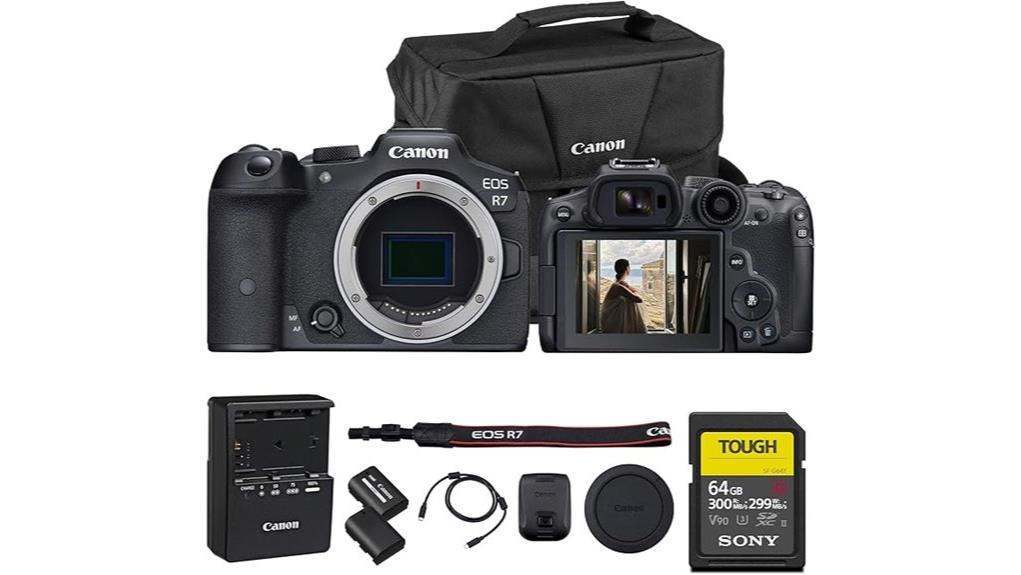
Because Canon packed a lot into a compact APS‑C body, the R7 delivers a clear value proposition: a 32.5MP sensor with 14‑bit RAW capture, Dual Pixel CMOS AF II with AI subject tracking, up to 15 fps mechanical (30 fps electronic) burst shooting, and oversampled 4K60 10‑bit video, all built around the RF mount and finished with built‑in Wi‑Fi/Bluetooth and a color screen plus EVF for practical on‑set use. You’ll get logical kit extras—battery pair, charger, 64GB UHS‑II card, strap and bag—that let you shoot immediately. Mount compatibility with RF (and EF via adapters) preserves lens investment and workflow efficiency. The package is well suited to DSLR enthusiasts and photographers seeking essential gear that supports both stills and video workflows.
Autofocus and Speed: Real‑World AF, Tracking, and Burst Performance
Having covered what the R7 brings on paper, let's look at how its autofocus and burst systems perform when you push the camera hard. You’ll find Dual Pixel CMOS AF II delivers swift subject acquisition and steady AF-C tracking across 171 points. Eye tracking reliability is strong for humans and animals, maintaining lock during erratic motion and rapid framing changes. Burst responsiveness impresses: 15 fps mechanical, 30 fps electronic feel immediate, but real-world throughput depends on buffer management behavior and UHS-II card speed. Plan for occasional slowdowns when raw files saturate the buffer; strategy and card choice matter. Also consider reliable power management and backup solutions like dual battery chargers to keep shooting through long sessions.
Image Quality and Low‑Light Performance (32.5MP APS‑C Sensor)
When you push the R7’s 32.5MP APS‑C sensor, it delivers finely detailed stills with a clean tonal gradation that holds up across typical print sizes and moderate crops. You’ll notice excellent fine‑detail retention in daylight and controlled shadow recovery thanks to 14‑bit processing. The camera shows impressive high‑iso resilience up to its native ceiling, maintaining texture with manageable luminance noise. Its nuanced dynamic‑range color‑faithfulness preserves hue shifts in challenging scenes, so skin tones and foliage remain natural. For night‑streetshooting the R7 balances exposure and noise well, letting you shoot handheld or with faster primes for cleaner results. For best results when editing and printing, make sure to use proper color calibration to preserve accurate hues from capture through final output.
Video Capabilities: 4K60, 10‑Bit, and Filming Workflow
For filmmakers who need a compact, high‑frame‑rate option, the R7 delivers a robust 4K60 workflow by oversampling from a 7K readout and offering 10‑bit color with C‑Log 3 and HDR PQ profiles, so you get cleaner detail, greater grading latitude, and reduced banding compared with 8‑bit capture. You’ll find accurate exposure and skin tones straight from camera, easing 4K colorgrading. Monitor rolling shutter in fast pans; it’s better than many competitors but not immune. Record internally to UHS‑II or offload to an external recorder via the video out. Use external microphones and proxy workflows for efficient editing and sound. For longer shoots and better on-set viewing, consider pairing the R7 with an external camera monitor for critical monitoring.
Handling, Battery Life, and Accessory Ecosystem
Although compact, the R7's grip and control layout put essential dials and buttons within easy reach, so you can run a long shoot without fumbling for settings; the textured thumb rest and well-placed AF-ON and multi-controller make one-handed adjustments straightforward even with larger lenses. You’ll notice superior grip comfort during extended handheld sequences. Battery endurance is strong thanks to included LP-E6NH cells and a spare LP-E6P, letting you cycle cards and charge between sessions. Port layout is logical — dual card and video-out access where you'd expect it. Accessory compatibility with RF lenses and common grips is broad and practical. For more shooting time, consider high-capacity camera batteries that match Canon's LP-E6-series specifications.
Who Should Buy the R7 and Which Kit to Choose
Having established how the R7 handles long shoots and battery swaps, let's look at who will get the most out of this body and which kit matches specific workflows. You’re a sports, wildlife, or hybrid photo‑video shooter who values high frame rates, reliable Dual Pixel AF II, and 4K60; prospective buyers from these groups gain the most. The included LP‑E6NH battery and 64GB UHS‑II card cover pro sessions. For lens recommendations, pair the R7 with an RF 70-200mm or RF 100-500mm for reach, and an RF 16-35mm or RF 24-70mm for versatility depending on your shooting priorities. The site also offers a selection of dedicated telephoto gear for wildlife and sports shooters.
Some Questions Answered
Does the R7 Support In‑Camera Vertical Video Recording With Stabilized Output?
Yes — you can record vertically in‑camera, and you’ll get portrait filming options, but vertical stabilization is limited. You’ll rotate the camera for portrait framing and the R7 records vertical video metadata for compatible players. In‑body stabilization isn’t listed for this model, so stabilization relies on lens IS, electronic stabilization (if enabled), or post‑processing. You should use stabilized RF lenses or gimbals for the most reliable stabilized portrait filming results.
Can I Use Canon EF Lenses Without Losing Autofocus Functionality?
Yes — you can use Canon EF lenses via an EF adapter without losing autofocus functionality in most cases. You’ll retain autofocus compatibility because the EF adapter preserves lens electronics and communicates aperture, AF drive and stabilization data. Performance depends on specific lens motors (USM/STM) and firmware, so some exotic lenses or very old models may have limitations. Test critical lens+adapter combos and update camera and adapter firmware for best results.
Is the Dual Card Slot Available or Single SD Card Only?
It’s single SD card only — the R7 doesn’t offer dual slots, so you won’t get the redundancy of dual slots for instant backups. You’ll need to plan storage flexibility using the included 64GB UHS‑II card and swap or archive cards more often, or rely on tethering or wireless transfers. For professional redundancy, consider carrying extra high‑capacity UHS‑II cards or using a fast external workflow to maintain shoot continuity and data safety.
Does the Camera Record RAW Video or Direct Prores Internally?
No, it doesn't record RAW video or offer internal ProRes compatibility. You can capture high-quality 4K60 10‑bit footage (including C‑Log 3/HDR PQ) internally as MP4, but RAW video is limited to external recorders via HDMI. For ProRes workflows you'll need an external recorder that supports RAW-to‑ProRes conversion or records ProRes directly from the camera's HDMI output; the body itself won't write ProRes or RAW cinema files internally.
Are Firmware Updates User‑Installable via Mobile App Over Wi‑Fi?
Yes — you can install firmware updates via the Canon mobile app over Wi‑Fi. You’ll enjoy firmware convenience for straightforward transfers, but you should verify mobile reliability before updating: make certain stable Wi‑Fi, fully charged battery, and sufficient storage on your phone. Follow the app’s step‑by‑step prompts, back up settings, and avoid interruptions. For critical updates, consider using a computer or SD card as a fallback for added assurance.