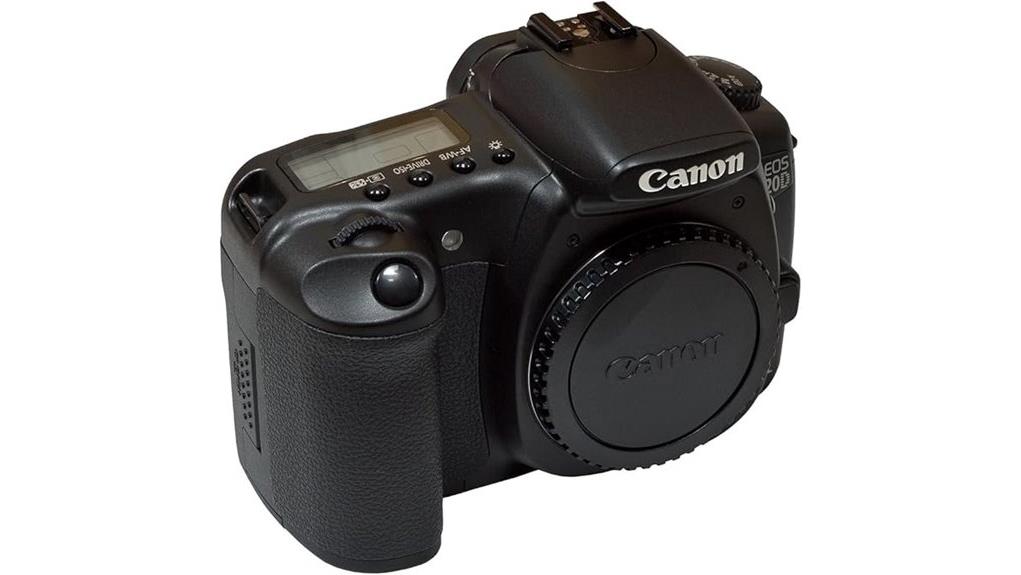
You’ll find the Canon EOS 20D is a solid enthusiast APS‑C DSLR that gives punchy in‑camera JPEGs and RAW files with plenty of latitude for highlight and white‑balance tweaks. Its 8.2MP sensor and 5 fps drive handle action well, while the 9‑point AF and evaluative metering are reliable for most situations. Kit lenses are versatile, L‑series and primes boost low‑light performance, and workflow needs a spare BP‑511A and fast CompactFlash — keep going to learn specifics.
Some Key Takeaways
- 8.2MP APS‑C sensor delivers punchy in‑camera JPEGs and RAW files with strong highlight recovery and flexible tone mapping.
- 9‑point phase‑detect AF and 5 fps continuous drive give reliable subject tracking and good action-shooting performance.
- Evaluative metering and fast start‑up/shutter lag provide consistent exposures and timely capture in varied lighting.
- Usable ISO up to 800; noise rises above that, so careful exposure and moderate RAW sharpening are recommended.
- Compatible with EF/EF‑S lenses; L‑series or primes improve corners and low‑light capability, while heavier glass benefits from a tripod.
Canon EOS 20D at a Glance : Key Specs and What They Mean
Although it's an older model, the Canon EOS 20D still gives you a practical blend of speed, control, and image quality. You get an 8.2MP APS-C sensor, 5 fps drive, 9-point AF, and EF/EF-S lens compatibility, showing strengths in action and versatility. Its build ergonomics feel solid and familiar, with a confident grip and well-placed controls. Menu navigation is straightforward for photographers migrating from point-and-shoots, though lacks modern touchscreen shortcuts. Battery life and CompactFlash media are adequate. Overall, you’ll appreciate its responsive handling and system compatibility, even if raw resolution and modern conveniences lag. For mirrorless camera enthusiasts, understanding lens compatibility helps when comparing systems and choosing gear.
Image Quality and Sensor Performance : Real‑World RAW and JPEG Results
When you shoot with the 20D, its 8.2MP APS‑C CMOS sensor delivers punchy JPEGs straight from the camera and RAW files that tolerate substantial exposure and white‑balance adjustments. You’ll find JPEGs require minimal processing thanks to reliable color fidelity and conservative in‑camera contrast, while RAW gives latitude for highlight recovery and nuanced tone mapping. Shadow detail holds up well to moderate ISO, though noise rises above ISO 800. Pay attention to raw sharpening to avoid halos when converting, and resist heavy jpeg compression if you plan edits. Overall the 20D rewards careful exposure and modest postwork. For best results consider calibrating your display with monitor calibration so colors and tones look true to life.
Autofocus, Metering, and Shooting Speed : How It Handles Action
Having established how the 20D’s sensor and files respond to exposure and processing, let’s look at how its AF, metering, and drive system help you capture moving subjects. You get a 9-point phase-detect AF with Continuous-Servo (AF-C) that’s keen for sports or kids; focus tracking is competent for predictable motion but can struggle with erratic subjects. Evaluative metering pairs well with exposure modes, yielding reliable results in varied light. The 5 fps drive and fast start-up minimize missed moments, and shutter lag is short enough that timing feels natural. Overall, it’s a capable action tool for its class. Choosing the right tripod head can further stabilize your shots and improve composition when shooting action with DSLRs like the 20D, especially when using a ball head for quick adjustments.
Lenses, Optics, and Handling : Using EF/EF‑S Glass With the 18–55 Kit
With the 18–55mm kit on the 20D, you get a versatile, lightweight starting setup that shows both the strengths and limits of Canon's EF/EF‑S ecosystem. You’ll appreciate sharp center performance and quick AF with native EF/EF‑S glass; the crop sensor boosts apparent reach. Swap to L-series or primes for improved corners and low‑light capability. Third party lenses expand options and value, though check AF compatibility. Manual adapters let you use legacy glass for character shots but cost autofocus. Mind filter stacking—vignetting appears on wide end. Handling balance favors the body with the small kit lens; heavier glass shifts feel. For stability with heavier lenses, consider pairing your setup with a quality tripod to improve sharpness and handling.
Exposure, Flash, and Low‑Light Capabilities : ISO, Shutter, and Flash Sync
Although the 20D’s 8.2MP APS‑C sensor starts at ISO 100 and can be pushed to an expanded ISO 3200, you’ll find usable low‑light performance limited compared with modern sensors — noise rises noticeably above ISO 800 and detail softens in shadows. You’ll control exposure with reliable shutter speeds up to 1/4000s and a 1/250s flash sync, but be aware of Sync limitations when using faster shutters. High ISO performance is acceptable for web use, not large prints. Flash recycling is reasonable with dedicated Canon flashes, though frequent pops show Long exposure noise in very slow exposures. For extended shoots or travel, consider carrying spare camera batteries to avoid missed shots.
Battery Life, Storage, and Connectivity : Practical Workflow Notes
When you’re shooting all day, the EOS 20D’s BP‑511A battery will keep you going but you’ll want a spare—expect a full day of mixed shooting to eat through one battery and carry at least one extra for reliability. Manage power by switching off unused functions, cooling LCD use, and rotating batteries; good battery management prevents missed frames. Use CompactFlash cards sized for RAW throughput and back them up nightly to avoid workflow bottlenecks. The USB/PictBridge port supports tethered shooting to a laptop for studio work, while limited wireless transfer options can handle quick previews—plan offline backups into your workflow integration. Consider investing in quality third‑party chargers and genuine batteries to ensure reliable battery performance.
Who Should Buy the Canon EOS 20D Today : Use Cases, Alternatives, and Value
If you’re buying a used DSLR for learning fundamentals, product shots, or budget-conscious project work, the Canon EOS 20D still makes sense: it gives reliable handling, a responsive 5 fps drive, and compatibility with the extensive EF/EF‑S lens lineup, all at typically low street prices. You should buy one if you want a tactile DSLR to learn exposure, autofocus basics, or run studio product shoots without high investment. Consider alternatives like newer used Rebels or entry-level full‑frame bodies for better ISO and live view. Its vintage appeal helps resale in the collector market; check repair availability and replacement parts before buying. The 20D is a great fit for photographers who value tactile DSLR handling and classic DSLR ergonomics.
Some Questions Answered
Does the Camera Support Video Recording or Movie Capture?
No — it doesn't support movie capture. You won't get modern video capability or live view on the 20D; it's a stills-focused DSLR with no movie mode listed. You'll shoot JPEG, RAW or TIFF images, use the optical viewfinder for composition, and rely on continuous or single-frame drive for action. If you need live view or video capability, you'll want a later Canon model designed with dedicated video features and on-sensor preview.
Can I Use Third‑Party Batteries Safely With the 20D?
Yes — you can use third‑party batteries, but you should be cautious. You’ll get lower cost and similar runtime sometimes, yet battery safety varies and counterfeit risks exist. Buy from reputable brands and sellers, check for proper voltage, capacity, and protective circuitry, and inspect for damage or swelling before use. Keep backups, avoid charging unattended, and consider OEM BP‑511A replacements if you want maximum reliability and minimal risk.
Is Weather Sealing Included for Outdoor/Professional Use?
No, it doesn’t have dedicated weather protection; you shouldn’t rely on full seal integrity for heavy rain or dusty conditions. You can use the 20D outdoors, but treat it as unsealed: avoid prolonged exposure, use rain covers, and service contacts if moisture gets in. For professional outdoor work where guaranteed weather protection matters, pick a later model with explicit sealing to preserve reliability and seal integrity.
Does the 20D Support Remote Shutter Release or Intervalometer?
Yes — you can use a remote trigger with the 20D: it accepts Canon wired remote releases (and compatible third‑party units) for single and bulb exposures. It doesn’t have a built‑in intervalometer, so for interval shooting you’ll need an external intervalometer or a compatible remote that offers interval functions. You’ll get reliable results for time‑lapse and long exposures, but plan to source the accessory separately.
Can the Camera Be Used With Modern SD Cards via Adapters?
Yes — you can use SD cards via CF-to-SD adapters, but check adapter compatibility and filesystem limitations. The 20D expects CompactFlash and reads FAT16/FAT32; large modern SD cards formatted exFAT won't work. Use a reliable adapter that presents the SD as a true CF card and format to FAT32 at a compatible size (<=32GB) to avoid errors. Test the combo before important shoots to confirm stable write performance.