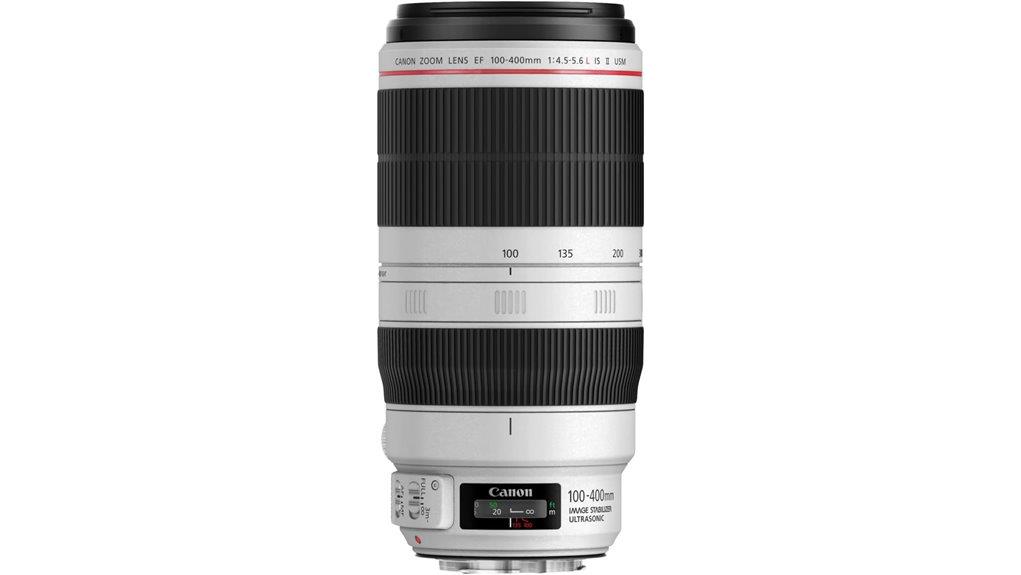
You’ll find the Canon 9524B002‑IV EF 100–400mm is a pro‑grade, weather‑sealed super‑telephoto zoom with reliable USM AF, solid center sharpness across the range, and slight softness at 400mm wide open that tightens when stopped down. Its optical stabilization gives about 3–4 stops of usable correction and Air Sphere Coating reduces flare in backlit scenes. It’s rugged, well balanced with a tripod collar, and ideal for handheld sports and wildlife—keep going for detailed tests and comparisons.
Some Key Takeaways
- Professional-grade Canon EF 100–400mm f/4.5–5.6 L USM delivers excellent center sharpness and reliable autofocus for sports and wildlife.
- Image Stabilization provides about 3–4 stops of usable correction, aiding handheld shooting and composition.
- Air Sphere Coating reduces flare and ghosting, preserving contrast in backlit scenes.
- Rugged L-series build with weather sealing, magnesium-alloy components, and included tripod collar for field durability.
- Slight softness wide-open at 400mm improves stopped down; test across focal lengths and apertures for optimum results.
What the Canon 9524B002‑IV 100–400mm Lens Actually Is
Think of the Canon 9524B002‑IV as a professional-grade super-telephoto zoom designed for Canon EF‑mount SLR/DSLR bodies; it covers 100–400mm with a variable f/4.5–5.6 maximum aperture, uses USM autofocus, and incorporates image stabilization and Air Sphere Coating to control flare and ghosting. You’ll handle a robust L-series zoom weighing 1640 g, with weather resistance, 77 mm filters, rotation zoom and torque adjustment rings. It’s intended for sports and wildlife, provides manual override, and ships with hood and case. Note compatibility limits: mount adapters may be required for other systems, and third party copies differ in build and support. For photographers using adapters, consider investing in lens adapters to maintain functionality and compatibility when mounting this lens on non-EF bodies.
How the Optics, Stabilization, and Coatings Perform in the Field
Having covered what the 9524B002‑IV is and where you'd use it, let's look at how its optics, stabilization, and coatings perform in real-world shooting. You’ll find sharp center resolution from 100–400mm at peak apertures; slight softness appears wide-open at 400mm but tightens stopped down. Chromatic aberration is well controlled by the optical design. The optical stabilization delivers 3–4 stops of usable correction, keeping subjects steady handheld and aiding composition. New Air Sphere Coating improves coating performance against backlit flares and ghosting, preserving contrast in high-contrast scenes. Autofocus remains fast and consistent for tracking. For demanding, high-speed burst shooting and large RAW files, pairing this lens with high-speed memory cards ensures your camera buffer clears quickly and you maintain continuous shooting performance.
Handling, Build Quality, and Weather Resistance for Sports & Wildlife
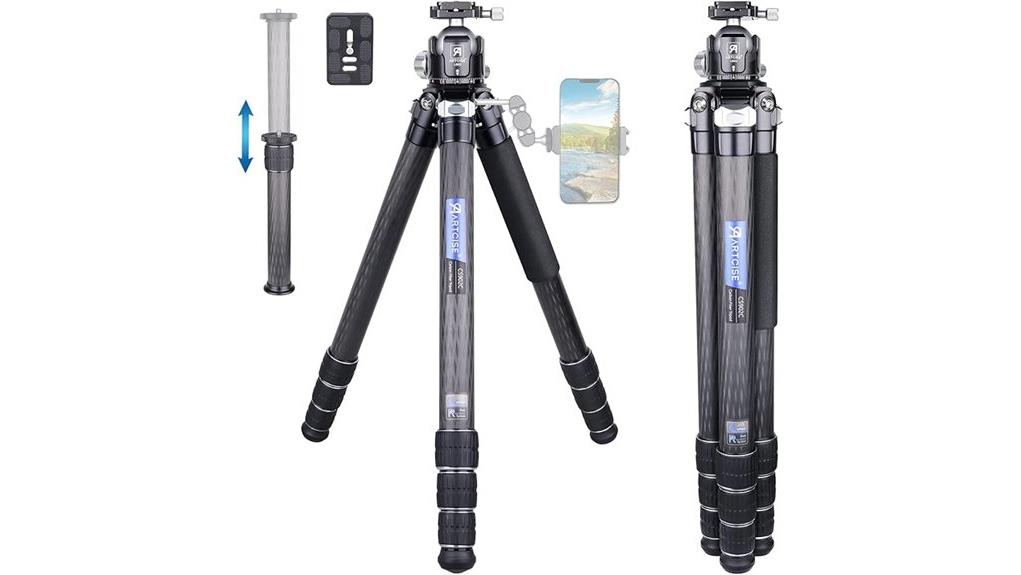
The 100–400mm L II feels purpose-built for demanding fieldwork: its magnesium-alloy components, solid zoom and focus rings, and robust tripod collar deliver predictable balance and control during extended shoots, while the refined zoom torque adjustment lets you dial resistance to match quick panning for sports or slow, deliberate tracking for wildlife. You’ll notice fast handling from the responsive USM focus and well-calibrated zoom action; controls are tactile without being loose. Rugged ergonomics include seals at all joints and a durable finish that resists abrasion and moisture. At 1640 g it’s portable enough for long days yet solid under harsh conditions. For optimal stability during outdoor shoots, pairing the lens with a heavy-duty tripod is highly recommended.
Real-World Image Examples, Sharpness Tests, and ISO/Aperture Guidance
Although lab charts give a baseline, real-world samples reveal how the EF 100–400mm L II performs across apertures, IS settings, and ISO ranges, so you can judge its delivered sharpness and noise behavior in practical shooting. You’ll review edge-to-edge crops at 100, 200, 300, 400mm, comparing f/5.6–f/11 for optimum resolution. Test sequences include exposure bracketing with and without IS to verify consistency. Observe microcontrast, chromatic aberration, and longitudinal CA in high-contrast scenes. Assess bokeh characteristics at longest focal lengths and widest apertures for subject separation. Recommend ISO ceiling per tolerance for acceptable noise and retained detail. Also include practical tips for close-up composition using macro lenses to help readers translate these findings into better subject framing and background separation.
Who Should Buy This Lens and How It Compares to Alternatives
After reviewing real-world sharpness, IS behavior, and noise performance, you can judge whether the EF 100–400mm L II fits your shooting needs. You should buy it if you need a rugged, reliable super-telephoto zoom with excellent stabilization for sports, wildlife, and travel photographers who demand reach without a tripod. It outperforms kit telephotos in sharpness and AF speed, and beats cheaper zooms in build and flare control. If you’re a beginners’ telephoto user or budget-focused shooter, alternatives like the 70–300mm or third-party 100–400mm offer savings but compromise stabilization, weather sealing, and long-end quality. The site also offers tripods and accessories to help you use this lens effectively with supportive gear.
Some Questions Answered
Does This International Version Include a Manufacturer Warranty?
No, you won’t get a manufacturer warranty with this international version; it’s sold explicitly as "no warranty." You can rely only on any seller guarantee offered at purchase, such as Amazon’s voluntary 30-day return guarantee, but that doesn’t replace an international warranty from Canon. Verify the seller guarantee terms before buying, and consider buying a regionally warranted unit or authorized dealer stock if you need manufacturer-backed service and coverage.
Can This Lens Be Used on Sony or Other Mirrorless Bodies Without Adapter?
No — you can’t use it on Sony or other mirrorless bodies without mount adaptation. You’ll need a compatible EF-to-mirrorless adapter to provide correct flange distance and secure fit. Make sure the adapter supports electronic communication for autofocus, aperture control and image stabilization; passive mechanical adapters will limit functionality. Third‑party adapters vary in latency and compatibility, so test autofocus and IS performance on your specific camera before critical use.
Is the Lens Compatible With Canon Extender EF Teleconverters?
Yes — you can use Canon extenders (teleconverters) with this lens, but extender compatibility depends on model and shooting needs. You’ll retain autofocus with a 1.4x on many bodies; a 2x often limits AF or disables it on slower cameras. Teleconverter performance reduces effective aperture, resolution, and AF speed; expect about 1–2 stops light loss and mildly softer images. Test combinations for best extender compatibility and teleconverter performance.
What Is the Tripod Collar Thread Size and Compatibility?
The tripod mount uses the lens’ removable collar; the collar fitment accepts a 1/4"-20 plate for quick release and a 3/8"-16 threaded tripod foot via the collar’s built-in adapter. Thread diameter specifics: primary screw is 3/8"-16 (0.375") on the collar foot; a 1/4"-20 (0.25") option is available via adapter. Compatibility notes: works with standard Arca‑Swiss clamps when using an appropriate foot/plate and most tripod heads supporting those thread sizes.
Are Genuine Canon Replacement Parts Available for Repairs?
Yes — you can obtain genuine Canon parts for repairs through Canon service centers and authorized repair partners; they’ll source OEM components for the 9524B002-IV. If warranty/service access is limited for the international/no-warranty unit, you can still request OEM parts but expect fees. Aftermarket alternatives are widely available and often cheaper, yet they may vary in fit, finish, and durability compared with Canon parts, so evaluate supplier reputation and return policies.