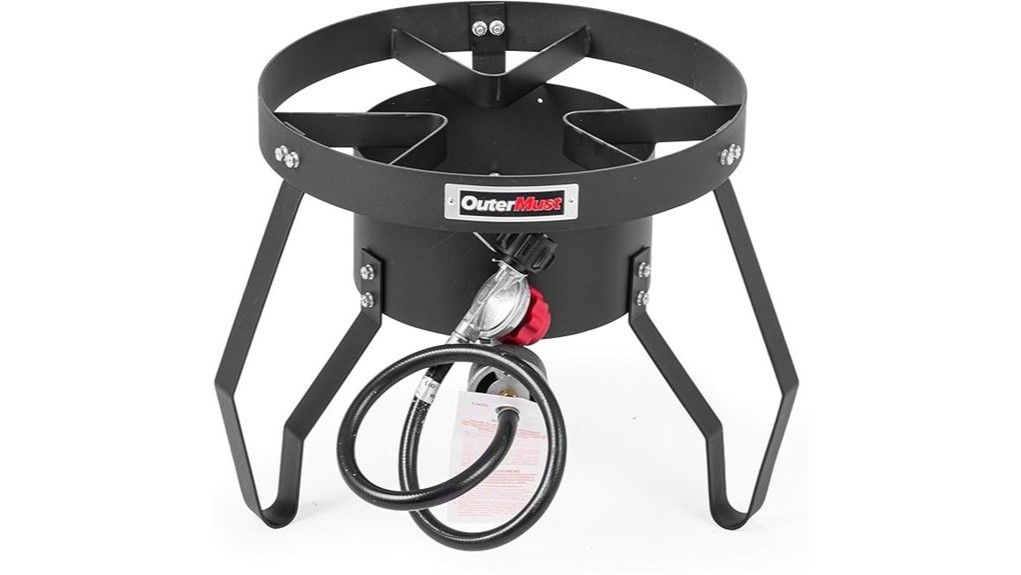
You’ll get brutal, controllable heat that brings cast-iron Dutch ovens to boil fast and sears like a backcountry skillet. The 85,000 BTU double-ring cast-iron burner spreads flame evenly, so you’ll avoid hot spots and hold steady simmers or furious sears. A heavy round base and low center of gravity keep large Dutch ovens stable on uneven ground. Manual ignition and a responsive knob give precise control; a CSA 0–10 PSI regulator adds safety. Keep going to learn setup, fuel notes, and care.
Some Key Takeaways
- 85,000 BTU double-ring cast iron burner delivers rapid heat-up and even flame distribution for large cast-iron Dutch ovens.
- Dense, heavy base and low center of gravity provide stable support and minimize wobble under heavy cookware.
- Responsive control knob allows precise simmering and full-open high-heat searing for braises and pan-sears.
- High fuel consumption requires checking propane supply; includes CSA-certified 0–10 PSI regulator for steady pressure.
- Durable cast-iron construction resists rough use, but requires post-trip drying and light oiling to prevent seasonal corrosion.
How This 85,000 BTU Stove Performs With Cast Iron Dutch Ovens
When you pair this 85,000 BTU stove with a cast iron Dutch oven, you’ll get rapid, even heating that minimizes hotspots and keeps heavy cookware stable. You’ll appreciate the dense cast iron burner and heavy-duty round base that grip the Dutch oven’s weight, so you can sear, braise, or simmer without wobble. Controls give precise flame modulation; manual ignition stays reliable in the field. Mind seasonal corrosion by keeping surfaces dry and using light oil after trips. Check fuel availability before heading out; high output consumes gas faster. This setup is pragmatic: robust, predictable, and engineered for heavy cookware performance. For enthusiasts, having the right essential gear improves safety and cooking consistency.
Heat Output, Distribution, and Real-World Cooking Tests
After testing the stove with a Dutch oven, it’s useful to measure how its 85,000 BTU rating performs across real cooking tasks. You’ll notice rapid heat-up and strong thermal responsiveness—boils form quickly and braises reach steady simmering without long lag. The double-ringed cast iron burner spreads flame evenly under a heavy pot, so hot spots are minimal and browning is consistent. Use the control knob to dial down for gentle simmer capability; flames remain stable at low settings. In practical tests—stews, breads, pan-sears—the stove delivered predictable, controllable heat that matches its high-output claims. For fully enjoying these results while camping, pack the essential campfire cooking irons that make cast iron Dutch oven cooking safe and convenient.
Stability, Footprint, and Compatibility With Dutch Ovens and Other Heavy Cookware
Because the stove’s heavy-duty round cast iron base and dense double-ring burner create a low center of gravity, you’ll get reliable support for heavy cookware like Dutch ovens without wobble. The compact footprint balances stability with portability, so you can set it on uneven ground and still trust the stove to hold a full pot. Pot compatibility is excellent: the broad ring fits wide-bottom Dutch ovens, woks, and large pans, preventing tipping or heat loss. You’ll appreciate the sturdy surface during searing or long braises outdoors. Setup is straightforward, and the design minimizes rocking under weight. This makes it a great choice for fans of camp Dutch oven cooking who need dependable gear in the field.
Controls, Ignition, and Temperature Control for Braising and Searing
Although the stove uses manual ignition, you’ll find lighting it straightforward with an ignition stick or match, and the responsive control knob gives precise flame adjustment for both low-and-slow braising and high-heat searing. You’ll appreciate the tactile feedback from the knob; small turns yield fine flame modulation so you can hold a simmer or spike heat for a crust. Manual ignition keeps the design simple and reliable in the field. For braises, set a low, steady flame and monitor; for searing, open the valve fully and let the double-ring burner deliver even, concentrated heat for quick browning. This setup is ideal when cooking with a two-burner camp stove because it provides the extra power and versatility often needed for cast iron Dutch ovens.
Safety Features, Regulator Details (0–10 PSI CSA), and What’s Not Included
Once you’ve got the flame dialed for braising or searing, pay attention to the stove’s safety and regulator setup: it comes with a CSA-certified 0–10 PSI regulator that keeps pressure steady and prevents sudden surges, and the metal fittings and cast-iron body resist damage and wear in rough outdoor use. You’ll appreciate built-in flame-stabilizing geometry and secure hose connections that meet safety certifications; they minimize leaks and tip risks. Perform regular regulator maintenance: check seals, hoses, and fittings before each trip. Note: propane cylinder/gas isn’t included, and ignition sticks aren’t supplied. Also consider bringing essential fire-starting tools like fire starters to ensure reliable ignition in wet conditions.
Some Questions Answered
Can This Stove Be Used Indoors With Ventilation?
No, you shouldn’t use this stove indoors even with ventilation. Portable high‑BTU propane stoves can produce dangerous carbon monoxide and aren’t typically approved for indoor use; check indoor legality locally. If you must, use only appliances certified for indoor operation, run CO detectors, and guarantee professional ventilation. For safety and compliance, stick to CSA‑approved indoor-rated heaters or cookers rather than outdoor camping stoves designed for open air.
What Type of Fuel Canisters or Fittings Are Compatible?
You can use standard Butane canisters and propane via Propane adapters; you’ll need a 0–10 PSI regulator (CSA-certified) between the stove and fuel. For butane, use threaded camping canisters sized for your stove. For propane, attach a proper adapter and a small disposable or refillable 1 lb cylinder or hose to a larger tank, keeping fittings tight and leak-tested. Don’t forget to verify compatibility and follow safety instructions.
How Much Does the Stove Weigh for Backpacking?
It weighs roughly 8–10 pounds, so you’ll note the pack weight but still find reasonable carrying comfort for short treks. You’ll want to balance it in your pack or strap it externally to avoid shoulder strain. If you prioritize minimal load, you’ll choose lighter burners; if stability and cast-iron compatibility matter, this weight’s acceptable. Consider redistributing other gear to maintain hiking comfort and posture.
Are Replacement Parts or Cast Iron Grids Available?
Yes — you can get replacement parts and cast grids. You’ll find replacement parts like control knobs, regulators, and burners through the manufacturer or outdoor retailers; cast grids (dense cast iron holes/grates) are often sold separately or as replacement assemblies. Contact the maker for exact part numbers and CSA-compliant regulator swaps. Keep receipts and model info handy so you’ll order compatible replacement parts and correct cast grids for safe, stable cooking.
Does It Fit on Standard Camp Tables or Camp Stoves Stands?
Yes — it fits most standard camp tables and stove stands. Its portable dimensions let you carry and position it on typical tabletops, and the heavy-duty round design provides tabletop stability for cast iron cookware. You’ll get steady, high-output flame without wobble on firm surfaces. Still, you should confirm your table’s weight rating and use a heat-resistant pad to protect thinner folding tables from prolonged heat exposure.