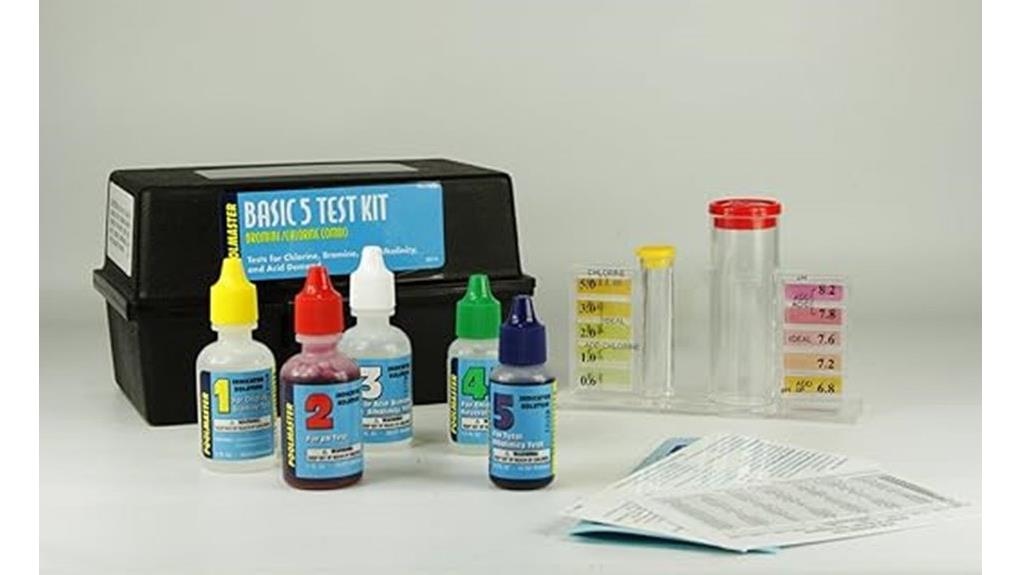
You’ll get a compact, lab-style kit that measures free chlorine/bromine, pH, total alkalinity and acid demand using a clear round test block and five drop reagents. Setup is simple: collect a mid-depth sample, add specified drops, invert and match colors on front/back scales or perform titration for alkalinity and acid demand. Expect good routine performance but limited reagent life and subjective color reads; keep reagents fresh and sample conditions controlled to improve accuracy — more specifics follow.
Some Key Takeaways
- Compact home kit measures chlorine/bromine, pH, acid demand, and total alkalinity for routine pool maintenance.
- Five reagent bottles (three 1‑oz, two ½‑oz) provide professional-style drop tests but have limited long-term supply.
- Color comparison depends on subjective reading and environmental conditions, which can introduce the largest errors.
- Plastic test block and included acid-measuring chart make sampling and titration-style tests straightforward for DIY users.
- Consider reagent freshness, storage, and alternatives (test strips or handheld photometers) for greater convenience or precision.
How the Basic 5-Way Swimming Pool Test Kit Works and What’s Included
Although compact enough for home use, the Basic 5-Way Swimming Pool Test Kit gives you professional-style measurements: you collect a water sample in the clear-view round test block, add the specified drops from solutions #1–#5 (three 1‑oz bottles and two 1/2‑oz bottles), and compare the built-in front-and-back color scales to read chlorine, bromine, pH, acid demand and total alkalinity; the kit also includes matching caps for each reagent and an acid measuring chart to convert results into corrective dosing. You follow precise reagent volumes, rely on color calibration for consistent reads, and note storage longevity recommendations to maintain reagent accuracy.
Quick Setup and Step‑by‑Step Testing for Chlorine, Bromine, pH, Alkalinity, and Acid Demand
Before you begin testing, assemble the kit components on a clean, level surface: the round clear-view test block with its matching reagent caps, solutions #1–#5, the acid measuring chart, and a clean towel. You’ll collect a mid-depth sample in the test block, cap the opposite side, then follow reagent order. For free chlorine/bromine: add solution #1 dropwise, cap, invert, compare front color. For pH: add solution #2, invert, read back color. For total alkalinity: use solution #3 with titration-style drops and the acid chart to determine ppm. For acid demand: titrate with solution #4–#5 per instructions. This procedure enforces consistent pool maintenance and reliable water chemistry readings.
Accuracy, Reliability, and Real‑World Performance Based on Use and Materials
Now that you’ve seen how to perform each test, evaluate how the kit’s materials and methods affect measurement accuracy and everyday reliability. You’ll notice reagent stability is limited by small 1 oz/½ oz bottles; prolonged storage or heat can degrade reagents, altering color intensity. The plastic test block resists weather but can permit sensor drift in color comparison over repeated use. Reading subjectivity remains the largest error source—dual-sided color pads help, but operator consistency matters. Environmental effects (sunlight, temperature, turbidity) will skew results; control sampling conditions and rotate reagents to maintain dependable real-world performance.
Pros, Cons, and Who This Swim Central Kit Is Best For
While compact and user-friendly, the Swim Central Basic 5-Way kit balances practical lab-style tests with limits you should plan for: it gives you quick, on-site measurements for chlorine/bromine, pH, acid demand, and total alkalinity using small reagent bottles and a durable plastic test block, but reagent degradation, subjective color matching, and environmental sampling variables will constrain precision and long‑term consistency. Pros: portable, durable plastic block, clear acid measuring chart, straightforward for routine seasonal maintenance. Cons: limited reagent volumes, non-instrumental color interpretation, and material safety reliance on labeling. Best for DIY pool owners who need inexpensive, periodic monitoring.
Buying Considerations, Alternatives, and Final Recommendation
Because you’ll rely on this kit for routine decisions about sanitation and chemical adjustments, prioritize reagent freshness, ease of color matching, and test range when comparing options. Check packaging dates, storage recommendations, and replacement reagent availability. Perform a price comparison between this Swim Central kit and drop-strip or digital testers; include long-term reagent costs. Verify warranty options and return policies through the retailer; a clear warranty reduces lifecycle risk. Consider alternatives: colorimetric strips for speed, handheld photometers for precision. Final recommendation: if you value low-cost, basic multi-parameter checks and reagent replaceability, this kit is a practical, economical choice.
Some Questions Answered
Is This Kit Safe to Carry While Traveling by Air?
Yes — you can usually carry the kit in carry-on or checked baggage, but you’ll need to follow airline restrictions. The small reagent bottles (1 oz and 1/2 oz) fall within typical liquid limits for carry-on, but pack them in a clear quart bag and declare if asked. Put reagents in checked baggage if concerned about leaks or security. Check your airline and TSA rules before travel to guarantee compliance.
How Long Do the Reagent Solutions Remain Usable After Opening?
You should expect the reagent solutions to remain usable about 6–12 months after opening, depending on shelf life and storage conditions. Store bottles tightly capped, upright, in a cool, dark place away from direct sunlight and extreme temperatures; refrigeration can extend life. Discard if color changes, precipitates form, or tests give inconsistent readings. Note unopened shelf life may be longer; follow manufacturer instructions and record open dates for accuracy.
Can the Test Block Be Replaced if Lost or Damaged?
Yes — the manufacturer doesn’t sell the test block separately, so direct replacement availability from Swim Central is limited. You can source third party alternatives: compatible round clear-view test blocks with matching caps are sold by aftermarket suppliers and pool-supply retailers. When choosing a substitute, verify optical clarity, cap compatibility and color-scale alignment with your reagent set to maintain accurate readings. Keep documentation for calibration and compatibility checks.
Is There Customer Support or Warranty From Swim Central?
Swim Central doesn’t list formal warranty details on the product page, so you shouldn’t assume extended coverage; they likely offer standard manufacturer protection only. For support responsiveness, you’ll need to contact Swim Central directly via their customer service channels or retailer messaging; response times vary and aren’t specified. Keep purchase records and the user guide to expedite any claim. If you need precise warranty details, request them in writing from Swim Central.
Are the Reagents Safe to Store Around Children and Pets?
No — you shouldn’t store the reagents around children and pets. Child safety requires keeping chemical storage secured, out of reach and locked. The kit’s solutions are concentrated and can irritate skin, eyes, and mucous membranes or harm pets if ingested. Label bottles, keep caps tight, store in a cool, dry place away from food, and follow the user guide. Dispose of spills per local hazardous-waste guidance.