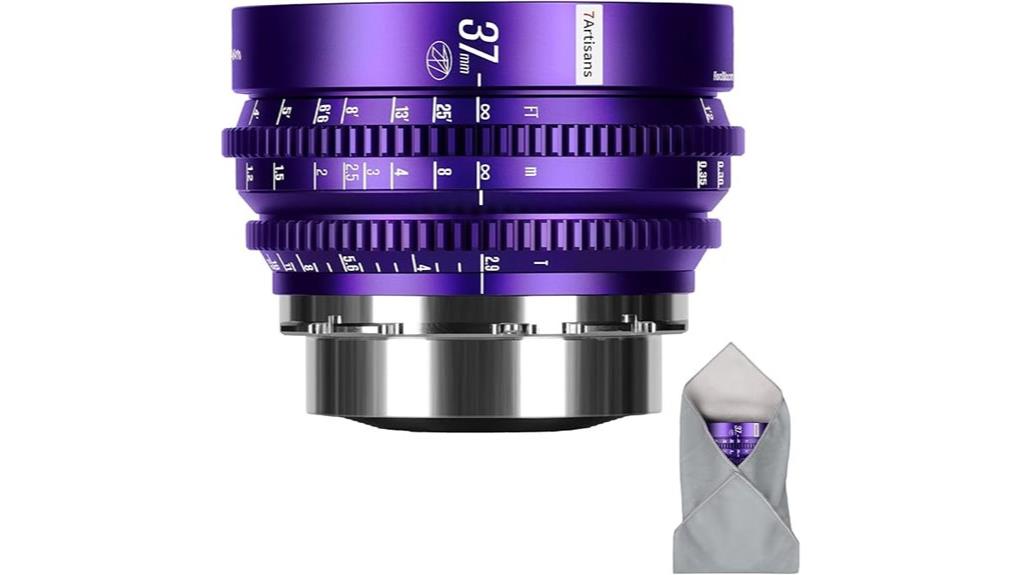
You’ll get a compact, cine-ready 37mm that favors a razor-sharp central plane and dramatic petal-like edge blur over clinical uniformity. Aperture shifts change dreamy distortion versus conventional resolution; T2.9 gives bloom and separation, T5.6–T8 restores microcontrast. The 300° focus throw and geared, clickless iris suit follow-focus and gimbals, though adapters must be solid for mirrorless. It’s ideal for stylized narrative work rather than clinical landscapes — keep going to see setup, tests, and alternatives.
Some Key Takeaways
- Distinctive “explosive bokeh”: sharp center with rapid petal-like edge softening creates a dreamy foreground/background separation.
- T2.9 provides strong character; stop down to T5.6–T8 for improved microcontrast and overall resolution.
- 300° focus throw and damped ring offer precise manual pulls, ideal for follow-focus and cine rigs.
- Lightweight (~345 g) and geared aperture make it versatile for handheld, gimbals, and PL-mount cine setups.
- Expect dreamlike vignetting, mild radial chromaticism, and highlight bloom—great for stylized work, not clinical sharpness.
How the 7artisans 37mm T2.9 Floral Bloom Behaves on Set
On set, the 7artisans 37mm T2.9 Floral Bloom behaves like a purposely idiosyncratic tool: you’ll get a sharp center with pronounced radial edge blur that changes noticeably as you stop down, so you can dial between dreamy distortion and more conventional resolution. You’ll frame tighter than a standard 35mm and adjust focus carefully because the 300° throw rewards precision. Test against a modern cine lens to quantify vignette and contrast shifts. Plan lighting setups to control highlight bloom and maintain subject separation. Also account for sound considerations—handheld rigs and gimbals reduce handling noise but need dampening for clean audio. Consider how different tripod heads affect shot stability and fluidity, especially when using heavier camera setups with fluid heads.
Optical Character: Explosive Bokeh, Sharp Center, and Aperture Effects
Having noted how the lens handles on set, next focus on its optical character: the Floral Bloom yields a sharply defined central plane surrounded by rapid radial softening that produces the “explosive bokeh” look. You’ll find center sharpness excellent at T2.9, then deliberate petal-like blur toward edges. Stop down to T5.6–T8 to retain creative bloom while regaining microcontrast. Watch for dreamlike vignetting and mild radial chromaticism distortion in high-contrast edges; these are intrinsic to the effect, not flaws. In comparative tests it outpaces generic primes for surreal foreground separation—use it when you want controlled, theatrical distortion. Essential lens gear choices like quality manual primes often improve handling and artistic results for photography enthusiasts, especially when pairing a specialty optic with the right camera body and accessories for lens-focused shooting.
Handling, Build, and Cine-Friendly Controls for Filmmakers
Reach for the 7artisans 37mm T2.9 and you’ll notice it’s engineered for hands-on cinematography: at roughly 345 g with a 300° focus throw, the lens balances lightweight portability with the long, precise manual focus control cinematographers expect. You’ll appreciate the ergonomic focus ring—smooth, damped, and ideal for follow-focus; tactile markings are clear and repeatable for mark-to-mark pulls. The geared aperture lets you integrate with standard cine rigs and clickless adjustments. Balanced weight and compact form make handheld and gimbal use stable compared with heavier primes. In testing it tracked accurately, recommended for rigs prioritizing manual control and efficiency. It pairs well with fluid heads to maintain smooth camera movements on tripods and dollies.
Best Creative Use Cases and Test-Shot Examples to Replicate
Because the 7artisans 37mm T2.9 pairs a distinctive "explosive bokeh" with a compact, cine-ready build, you'll want to plan test shots that isolate how aperture and subject distance shape the effect; shot sequences should compare T2.9, T4, and T8 for the same composition, include foreground elements at varying distances to catch radial edge blur, and use both static rack-focus and slow push-ins to evaluate how the center sharpness reads against the smeared periphery. Test ideas: dream sequences with backlit haze, urban portraits at night using neon highlights, handheld gimbal push-ins through crowds, and tight interiors showing surreal peripheral smear. Consider also practicing these sequences specifically for macro lenses to better understand close-focus rendering and bokeh behavior.
Buying Advice: Mounts, Compatibility, Alternatives, and Who Should Buy
While the 7artisans 37mm T2.9 is designed as a PL-mount, full-frame cine lens, you’ll want to confirm mount compatibility or plan for a high-quality adapter before buying—especially if you shoot on mirrorless systems. You’ll need robust Mount adapters to preserve flange distance and maintain repeatable focus marks; cheap adapters can introduce play and misalignment. Compare it against Alternative primes: faster standard cine glass yields cleaner bokeh and sharper edges, while vintage lenses give different character. Buy if you prioritize the unique “explosive bokeh,” manual focus precision, and lightweight build for narrative or experimental shoots; skip if you need clinical sharpness. Consider pairing it with a sturdy L-bracket to improve handling and secure tripod mounting for run-and-gun or careful composition work.
Some Questions Answered
Does It Come With a Lens Hood or Protective Case?
No, it doesn’t include a lens hood or protective case. You’ll get a lens cap and a filter thread for screw-in filters, but you’ll need to buy a hood or case separately. Compared to competitors that bundle pouches or hoods, this kit is minimalist. For practical use, get a padded pouch and a 37mm hood to control flare and protect elements; test with different filters to preserve the floral-bloom effect at wide apertures.
Is There Weather Sealing or Dust Resistance?
No, it doesn’t offer official weather sealing? or documented dust resistance?. You’ll treat it as an unsealed cine lens in comparative testing: it lacks gaskets and protective coatings found on pro sealed lenses. Practically, you should avoid heavy rain, dusty shoots, and rapid temperature changes. Use a rain cover, protective filter, and sensor/lens maintenance routine. For field reliability, consider sealed alternatives if you routinely shoot in harsh environments.
What Is the Minimum Focusing Distance?
The minimum focusing distance is 0.35 m measured from the focal plane, so you’ll get a usable close focus for mid-frame subjects. In comparative testing, that focal plane spec yields a modest working distance but not true macro adaptability. You’ll need extension tubes or adapters for closer magnification. Practically, you’ll use manual focus sweep within the 300° throw to refine close focus and preserve the lens’s distinctive bokeh effects.
Does It Support Focus Breathing Reduction Techniques?
No — it doesn’t eliminate focus breathing, though you can mitigate it. You’ll observe measurable focus breathing and some optical shift during close-focus pulls. In comparative testing, breathing is moderate versus cinema primes with internal focus. Practically, you should use longer pulls, mark key distances, avoid extreme close-ups, or employ external optical shift compensation adapters or post stabilization/cropping. For critical shots, consider lenses with internal focus designs to minimize breathing.
Are Compatible Cine Follow-Focus Gears Included?
No — the lens doesn't include cine follow-focus gears. You’ll need to add your own manual gearing; the barrel has standard gear spacing for third-party follow-focus rings, but you should verify tooth pitch before buying. In practical testing, aftermarket gears mounted securely and preserved the 300° focus throw without slippage. Recommendation: use low-profile metal gears matched to your follow-focus system and confirm gear spacing alignment during setup for smooth, precise operation.