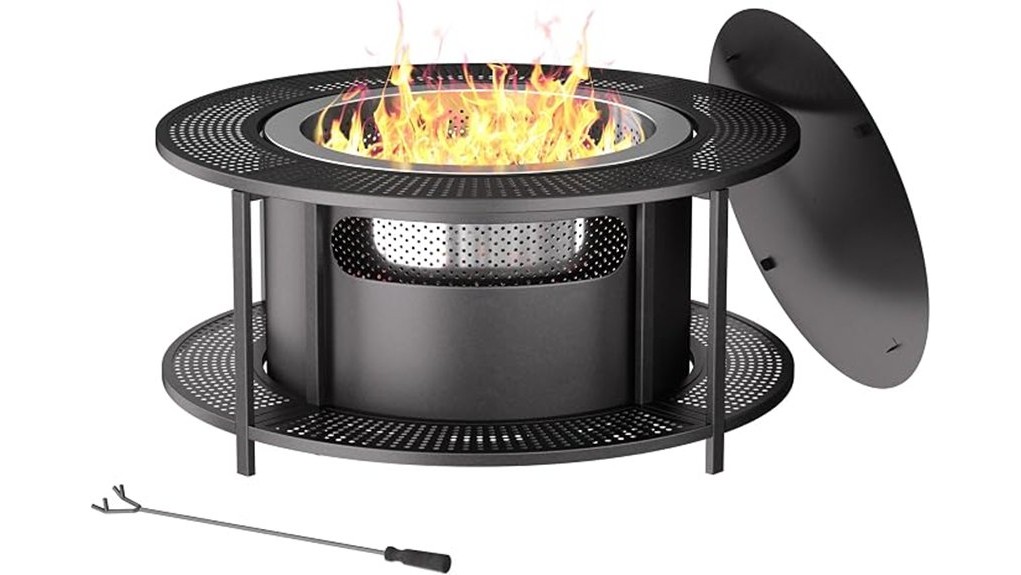

You’ll get a patio-ready ALAULM 37-inch smokeless fire pit tabletop built around a double-wall airflow design for fuller combustion, lower visible smoke, and reduced lingering odor. Ventilation holes and a no-drip lid help you manage burn quality and minimize incomplete combustion. You can switch between fire pit mode (lid off for flames) and outdoor table mode (lid on). Use the included waterproof cover and fireproof mat, empty the ash tray only when fully cool, and confirm the spark screen seats correctly to stay compliant and safer—there’s more to know next.
Some Key Takeaways
- Covers the ALAULM 37-inch smokeless double-wall design aimed at fuller combustion and reduced visible smoke.
- Highlights ventilation holes and airflow control to burn wood more efficiently with less soot and lingering odor.
- Explains fire pit vs outdoor table conversion by swapping the lid for active flames or calm dining use.
- Reviews safety and placement guidance, including fireproof mat use, spark arrestor seating, and ash tray emptying.
- Notes maintenance and durability, focusing on 201 stainless steel body/components and cleaning after each session.
ALAULM 37 Inch Smokeless Fire Pit Tabletop Design Highlights
With its double-wall construction and strategically placed ventilation holes, the ALAULM 37 Inch Smokeless Fire Pit Tabletop is built to improve airflow and support fuller combustion, which helps you achieve low-smoke, more efficient burning for comfortable outdoor use. You’ll appreciate the No drip lid and the airflow control, which let you manage burns while lowering risk from smoky, incomplete combustion. The 201 stainless steel body and burning plate resist heat and corrosion, meeting practical outdoor durability expectations. For safety, you should use a heat-resistant mat on surfaces like wood floors or carpets, and you’ll feel more confident hosting friends.
How the Smokeless Double-Wall System Cuts Smoke and Odors
The ALAULM smokeless double-wall system reduces visible smoke and lingering odors by engineering cleaner combustion: you feed firewood into the inner burn chamber, and the double-wall design plus ventilation holes improve airflow so more volatile gases burn off instead of escaping as soot and smell. This evidence-based approach supports airflow Ventilation and reduces incomplete combustion. You’ll feel more comfortable with odor reduction during backyard gatherings, since fewer particulates and smoldering vapors escape. Low-smoke design helps minimize the smoky remnants that can cling to outdoor areas, supporting a cleaner-feeling experience. For safety and compliance, follow the manufacturer guidance: use only outdoors and keep the unit on a fireproof mat to limit heat transfer risks.
Choose the Right Setup: Fire Pit vs Outdoor Table Conversion
To get the most smokeless performance from your ALAULM 37-inch unit, choose the conversion mode that matches how you’ll use it—and set it up accordingly. If you want active flames for gatherings, run it as a wood-burning fire pit by removing the lid; if you want a calm dining surface, swap the lid in for table mode. This Easy Conversion supports a Versatile Layout that fits patio and balcony life. To maximize spark containment, confirm the spark arrestor screen is seated correctly before lighting. For compliance and safety, keep the 201 stainless steel body stable and avoid unattended use near combustibles; also use a fireproof mat on non-rated floors.
Weather-Ready and Safe Use: Cover, Ash Tray, and Placement Tips
After you finish setting up your ALAULM 37-inch smokeless fire pit table, you’ll want to use it safely in changing weather—then keep it protected when you’re not burning. Use the included waterproof cover for rain and dust weather protection against rain and dust. Always empty the removable ash tray when the unit cools fully; follow local ash disposal rules to reduce fire and contamination risk. For compliant placement, set the tabletop on a fireproof mat and keep it away from wood, carpets, and low overhangs. During windy or damp conditions, reduce airflow disruption and monitor the flame until it’s stable.
Maintenance and Durability Review for 201 Stainless Steel Performance
With 201 stainless steel forming both the stove body and burning plate, you get a surface designed to resist corrosion and handle repeated heat cycles without degrading quickly. To protect your investment and belong confidently with safer outdoor gatherings, you should clean after each session, focusing on ash removal and inspection for warping. Use the durable ash tray for straightforward disposal and minimal scrubbing, reducing residue that can drive long term corrosion. Store the unit under the included waterproof cover to limit moisture exposure. Confirm placement on a fireproof mat to meet safe-use expectations, and keep your heat resistance performance consistent by using fireproof patio mats as a protective layer between the heat source and your outdoor surface.
Some Questions Answered
Does It Burn Evenly With Different Wood Sizes and Thicknesses?
Yes, it can burn fairly evenly, but uneven burn causes matter: oversized pieces can starve airflow, leaving cooler edges. You’ll get better results by using a mix of similarly sized logs and splitting thicker wood so it ignites and feeds the double-wall airflow. Wood moisture effects are big—wet or partially seasoned wood smolders, shifts heat, and increases smoke. Always start with dry, cured fuel for compliance, safety, and belonging.
What’s the Maximum Safe Burn Time Before Needing a Cool-Down?
You should plan for short burn cycles: aim for about 60–90 minutes before you cool it down, then let the unit fully reach ambient temperature before reloading. Safety guidelines matter most because temperatures can stay elevated even after flames fade. Use temperature monitoring with a surface thermometer or infrared reader, and keep children and pets back until it’s cool. If the ash tray or tabletop frame heats noticeably, extend the cool-down.
Is the Tabletop Heat-Safe for Placing Drinks or Plates Nearby?
Yes—your tabletop is designed to handle heat, but you shouldn’t treat it like a “warm stove.” Use it as a heat-tolerant surface only. For drink and plate placement, keep items at a safe distance and verify stability through heat shield testing. Rely on Flavorful smoke control features to reduce soot and residue, but avoid placing glassware directly where radiant heat concentrates. If you’ve got doubts, use a fireproof mat and follow manufacturer guidance.
How Loud Is It While Burning, and Does It Create Sparks?
You’ll usually hear a low, steady crackle rather than loud roaring; noise depends on wood type and airflow. The design aims for spark free operation, but you should still assume occasional embers can pop, especially with dry, fast-burning logs. Smoke volume control keeps visible smoke low, yet small haze may occur in cool, windy conditions. For safety and compliance, keep a fireproof mat, clear combustibles, and use a spark screen if available.
How Do I Clean Soot Buildup From the Double-Wall Ventilation Area?
Clean soot buildup by letting the unit fully cool, then Check ventilation maintenance with soot inspection frequency after every few fires or sooner if you notice reduced draw. Use a soft brush or dry cloth to remove loose soot from the double-wall ventilation holes—avoid water and harsh chemicals that could trap residue. For stuck deposits, use a lightly dampened cloth, then dry completely before relighting. Keep a fireproof mat to reduce ignition risks.