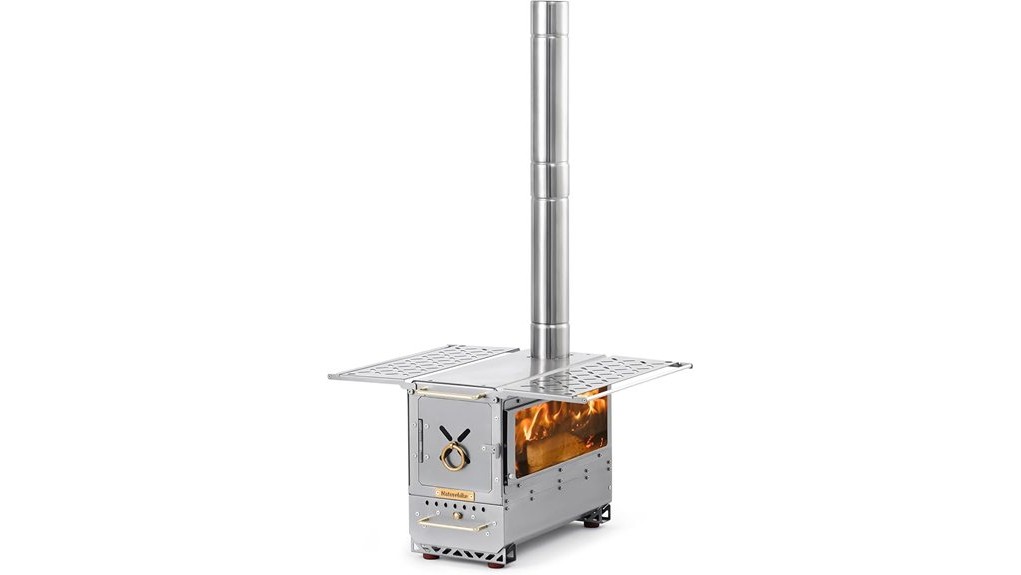
The Naturehike Icefield hot tent stove is a compact stainless‑steel wood stove you can use on a table or freestanding in a tent, yurt, or shelter up to about 200 sq ft. It’s rust‑resistant, ships mostly assembled, and stores four chimney sections inside for neat transport. You’ll get steady, efficient heat and basic cooking on the flat top, though draft and ventilation affect smoke control. Keep safety checks in mind, and the full review covers setup, pros, and tradeoffs.
Some Key Takeaways
- Compact stainless‑steel build offers rust resistance and tabletop or freestanding hot‑tent heating for shelters up to ~200 sq ft.
- Weighing about 17.9 lb, it’s portable but better suited for two‑person transport than ultralight trips.
- Nesting four chimney pipes and folding shelves enable minutes‑long setup and compact storage with most parts preassembled.
- Efficient burning of small wood pieces, adjustable draft/damper, and ash tray provide steady heat and good fuel economy.
- Visible glass window aids monitoring, but proper ventilation, smoke testing, and cleaning are essential for safe tent use.
What the Naturehike Icefield Hot Tent Stove Is and Who It’s For
Think of the Naturehike Icefield Hot Tent Stove as a compact, stainless‑steel wood stove built for tabletop or freestanding use in shelters—hot tents, yurts, sheds, or any flame‑retardant shelter—where you need reliable heat and the option to cook. You’ll find it’s a portable, rust‑resistant stove with a visible fire window, folding side shelves, and a stowable chimney—designed for efficient wood burning. It suits backcountry enthusiasts who want lightweight, multiuse gear and campers needing straightforward tent heat and cooking. It also fits emergency preparedness kits for short‑term shelter heating. You’ll appreciate its practical, no‑nonsense function. This model is a good choice for campers who prioritize portable tent heaters and simple wood‑burning reliability.
Quick Specs and Build Details: Materials, Size, and What’s in the Box
Because the Icefield is built around a stainless‑steel frame, you get a rust‑resistant, well‑sealed stove that’s meant for frequent use and minimal smoke leakage. You’ll notice a clean stainless finish and a compact footprint: collapsed size is 15.8L x 7.1W x 11.8H inches, operating dimensions 7.09 x 15.75 x 11.81 inches, weight about 8.1 kg. Construction includes side observation glass, folding side shelves, and stove body designed to stow four chimney pipes internally (total ~47.2″). The box contains 1 stove body, 2 side shelves, 4 chimney pipes, and 1 ash hook. No complex assembly required. Many campers pair catalytic heaters with hot tent stoves for safer, flameless heat in enclosed spaces like hot tents, especially when prioritizing outdoor heating safety.
Performance in the Field: Heating, Fuel Use, Smoke Control, and Cooking
When you light the Icefield in a sheltered tent, it heats quickly and maintains steady warmth for spaces up to about 200 sq ft while burning small pieces of wood efficiently. You’ll notice even heat distribution across the tent when vents and the rotary damper are adjusted. Fuel efficiency is strong with controlled burns; ember management is straightforward using the ash tray and hook. Smoke mitigation performs well thanks to sealed seams and a direct-vent chimney, though draft matters. Cooking versatility is good on the flat top and side shelves; simmer control works via the damper, but fine tuning takes practice. These stoves are popular with campers who prefer multi-fuel stoves for their versatility and reliability.
Setup, Portability, and Practical Use: Assembly, Chimney Storage, and Transport
Getting the Icefield ready is straightforward and won’t bog you down: the stove ships mostly assembled, the folding side frames slide into place, the four chimney sections nest inside the unit for compact storage, and the ash hook tucks into its slot. You won’t need tools; setup takes minutes. At 8.1 kg pack weight it’s manageable for two people; the collapsed dimensions fit most transport cases. Chimney pipes stow internally, reducing snag risk. Corner protection on hard cases prevents dents, and rope ties keep loose parts secured during transit. Practical, compact, and focused on simple field use. Many campers also carry spare repair sleeves to protect and extend tent pole longevity.
Pros, Cons, and Should You Buy the Icefield Hot Tent Stove?
If you want a compact, efficient wood stove for small shelters, the Icefield delivers solid heat, easy setup, and useful extras like folding side shelves and a view window. Pros: sturdy stainless steel, collapsible chimney, adjustable damper, and good heat for ~200 sq ft; user testimonials praise portability and performance. Cons: you’ll need consistent wood sourcing, the 17.9 lb weight isn’t ultralight, and glass requires cautious cleaning. Follow safety protocols, secure ventilation, and perform smoke testing before extended use. Should you buy? Yes if you prioritize reliable tent heating and simple operation; otherwise consider lighter or smokeless alternatives. This is a great pick for campers who already use propane camp stoves and want a complementary solid-fuel option.
Some Questions Answered
Is a Spark Arrestor Required or Included With the Chimney?
No, a spark arrestor isn’t included with the chimney; the package lists four chimney pipes and an ash hook but no spark arrestor or chimney cap. You’ll want to add a compatible spark arrestor/chimney cap for safety if you’ll use the stove in spark-prone areas or under fire restrictions. Choose a stainless steel arrestor sized to the pipe diameter, secure it to the top pipe, and check local regulations and campsite rules before use.
Can It Burn Coal or Charcoal in Addition to Wood?
Yes — you can burn coal and charcoal, though coal compatibility is limited. You’ll get reliable charcoal performance for cooking and steady heat; charcoal burns cleaner and longer than wood. Coal can be used but produces higher temps, more ash, and requires careful air control and sturdy ash handling. Monitor vents and chimney for soot; avoid indoor use without proper ventilation in tents or enclosed shelters to stay safe.
Are Replacement Chimney Pipes Sold Separately?
Yes — replacement chimney pipes are available, but availability varies by seller and region. You’ll want to check the manufacturer or authorized dealers for replacement availability and compatible chimney adapters if you need different lengths or connections. Contact Naturehike customer service or the original retailer; they usually respond within 24 hours. If official parts aren’t listed, measure pipe diameter and joint type before buying third‑party adapters to guarantee a safe, proper fit.
Does It Void Tent Manufacturer Warranty When Used Inside Shelters?
Yes — using this stove inside a shelter can void your tent manufacturer warranty. You’ll change warranty implications because manufacturers often disallow open flames or non-approved heaters; heat or smoke damage may be excluded from coverage. Beyond warranty, you’ll increase safety liability if a fire or carbon monoxide incident occurs. Check your tent’s warranty terms and the stove’s instructions, get written approval if needed, and consider certified alternatives or professional guidance.
What Maintenance Schedule Prolongs Stainless Steel Life?
You should do seasonal cleaning and an annual inspection to prolong stainless steel life. After each trip, wipe soot and moisture, empty ashes, and dry the stove. Every season deep-clean joints, glass, and chimney pipes with mild detergent and a soft brush, then inspect seals and fasteners. Annually check for pitting, crevice corrosion, and warped parts; replace damaged components and apply light oil to hinges. Store dry between uses.