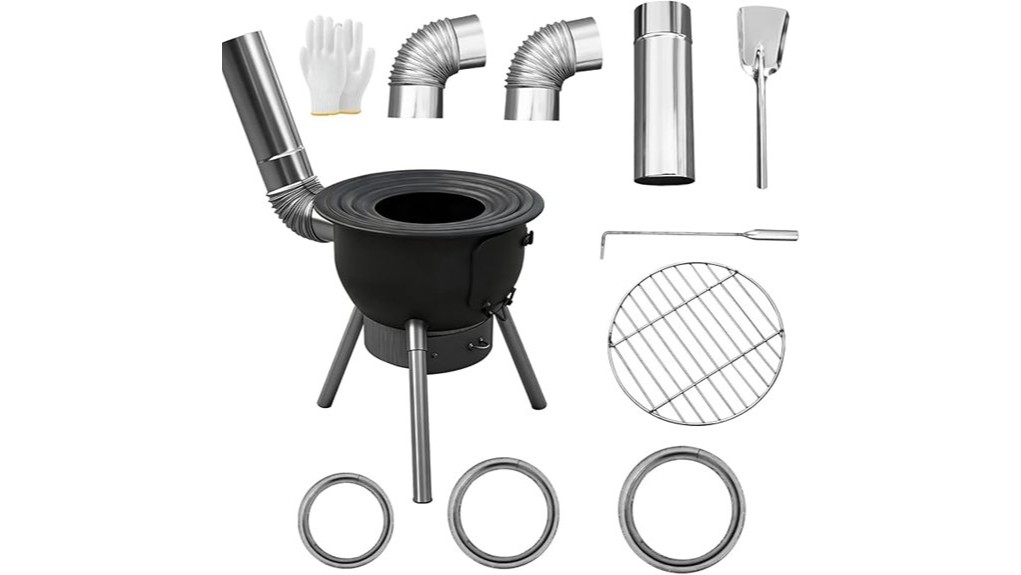
You’ll get a rugged 25 lb wood stove with a chimney and vent that’s built from 1.8 mm hot‑rolled steel for heat resistance and longevity, and a low‑center 16.9″×20.4″ profile for stability. It’s compact for car camping, offers a 14.9″ stainless grate and detachable rings for versatile cooking, and the chimney plus adjustable vent improves combustion and lowers smoke. You’ll need stable, noncombustible placement, ash management, and rust prevention; keep going to learn setup and maintenance specifics.
Some Key Takeaways
- Compact 25 lb wood-burning stove with chimney suits campers and overland travelers needing a rugged, multiuse heat source.
- 1.8 mm hot-rolled steel construction ensures heat resistance and long-term structural durability.
- Vertical chimney and adjustable vent improve combustion efficiency and reduce smoke and unburned particulates.
- 14.9″ stainless steel grate with detachable rings provides versatile cooking and better cookware contact.
- Requires stable, noncombustible placement, routine ash removal, and corrosion prevention for safe, long-term use.
Quick Verdict: Who the Stove Is Best For
While it’s compact enough for weekend camping, this stove is best for outdoor users who need a rugged, multiuse heat source for cooking and warming small groups—campers, backyard hosts, and overland travelers who can handle solid-fuel operation. You’ll appreciate its practical camping aesthetics and straightforward controls. You’re buying a durable, heat-resistant unit with a chimney and adjustable vent to manage combustion and smoke. Use care: you’ll position it on stable ground, keep clearance from combustibles, and monitor embers. Inspect and maintain the grate and chimney before use. If you prioritize portability over instant convenience, this fits. For more versatility at camp, consider accessories and compatible collapsible fire pits to expand cooking and heat options.
How the Stove Is Built: Materials, Size, and Portability
Built from 1.8 mm hot-rolled steel, this stove prioritizes heat resistance and structural longevity so you can run wood or charcoal at high temperatures without rapid distortion. You’ll note the specified steel thickness gives predictable heat transfer and resists warping over repeated cycles. The 16.9” diameter and 20.4” height keep a low center of gravity while providing usable firebox volume. At 25 pounds, it’s portable but not flimsy; you’ll carry it for short hikes or car-camping. Tripod legs deliver tripod stability and reinforced support, but you should always set it on level, noncombustible ground and inspect leg fittings before use. For campsite setups, consider bringing an electric pump for inflatables like air mattresses to streamline your gear and save time with quick inflation.
Cooking and Heating Performance: Grill, Rings, Airflow, and Smoke Control
Because the stove’s cooking surface and airflow are engineered for outdoor use, you’ll get predictable heating and manageable smoke when you follow proper loading and venting practices. The 14.9″ stainless steel grate versatility lets you match ring size to cookware, improving contact and consistent heat distribution. Use the detachable rings to center pots and avoid hotspots. The vertical chimney and adjustable vent increase combustion efficiency, pulling air through fuel and lowering unburned particulates for smoke reduction. For safety, monitor burn rate, avoid overloading, and keep flammable materials clear; controlled airflow equals safer, cleaner cooking and steady warmth. For campers who enjoy campfire cooking, having essential gear like a sturdy cooking iron can further improve your outdoor cooking setup campfire cooking irons.
Setup, Maintenance, and Durability in Real Use
Positioning the stove on a level, non-combustible surface is critical before lighting; you’ll set the tripod legs, attach the chimney and grill, and confirm all ring segments seat flush to avoid wobble or heat loss. Follow assembly tips: torque fasteners snugly, align chimney sections with gasketed overlaps, and verify the adjustable vent moves freely. For maintenance, remove ash after each cool-down, inspect welds and seams, and wire-brush the grate. Durability hinges on corrosion control—apply heat-resistant paint and store dry to aid rust prevention. Replace damaged rings promptly and never operate with structural deformation. Consider adding a fire poker to your gear to safely adjust logs and embers while camping.
Final Pros, Cons, and Buying Recommendation
Although it’s compact and portable, you should weigh the stove’s strengths and limitations against your intended use before buying. You’ll get durable 1.8 mm hot-rolled steel, adjustable airflow, and versatile cooking rings—excellent for camping or backyard heating. Consider weight (25 lb), limited manufacturer warranty details, and voluntary 30-day return policy when doing a price comparison. Cons: no explicit warranty options, potential rust without maintenance, and limited cooking surface for large groups. Recommendation: buy if you prioritize portability, efficient combustion, and solid construction; decline if you need full warranty backing or large-scale cooking capacity. Follow safety distancing and chimney clearance guidelines. Many users also pair these stoves with essential camp gear for safer, more efficient outdoor cooking.
Some Questions Answered
Does It Include a Carrying Case or Bag?
No, it doesn’t include a carrying case or bag. You won’t get a portable cover or storage tote with the unit; only the stove, chimney pipe and grill rack are included. You’ll want to plan for a weatherproof portable cover or a dedicated storage tote to protect the 1.8 mm hot-rolled steel from corrosion and to prevent accidental burns during transport. Using a proper tote also keeps sharp edges and soot contained for safe handling.
Are Replacement Grates or Rings Available?
Yes — you can source replacement grates and cast rings, though the manufacturer doesn’t list them explicitly. You’ll want stainless replacement grates matching the 14.9” grate dimensions and cast rings sized 11”, 12.9”, 14.9” outer diameters. Prioritize heat-resistant materials and verified fit to avoid instability. Inspect for warping, replace damaged parts promptly, and use protective gloves and eye protection during installation to reduce burn and pinch hazards.
Is Assembly Required Out of the Box?
Yes — some assembly’s required out of the box. You’ll attach tripod legs, chimney pipe and grill rack per the assembly instructions. It’s straightforward but you’ll need basic tool requirements: a wrench or adjustable pliers and possibly a screwdriver. Follow steps carefully, tighten fasteners securely, and confirm chimney seals and vent function. Wear gloves, work on stable ground, and perform a sniff-and-visual safety check before first lighting.
Can It Be Used on Wooden Decks Safely?
No, you shouldn’t place it directly on a wooden deck. You’ll need dedicated deck protection (heat-resistant mat, non-combustible pad, spark arrestor) beneath the stove and maintain clearance to combustibles. Confirm your deck’s weight limits — the unit’s ~25 lb plus fuel, cookware, and people’s load can concentrate stress. Always use the chimney and vent correctly, keep a fire extinguisher nearby, and never leave the stove unattended while burning.
What Is the Smoke Output Near Neighbors?
You’ll see moderate smoke output that depends on fuel and draft; it’s reduced by the vertical chimney and adjustable air vent. Pay attention to wind direction and smoke drift patterns—crosswinds can carry particulates toward neighbors. Burn dry wood, control airflow, and avoid smoldering to minimize smoke. Position the stove upwind of nearby properties, monitor plume behavior, and be ready to extinguish or alter burns if smoke drifts into populated areas.