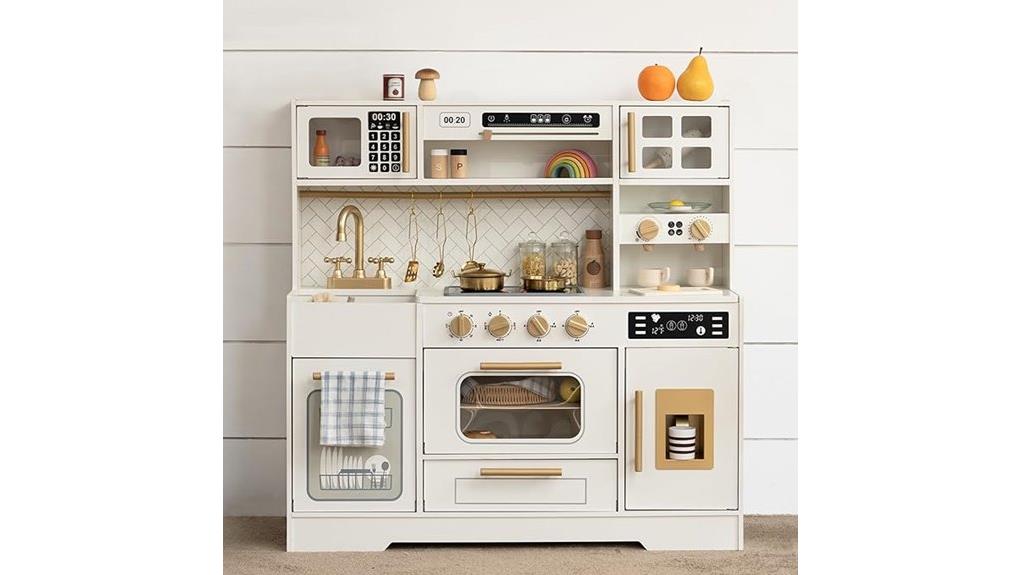
You’ll find a sturdy, standards‑aware wooden play kitchen that’s built for safe, realistic pretend play for ages 3+. It uses non‑toxic wood, rounded edges, and meets ASTM F963/CPSIA guidance; childproof latches and anchor points are recommended. The light‑up stove clicks, oven responds predictably, and over 15 metal/wood accessories store neatly on hooks and shelves. Assembly’s straightforward with QR video help; inspect fittings and replace worn metal parts. Scroll on to get setup, care, and purchasing tips. the mamizo corner play kitchen features a variety of interactive elements that stimulate imaginative play, encouraging children to develop their creativity and social skills. With its vibrant colors and realistic appliances, this kitchen will quickly become the centerpiece of playtime adventures. Parents will appreciate the attention to detail and commitment to safety in every aspect of this engaging toy.
Some Key Takeaways
- Durable, high-quality wood construction with rounded edges and robust joints meets ASTM F963 and CPSIA safety standards.
- Includes light-up stove, crackling sounds, clicky oven knob, and over 15 metal and wooden accessories for realistic pretend play.
- Accessories sized for small hands; metal pans, utensils, and storage hooks keep play organized and encourage motor-skill development.
- Straightforward assembly with QR video guidance; anchor to a wall and tighten fittings for stability and safe use.
- Recommended for supervised children aged 3+; perform routine inspections and replace damaged utensils or worn parts.
Why This Review Helps Parents Choose the Best Play Kitchen
Because choosing a safe, durable play kitchen matters for everyday play, this review gives you clear, standards-focused info so you can decide quickly. You’ll get concise guidance tied to ASTM F963 and CPSIA compliance, non-toxic materials, and sturdy construction so safety isn’t an afterthought. We highlight features that affect parent decision making—size, weight, assembly ease, storage, and realistic controls—so you can match the kitchen to your child’s space and skills. Purchasing considerations like included accessories, maintenance, and longevity are weighed against educational benefits and age recommendations, letting you prioritize what matters most for your family. We also consider how materials and finishes interact with outdoor use and deck sealer safety when kids use play kitchens near treated decks.
What the Wooden Play Kitchen Includes and How It’s Built
When you unpack this wooden play kitchen, you’ll find a thoughtfully organized setup: a light-up stove with crackling sounds, a clicky oven knob, sturdy shelves, hooks and an organizer, plus over 15 accessories (metal pans, utensils, cups and wooden ice cubes) designed for realistic pretend play. You’ll get multiple metal utensils—frying pan, pot, spatula, scoop, colander—and three metal hooks plus cups and wooden ice cubes. The build uses high-quality, non-toxic wood with a rounded finish and robust joints; it meets ASTM F963 and CPSIA standards. Assembly’s straightforward with included instructions and a QR video for guidance. For homeowners installing play equipment outdoors, choosing replacement parts like swing chains rated for residential use can help maintain safety and longevity, as reputable suppliers offer swing chain options suited to backyard play areas.
How It Performs in Play: Stove, Oven, Storage, and Accessories
Moving from how it’s built to how it actually performs, you’ll find the stove, oven, storage, and accessories work together reliably and safely during active play. You’ll turn interactive knobs that click like real appliances while the stove emits subtle sensory sounds, engaging kids without startling volume. The oven responds predictably, teaching cause and effect. Storage shelves, hooks, and organizer keep metal pans and utensils accessible and reduce clutter, supporting tidy habits. Accessories are sturdy, sized for small hands, and made from non-toxic wood and metal per ASTM F963/CPSIA guidance. Overall, performance balances realism, durability, and standards-conscious safety. Consider adding playset grip tape to steps and ramps to make outdoor play areas safer and more fun.
Safety, Age-Appropriateness, and Durability for Active Kids
Although it’s built to stand up to active play, you should still supervise younger children and follow the 3+ age recommendation. The kitchen meets ASTM F963 and CPSIA standards, uses non-toxic wood, and has smooth, rounded edges to reduce injury risk. Check for secure fittings and childproof latches on doors or storage to prevent pinches. The sturdy construction and tested impact resistance handle bumps and enthusiastic play, but inspect joints and accessories regularly for wear. Metal utensils are robust; discard damaged pieces. You’ll want to teach safe play habits and perform routine checks to maintain long-term durability and safety. Consider adding playset safety stickers to your backyard play area as a clear reminder of safe play practices.
Who Should Buy It and Practical Tips for Setup, Care, and Gifting
After confirming the kitchen meets ASTM F963 and CPSIA standards and is built for active play, consider who will get the most from it and how to set it up or gift it safely. Buy it if you’ve got a curious 3+ child who enjoys role-play, social games, or developing motor skills. For setup, anchor to a wall, follow the QR video, and install knobs and hooks tightly. Use the included organizer and suggest storage solutions for small metal utensils to prevent loss. As a birthday present, include batteries for lights, a note about age limits, and gift-wrap instructions for safe unboxing. Regular cleaning and inspections help keep play areas clean and safe.
Some Questions Answered
Does It Require Batteries for Lights and Sound?
Yes — the stove lights and crackling sound require batteries. You’ll find a battery compartment for easy access; follow instructions to insert the correct type and secure the cover. Sound activation is designed for safe, intermittent use; always switch off when not playing and check batteries regularly for leaks. This reduces risks and keeps the unit meeting standards. Keep spare batteries away from children and dispose of used cells properly.
Can Parts Be Purchased Separately if Lost or Damaged?
Yes — you can often get replacement parts if pieces are lost or damaged. Check the manufacturer’s warranty coverage first and keep your receipt; the warranty may cover defects but not normal wear. Contact the manufacturer (Jinhua haotongnianwangluokeji) or retailer for specific spare parts availability and ordering. You’ll want to verify parts meet ASTM F963 and CPSIA safety standards before use to keep play safe and compliant.
Is the Finish Wipeable and Food-Safe for Messy Play?
Yes — the finish uses a non toxic sealant and a water resistant coating, so you can wipe spills and messy play clean. You’ll still avoid prolonged soaking and harsh solvents; gentle soap and a damp cloth are best. The materials meet ASTM F963 and CPSIA standards, so the surface is formulated for safe contact during pretend food play. Inspect periodically for chips and re-seal if damage appears.
Does It Collapse or Disassemble for Storage or Moving?
Yes — you can partially disassemble it for moving; it uses a modular assembly that lets you remove shelves and detach components, and some parts collapse for a fold flat design during transport. You’ll want to follow the manufacturer’s instructions and retighten fasteners on reassembly to maintain ASTM F963/CPSIA integrity. Keep small hardware secured and supervise reassembly to guarantee stable, safe play after relocation.
Are Replacement Accessories Compatible With Other Brands?
Yes — many replacement accessories will fit, but you should verify brand compatibility and sizes before buying. You’ll want metal and wooden pieces that meet ASTM F963 and CPSIA standards to keep play safe. Check hook spacing, shelf depth and knob size for accessory crossfit with this kitchen’s dimensions. If in doubt, choose accessories labeled compatible or from the same manufacturer to guarantee secure fit and maintained safety certifications.