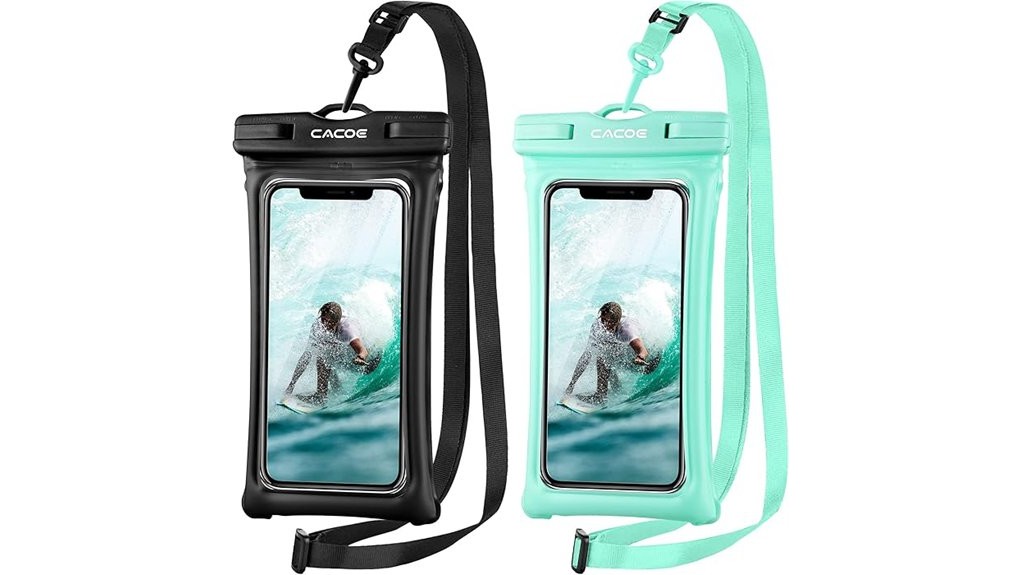
You’ll get a reliable, buoyant IPX8 pouch that’s great for beach days, pools, and casual boating, though you’ll need to remove very thick cases for a proper seal. The snap-and-lock rim and TPU build give consistent waterproofing and repeated use durability, while four-sided airbags keep most phones afloat and easy to recover. Touch input mostly works and the lanyard adds hands-free security. If you want specifics on fit, performance limits, and alternatives, keep going.
Some Key Takeaways
- Confirms IPX8 waterproofing in shallow submersion tests with no leaks, suitable for beach and pool use.
- Snap-and-lock clip and enclosed rim provide consistent, easy seals but retest before critical immersion.
- Four-sided airbags make the pouch buoyant and simplify phone recovery if dropped in water.
- Fits most phones up to 7.0 inches; bulky protective cases may prevent proper closure.
- TPU construction is durable for routine outdoor use, though sand and abrasion will gradually wear edges.
Quick Verdict: Is the CACOE IPX8 Floating Phone Case Worth Buying?
If you want reliable waterproof protection for beach days, boating, or poolside photos, the CACOE IPX8 floating case delivers practical value. You’ll appreciate the universal fit, buoyant four-sided airbags, and simple snap-and-lock seal that reduce loss risk and simplify use. In a price comparison with similar IPX8 pouches, the two-pack often undercuts single-case rivals, so you get spare coverage for less. You should weigh trade-offs: TPU pouch limits thick-case phones and may affect touch responsiveness at depth. Consider environmental impact of TPU and disposable plastics when replacing worn pouches; opt for careful reuse and proper recycling. Many beachgoers choose specialized waterproof bags designed for sand and salt exposure to complement phone protection.
How the CMWB Performs: Waterproofing, Seal, and Flotation Tested
When you test the CMWB for waterproofing, the IPX8 rating and snap-and-lock clip prove their worth in straightforward trials: the pouch held a paper-towel-wrapped phone submerged at shallow depths with no leaks, and its fully-enclosed rim maintained a consistent seal through multiple openings. You’ll appreciate clear results: short-term waterproof longevity seems solid under routine use, and seal maintenance is straightforward with the snap action. Buoyancy testing shows the four-sided airbags keep most phones afloat reliably. Be mindful of pressure effects at depth—higher pressure and temperature can stress the seal, so retest before critical use. This makes it a practical option for beach-ready protection when spending time at the shore.
Fit and Usability: Phone Compatibility, Touchscreen Access, and Lanyard Use
Although the CMWB fits most phones up to 7.0 inches, you'll need to remove bulky protective cases for some larger models to get a proper seal. You'll appreciate the roomy pouch if your device sits flush; case thickness can prevent closure, so test fit before water exposure. Touchscreen responsiveness is generally good for basic taps and swipes, though pressure and temperature at depth may reduce sensitivity; use volume buttons for shots when needed. Camera access through the clear window is adequate for daylight photos but can vignette on wider lenses. The adjustable lanyard keeps the pouch secure and hands-free during activity. These cases pair well with waterproof speakers at the beach for a fully protected outdoor setup.
Durability and Materials: TPU Build, Finish, and Day-to-Day Wear
You’ve already seen how fit and touchscreen behavior matter in real use; now look at what the materials tell you about long-term performance. The TPU build feels flexible without flopping, and you’ll notice TPU longevity in resisted stretching and consistent seals after repeated use. The smooth, matte finish combines grip with Matte resilience—resists scratches and shows fewer fingerprints than glossy pouches. Seams and the snap-and-lock clip hold up under daily handling, though abrasive wear from sand or keys will slowly dull edges. Overall, you get practical durability for routine outdoor use, with expected wear but no premature failure. These features make the case a practical choice for those who want to keep gear dry at the beach and during outdoor activities.
Who Should Buy This 2-Pack (Black + Green) and Alternatives to Consider
If you spend time near water, travel with family, or want a simple, low-cost backup for your phone, this 2-pack (black + green) is a practical buy—you get two IPX8-rated pouches that float, so you can protect one phone and keep a spare for a partner or kid. You should buy it if you’re beach travelers who need buoyant, budget protection, or if you plan family outings and want an easy lanyard solution. Alternatives: rugged waterproof cases for heavy-duty use, clear hard-shell options for better touchscreen reliability, or brand-specific waterproof housings if you need full case compatibility. The IPX8 rating means the pouches are designed for continuous immersion in water, making them suitable for most beach and pool activities when used properly and with proper sealing.
Some Questions Answered
Can I Use Wireless Charging Through the Pouch?
Yes — you can sometimes charge wirelessly through the pouch, but results vary. You’ll want to test wireless compatibility with your charger and phone before relying on it. The TPU plus sealed pouch increases charging distance and can reduce efficiency; thin cases and precise alignment help. If charging is inconsistent, remove the phone from the pouch (or case) for reliable charging. Always test with a paper-towel waterproof check first.
Is the Lanyard Length Adjustable or Replaceable?
Yes — the included lanyard features an adjustable strap so you can set a comfortable length. You can also swap it if you prefer a different style: the replaceable cord attaches to the pouch’s loop, letting you use thicker or decorative cords. You’ll want to check attachment integrity before water use and test the seal after swapping cords. This keeps functionality and floatation reliable while matching your carry preference.
How Do I Clean Saltwater Residue After Beach Use?
Rinse thoroughly with fresh water immediately after beach use to remove salt and sand. Open the snap-and-lock seal, remove your phone, then soak the pouch in a sink or bucket of warm water mixed with a teaspoon of baking soda to neutralize salt. Rinse thoroughly again, pat dry with a lint-free cloth, and air-dry completely before storing. Inspect seals for residue or damage; repeat if needed to guarantee proper waterproofing.
Will the Case Protect Against Impacts or Drops?
It offers limited drop protection and modest impact resistance. You’ll get buoyancy and a TPU pouch that guards against scratches, water, sand, and minor knocks, but it’s not a rugged shockproof case. Don’t rely on it for heavy drops or corner impacts—thicker protective cases absorb shocks better. If you need strong impact resistance, keep your phone in a dedicated drop-tested case and use this pouch for water and floatation protection only.
Are Replacement Seal Clips Available Separately?
No — replacement clips aren’t sold separately through the standard listing. You can contact CACOE support for replacement clips or warranty coverage if a clip’s defective from the start. Before returning, test the seal with a paper towel. If they authorize a replacement or repair under the 2-year warranty, they’ll guide you. Keep order info and photos to speed the process, and don’t use a compromised clip in water.