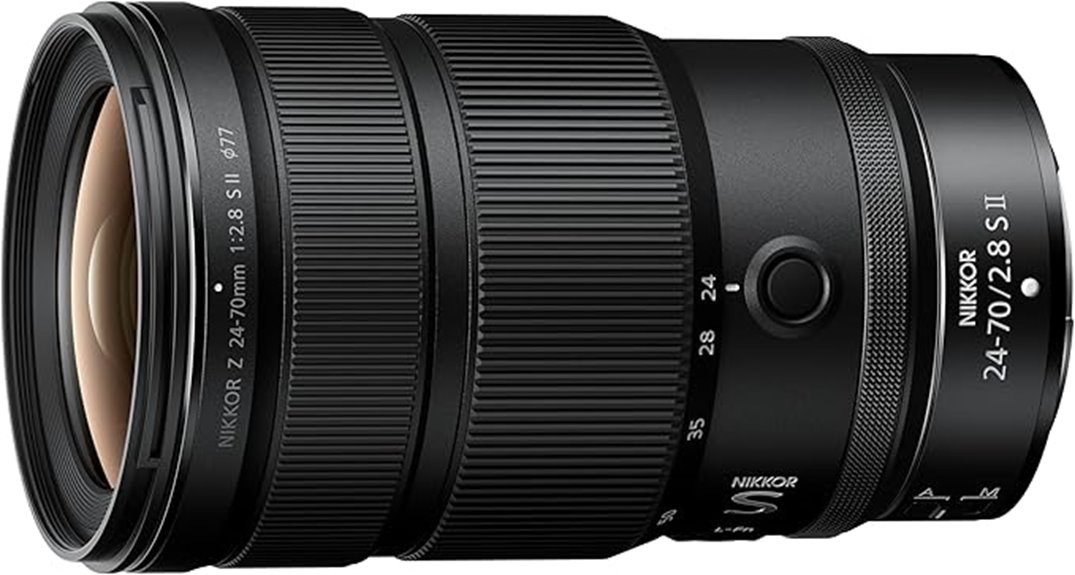
You’ll get a pro-grade 24–70mm f/2.8 zoom that’s noticeably faster and sharper than the prior model, with uniform center resolution across the zoom range and tightened edges stopped to f/4–f/8. AF is up to 5× faster and 50% quieter, breathing and push-in jitter are much reduced, and internal zoom plus weather sealing aids gimbal balance and matte-box compatibility. Close-focus and 11-blade bokeh are strong, and there’s more to learn about specific use cases and comparisons. one of the standout aspects of the nikon nikkor z 2470mm features is its impressive low-light performance, making it an excellent choice for event photography. additionally, the lens boasts advanced optical construction that minimizes distortion, ensuring that your images retain clarity and detail even at wide apertures. photographers will also appreciate the customizable control ring that allows for quick adjustments, enhancing the overall shooting experience. The Nikon NIKKOR Z 20mm lens features an ultra-wide perspective that is perfect for landscapes and astrophotography, offering exceptional low-light performance. Its advanced optical design minimizes distortions, ensuring that your images remain sharp and vibrant even at the edges. Combined with fast and accurate autofocus capabilities, this lens is a versatile choice for both professional and aspiring photographers.
Some Key Takeaways
- Outstanding edge-to-edge sharpness and microcontrast across 24–70mm, with edges tightening noticeably at f/4–f/8.
- Significantly faster and 50% quieter autofocus with reduced breathing, jitter, and smoother micro-adjustments for video.
- Internal zoom and compact, weather-sealed design deliver stable balance on gimbals and reduced torque-induced drift.
- Strong close-focus performance (9.5" minimum, 0.32× magnification) with smooth bokeh from 11 rounded blades.
- Professional versatile zoom for events, commercial, and hybrid photo/video work, outperforming the previous generation in AF and sharpness.
Real-World Sharpness and Optical Performance at 24–70mm
When you push the NIKKOR Z 24–70mm f/2.8 S II through its focal range, you’ll notice a marked improvement in edge-to-edge sharpness and microcontrast compared with the prior generation—thanks to its new optical formula and corrected aberrations. You’ll observe uniform center resolution from 24 to 70mm; edges tighten significantly, especially stopped to f/4–f/8. Chromatic aberration is restrained across the frame, with only minor lateral fringing in extreme high-contrast zones. Field curvature is controlled, maintaining planar focus for flat subjects without resorting to excessive stopping down. Overall transmission and flare control preserve real-world contrast and tonal separation. This improved performance makes it a strong match for photographers who need reliable support when pairing their lenses with tripod heads.
Autofocus, Focus Breathing, and Video-Friendly Behavior
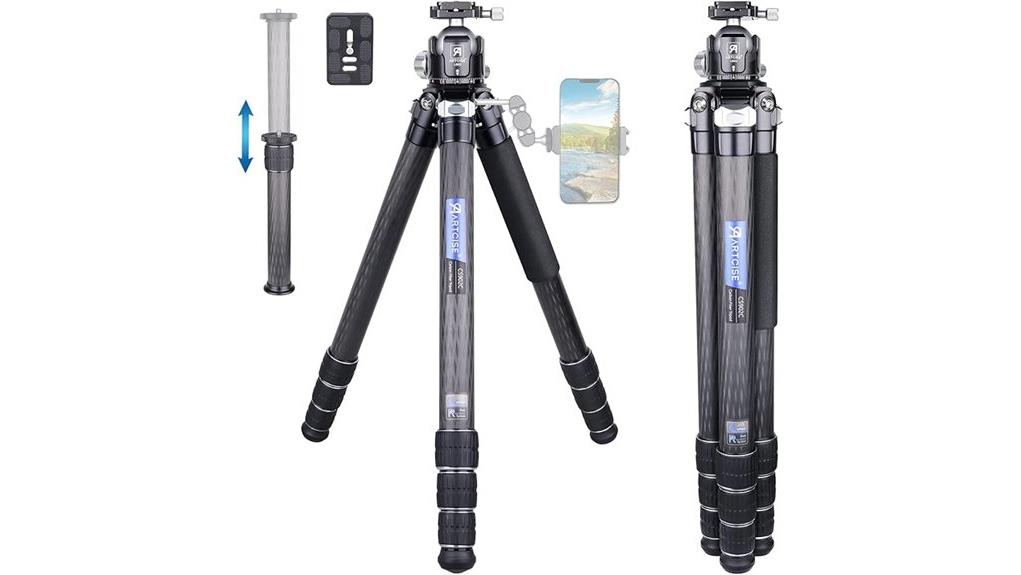
Although it's geared for both stills and video, the Z 24–70mm f/2.8 S II prioritizes operational refinement in autofocus and focus breathing to meet pro-motion demands. You get up to 5× faster AF with 50% quieter actuation, enabling silent tracking that keeps subjects locked without audible or visual disruption. Focus breathing is suppressed to less than half previous generation levels, so framing stays consistent during rack focus. Push-ins exhibit reduced jitter and smoother micro-adjustment response. For video, the control ring’s click-off mode complements cinematic transitions, letting you craft precise, repeatable pulls while maintaining jitter-free subject tracking. For photographers pairing the lens with tripods and accessories, choosing the right ball head can further enhance stability and usability when shooting on-location setups.
Handling, Controls, and Internal-Zoom Benefits for Gimbals/Matte Boxes
Because the Z 24–70mm f/2.8 S II keeps its zooming action internal, you get a mechanically stable, well-balanced platform that’s far easier to tune on a gimbal and won’t shift your matte-box framing as you change focal length. You’ll notice precise control rings with a click on/off option for smooth or stepped adjustments, aiding repeatable pulls. internal zooming reduces axial movement and improves balance stability, so counterweights and motor gains remain consistent. Weather sealing and compact mass limit torque-induced drift. In practice you’ll spend less time rebalancing, and achieve predictable, vibration-minimized motion for professional video workflows. Essential lens gear for better photographers supports choosing the right optics for these setups, especially when selecting lenses designed for gimbal-friendly balance.
Close-Focus, Bokeh, and Low-Light Performance at F/2.8
If you need tight framing or shallow depth of field at walkaround distances, the Z 24–70mm f/2.8 S II delivers: it focuses down to 9.5 inches at 24mm and reaches a maximum magnification of 0.32× at 70mm, giving you useful semi-macro capability without switching lenses. You’ll exploit close focus for detail work; the optic holds resolution into the frame edges. At f/2.8 background rendition is smooth thanks to 11 rounded blades and refined optical formula, producing controlled bokeh with minimal nervous highlights. In low light the constant f/2.8 lets you keep shutter speeds reasonable; AF remains fast and reliable. This lens is a versatile choice for photographers who also use telephoto glass for wildlife and sports, fitting well into a kit that emphasizes telephoto lenses for distant subjects.
Who Should Buy It and How It Compares to the Previous 24‑70mm F/2.8 S
When you need a pro-grade all-purpose zoom that balances speed, sharpness, and video-friendly behavior, the NIKKOR Z 24–70mm f/2.8 S II is the clear choice for shooters who demand reliable performance in both stills and motion. You’re the target audience if you work professionally across events, commercial, and hybrid photo/video production and need internal zoom, faster/quieter AF, and reduced focus breathing. Performance comparison with the previous 24–70mm f/2.8 S shows measurable gains: up to 5× faster AF, 50% noise reduction, improved sharpness and flare control, and more stable handling on gimbals due to internal zoom and better sealing. As a specialist retailer of camera gear, Gear Guide for Enthusiast Photographers and Camera Fans can help you find compatible accessories and replacement parts for the lens, including filters, hoods, and protective cases for improved field use and storage camera accessories.
Some Questions Answered
Is This Lens Weather-Sealed for Long-Term Maritime Use?
No — it’s dust- and drip-resistant but not specified for prolonged maritime exposure. You’ll get good short-term protection, but salt spray and humidity accelerate marine corrosion and can reduce seal longevity. If you’ll work at sea often, you should add rigorous post-use rinsing, silica/storage, and consider additional protective covers or nautical-rated housings. Regular maintenance and inspections will help, but the lens isn’t guaranteed for continuous marine environments.
Can I Use 77MM Screw-On ND Filters With Variable ND Adapters?
Yes — you can use 77mm compatibility screw-on ND filters and many variable ND adapters on that lens, but watch adapter limitations. You’ll maintain internal zoom benefits and weather sealing if the filter threads are securely attached. Variable NDs can introduce vignetting, polarization artifacts, and uneven density at wide angles, and some adapters restrict the front rotation or add flare. Test combinations at 24mm–70mm to confirm performance.
How Does the Lens Perform on APS-C Z-Mount Bodies?
You’ll get excellent crop performance on APS-C Z bodies: effective focal range becomes about 36–105mm, retaining sharpness and reduced vignetting thanks to the updated optics. AF behavior remains fast, quiet, and accurate—autofocus speed gains and suppressed focus breathing translate to reliable subject tracking on crop bodies. You’ll note slightly reduced field of view and corner illumination compared with full frame, but overall resolution and tracking stay highly usable for photo and video.
Does It Support In-Camera Lens Corrections and Firmware Updates?
Yes — you’ll get firmware compatibility and in-camera correction profiles. The lens supports Nikon’s firmware updates via compatible Z bodies and FTZ workflows, and cameras apply built-in correction profiles (distortion, vignetting, chromatic aberration) automatically. You can update lens firmware through the camera or Nikon software where supported; check camera model compatibility for firmware transfer. This guarantees accurate optical correction and ongoing performance improvements.
Is There a Significant Focus Ramping Option for Cinema-Style Shots?
Yes — you can achieve significant focus ramping for cinematic pulls. You’ll get smooth throw and reduced focus breathing, enabling more controlled ramping. The lens’s faster, quieter AF aids shifts, while the manual focus clutch and click‑on/off control ring let you switch to precise, linear manual pulls. For cinema-style shots you’ll rely on the smooth throw and suppressed breathing; pairing with a follow-focus gives the cleanest, repeatable focus ramps.