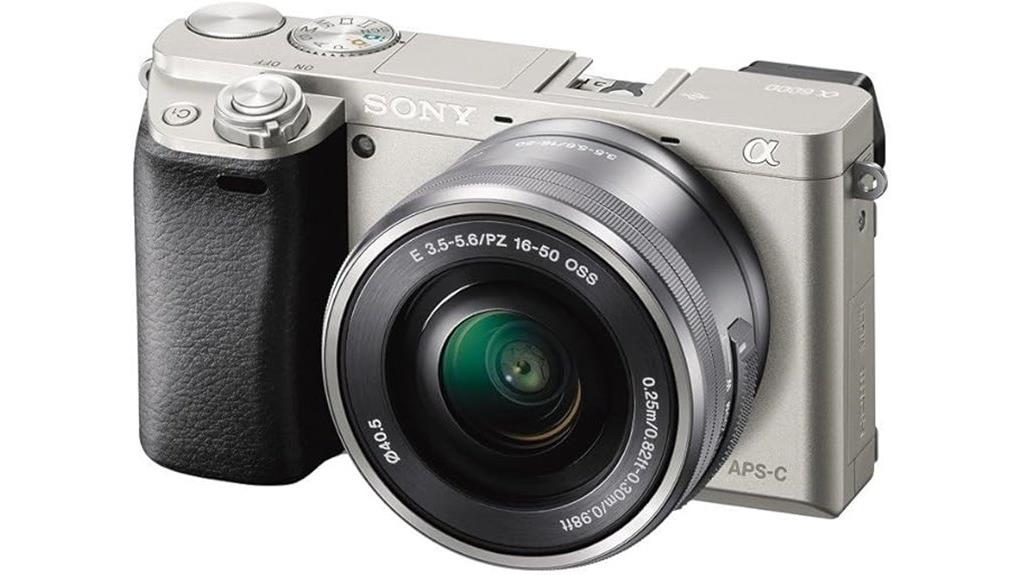
You’ll find the Sony Alpha a6000 a compact, fast, and affordable mirrorless that’s ideal if you’re starting out or travel light. Its 24.3MP APS-C sensor delivers sharp files and good dynamic range, while the 179-point hybrid AF and 11 fps burst nail action shots. Low-light results are usable to fairly high ISOs, though noise rises at the top. Battery life and lack of touchscreen or 4K are trade-offs, and the rest of this review covers those details. The Sony Alpha 6100 camera features a 24.2MP sensor and improved autofocus with real-time tracking, making it a versatile choice for both beginners and enthusiasts. Additionally, its intuitive interface and enhanced connectivity options allow for seamless sharing and remote operation. This model also includes impressive video capabilities, such as 4K recording, appealing to content creators looking for high-quality footage.
Some Key Takeaways
- 24.3MP APS-C sensor delivers detailed images and good dynamic range for beginners and enthusiasts.
- 179-point phase-detection AF plus 11 FPS continuous shooting offers fast, reliable autofocus and action capture.
- Compact, lightweight body with tilting 3-inch LCD and long battery life makes it ideal for travel.
- Usable high-ISO performance with increasing noise at top ISOs; NR can soften fine detail.
- Lacks touchscreen and 4K video, but offers excellent value and strong JPEG color for budget-focused users.
Quick Verdict: Who the Sony Alpha a6000 Is Best For
Who should buy the a6000? You’ll find the Sony Alpha a6000 ideal if you’re a beginner photographer wanting fast autofocus and easy learning curves. It’s compact, responsive, and won’t overwhelm you with controls, so beginners photographers can grow into its features. If you travel light, the a6000’s size, tilting 3-inch LCD, and long battery life make it a practical companion for travel enthusiasts who need reliable burst shooting and versatile zoom options. Enthusiasts seeking value get strong performance without a steep price. Pros wanting flagship low-light or highest-resolution images might look elsewhere. It’s also a great match for photographers who prefer mirrorless camera systems that prioritize portability and interchangeable lenses.
Image Quality and Low-Light Performance Explained
If you liked the a6000 for its speed and portability, you'll appreciate how those strengths feed into image quality—especially in everyday and low-light shooting. Its 24.3MP APS-C sensor delivers detailed files with good dynamic range for the class, letting you retain shadow and highlight detail when you push exposure. You'll find usable results up to mid-high ISOs, but watch for High ISO noise as you approach the top end; noise reduction helps but softens fine detail. For casual shooters and enthusiasts, the a6000 balances detail, exposure latitude, and manageable noise, making it reliable after dusk. The camera's feature set and accessory ecosystem make it a solid choice for enthusiast photographers who want a compact system with interchangeable lenses.
Autofocus, Burst Shooting, and Real-World Speed
Often the a6000's autofocus feels instantly responsive, and that's down to its hybrid AF system combining 179 phase-detection points with 25 contrast-detection points—so you get fast subject acquisition and reliable tracking in most everyday situations. You’ll notice phase detection evolution here: PDAF covers much of the frame, reducing hunting and improving continuous tracking of moving subjects. Shooting at up to 11 FPS delivers excellent throughput, but real-world speed depends on your buffer management strategy and card write speed. Buffer fills after extended bursts, especially with RAW+JPEG; plan bursts accordingly and use fast UHS-I cards to sustain performance. For photographers using external tools, pairing a light meter can help with consistent exposure across bursts and setups, especially in mixed lighting exposure measurement.
Lenses, Zoom Options, and Accessory Compatibility
Having a fast, accurate autofocus and high burst rate is only part of the story — the lenses you pair with the a6000 shape what you can actually capture. You’ll benefit from Sony E-mount Lens compatibility across native primes and zooms, plus many third-party options that keep weight and cost down. Clear Image Zoom and Smart Zoom extend reach for occasional needs, but optical glass gives better results. The camera’s Multi Interface Shoe and available shoe adapter plug you into a broad Accessory ecosystem — flashes, microphones, and grips — so you can tailor build and function to your shooting style. You can further refine portrait results by choosing the right prime or zoom for focal length and depth of field.
Final Pros, Cons, and Should-You-Buy Recommendations
While it's compact and quick enough to satisfy enthusiast shooters, the a6000 balances strong image quality and class-leading autofocus with a few trade-offs you'll want to weigh. Pros: excellent 24.3MP detail, 11 FPS burst and 179-point AF deliver reliable action shots; attractive color science for JPEGs; solid resale value keeps long-term cost down. Cons: modest battery life versus modern mirrorless, no touchscreen or 4K video, and shaping handling ergonomics that some users find cramped with larger lenses. Should you buy? If you want speed, image quality, and value in a small package, yes—especially as a budget-focused enthusiast or backup body. It also pairs well with a range of essential gear for DSLR enthusiasts and photographers.
Some Questions Answered
Does the a6000 Have Built-In Image Stabilization?
No — the a6000 doesn't have built-in image stabilization. You’ll rely on lens stabilization when using OSS (Optical SteadyShot) lenses or on faster shutter speeds and high ISO to avoid blur. That means in-body stabilization isn’t available, so evaluate lens choices for stabilization if you need steady handheld shots. For video, consider stabilized lenses or external gimbals; overall, plan gear accordingly to get the sharp results you want.
Can It Record 4K Video or Only 1080P?
No — it only records up to 1080p; the a6000 lacks 4K capability. You’ll get strong 1080p performance, but Firmware limitations and hardware design prevent native 4K capture. If you need 4K, you’ll have to look at newer Sony models or external workarounds like external recorders with upscaling, though those won’t equal true 4K sensor readout. Weigh your priorities: portability and speed versus native 4K video.
How Long Does the Battery Last per Charge (Shots or Hours)?
You’ll get about 360 shots per CIPA charge (around 1–1.5 hours of continuous shooting) with the NP-FW50 battery. Battery lifespan depends on age and usage patterns; expect capacity to decline after a few hundred cycles. For best results, monitor charging habits: avoid full discharges, store partly charged if unused, and use the official charger. That’ll keep runtime steadier and extend overall battery lifespan.
Is the Touchscreen Capable of Touch-To-Focus and Menu Control?
No, the touchscreen doesn't support touch-to-focus or full menu control. You'll use the 3-inch tilting LCD for review and framing, but touch responsiveness is limited to basic playback gestures only. Focus accuracy and AF performance rely on the 179-point hybrid system and physical controls, so you'll get fast, precise focusing without touchscreen input. If you need touch operation, you'll want a different Sony model with full touch functionality.
Can the a6000 Connect to Wi‑Fi and Transfer Images to a Phone?
Yes — you can connect the a6000 via Wi‑Fi pairing and transfer images to a phone. You’ll use Sony’s PlayMemories Mobile (or Imaging Edge Mobile) app to pair the camera and phone, then browse and download JPEGs or select RAW+JPEGs for transfer. It’s straightforward, reliable for quick Image transfer and remote control, but expect slower speeds for large RAW files and occasional reconnects in busy Wi‑Fi environments.