You’ll get class-leading APS-C autofocus with Real-time Eye AF and 4K from a full-pixel readout—no binning—so footage is detailed with restrained rolling shutter. It’s fast for stills: 11 fps mechanical, 8 fps with continuous AF, and excellent subject tracking versus rivals. Kit lenses are compact but trade some edge sharpness; there’s no IBIS and 4K clips are heat-limited. Battery and single UHS-I slot constrain workflows, and below are practical tips and options to contemplate. the sony alpha 7 iv camera features advanced connectivity options, including wireless file transfer and remote shooting capabilities, making it suitable for both photographers and videographers on the go. Additionally, its customizable controls and user-friendly interface enhance workflow efficiency, allowing for quicker adjustments in dynamic shooting environments. Given its performance and versatility, this camera is a strong contender for both enthusiasts and professionals alike. the sony a7r ii camera specifications reveal a robust feature set that caters to both enthusiasts and professionals alike. With its high-resolution sensor and impressive dynamic range, this model enables stunning image quality in various lighting conditions. Additionally, the customizable controls and menu system enhance the shooting experience, ensuring users can quickly adapt to different photographic scenarios.
Some Key Takeaways
- Excellent 24.2MP APS-C sensor with full‑pixel readout enables sharp 4K video without pixel binning.
- Fast, reliable autofocus: 0.02s acquisition with Real‑time Eye AF and Real‑time Tracking across 425 points.
- High continuous shooting: 11 fps (AF/AE locked) and 8 fps with continuous AF for action sequences.
- No IBIS and modest heat limits restrict extended handheld low‑light video and long 4K clips.
- Compact ergonomics, useful kit lenses with OSS, but add spare batteries and a UHS‑I U3 card for serious shooting.
Sony A6400 At a Glance : Key Specs and What’s in the Bundle
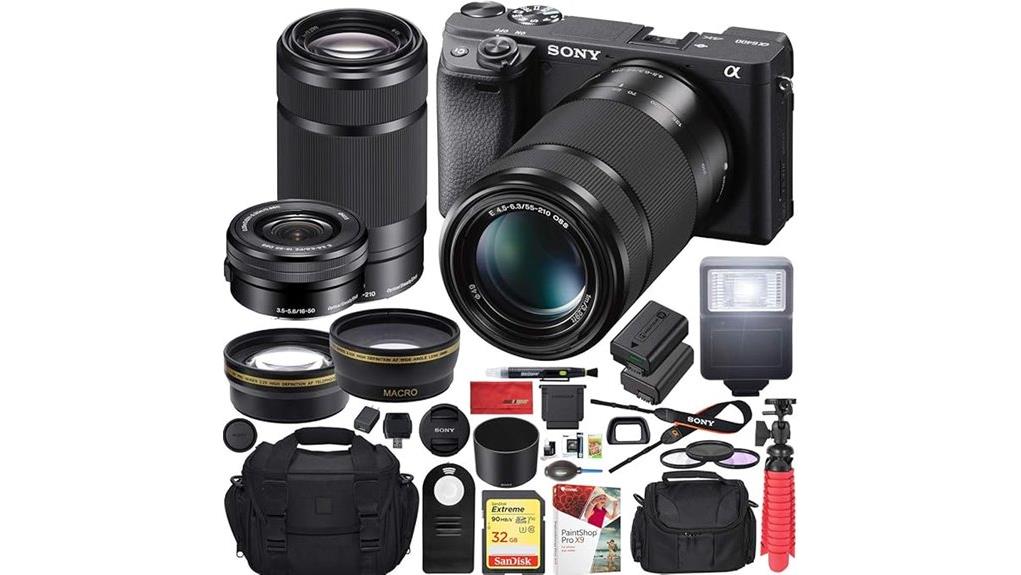
Boasting a 24.2 MP APS-C Exmor CMOS sensor and BIONZ X processor, the Sony a6400 delivers 4K video with full-pixel readout and fast stills performance—up to 11 fps with mechanical shutter and 0.02 s AF acquisition—making it a strong choice if you need speed and image quality in a compact mirrorless body. You get a complete kit: body with NP-FW50 battery, AC adaptor, micro USB cable, shoulder strap, two OSS lenses (16–50mm, 55–210mm) plus accessories like extra battery, SanDisk 32GB card, filters, tripod, flash and gadget bags. Check battery charger compatibility and warranty details for peace of mind. The kit is ideal for mirrorless camera enthusiasts looking to start shooting right away. In addition to the impressive performance, the sony alpha 6100 camera features a user-friendly interface that makes it accessible for beginners and experienced photographers alike. Its lightweight design ensures portability, allowing you to capture stunning images on the go. With customizable settings and advanced autofocus capabilities, this camera is perfect for those looking to elevate their photography skills. With the Sony a6400 camera specifications and features, you can also take advantage of its high-speed continuous shooting mode, which is perfect for capturing fast-moving subjects. Additionally, the impressive autofocus system includes 425 phase-detection points and real-time Eye autofocus, ensuring your subjects are always sharp and in focus. Ideal for both photography and videography, this camera is a versatile tool for any creative professional or hobbyist.
Real-World Image and 4K Video Performance You Can Expect
When you push the a6400 into real-world shooting, its 24.2 MP APS-C Exmor sensor and BIONZ X processor deliver detailed stills and clean 4K footage with full‑pixel readout and no pixel binning, so fine textures and color shifts hold up noticeably better than many entry-level 4K mirrorless models. You’ll appreciate natural color science out of camera, with modest grading latitude in RAW/10-bit workflows. Noise handling remains strong up to mid-high ISOs, with grain control that preserves detail. Rolling shutter is restrained for a CMOS sensor, though fast pans expose some skew. Heat management limits extended 4K clips; monitor runtime. You can improve framing, exposure checks, and focus accuracy by using an external camera monitor for critical shooting situations with external camera monitors.
Autofocus, Continuous Shooting, and Low‑Light Usability Tested
Although compact, the a6400’s AF system is remarkably aggressive: with 425 phase- and contrast-detection points covering roughly 84% of the frame and a quoted 0.02 s acquisition, you'll lock onto subjects faster than most APS-C rivals and maintain tracking with Sony’s Real-time Eye AF and Real-time Tracking. In practice, Eye tracking robustness excels for humans and animals, retaining focus through partial occlusion and erratic motion. Continuous shooting hits 11 fps with AF/AE locked; 8 fps keeps continuous AF. Low light AF remains usable to about -1 EV, with increased hunting beyond ISO 3200, still outperforming similarly priced competitors. Gear Guide caters to enthusiast photographers and camera fans, offering gear recommendations and reviews for those who enjoy photography and want to expand their kit with confidence, including detailed coverage of digital cameras.
Lenses, Stabilization, and How the Included Kit Performs
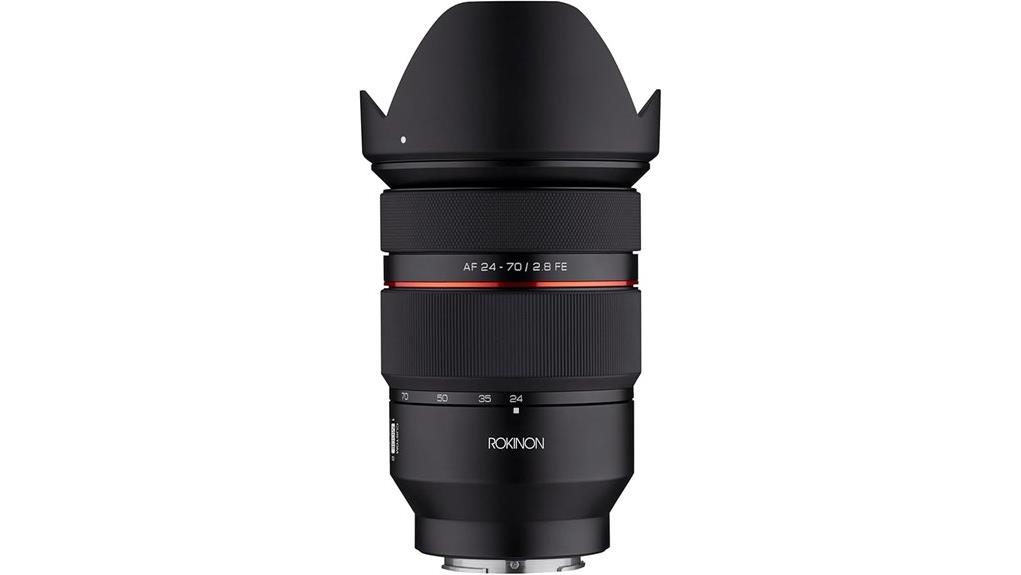
With the a6400's fast, reliable AF handling moving subjects, lens choice and stabilization determine how consistently you'll capture sharp, usable frames across focal lengths and light levels. The kit 16-50mm PZ is compact and convenient but shows softer corners and reduced lens sharpness at wide and tele ends compared with prime alternatives. The 55-210mm delivers usable reach; contrast and microdetail drop at the long end, so stop down when critical. Both lenses use OSS—stabilization effectiveness is solid for handheld stills and modest video, but body-based IBIS would improve low-light tele work and faster shutter rescue. Consider pairing these lenses with a fast, reliable portable SSD for secure on-location backups and quick offloads.
Handling, Controls, EVF/LCD and On‑Camera Ergonomics for Creators
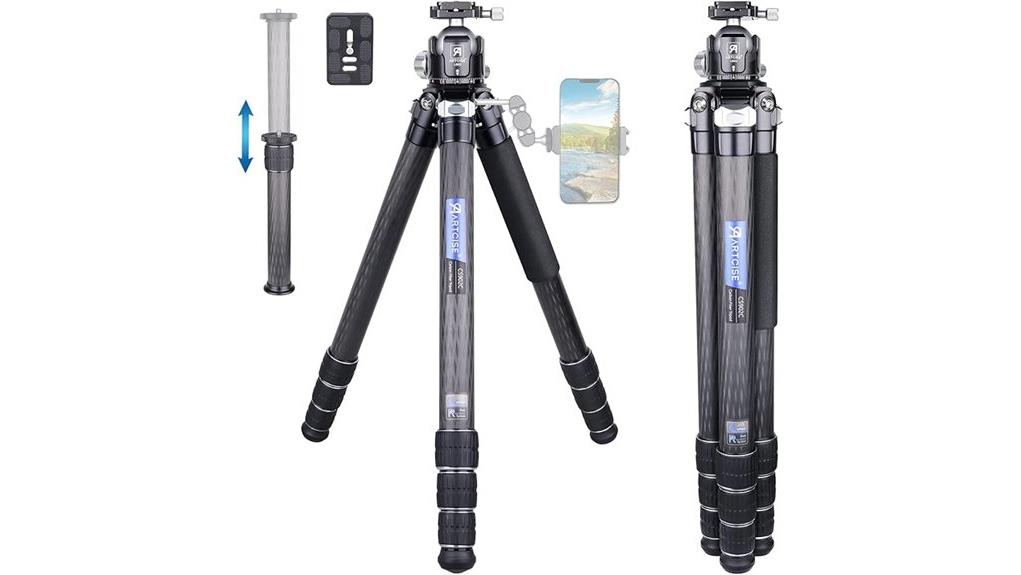
Because Sony designed the a6400 for fast, run‑and‑gun use, its controls prioritize quick access and minimal menu diving, and you'll notice that button placement and the deep right‑hand grip let you secure the camera and change key settings without breaking your eye from the EVF. You’ll appreciate the pronounced thumb grip for one‑handed stability and rapid thumb-operated dials. Button placement favors ergonomic reach compared with many compacts, reducing menu accessibility reliance. The 180° articulating screen aids vlogging and high/low framing, though its side hinge is bulkier than top-tilt designs. Overall, on‑camera ergonomics feel deliberate and efficient. For photographers who often use tripods, choosing the right tripod gear can further enhance stability and shooting flexibility.
Battery Life, Connectivity, Media Performance, and Workflow Tips
Ergonomics and quick controls make the a6400 pleasant to shoot, but battery life and media behavior shape how long you can keep shooting and how smoothly footage moves from card to edit. You’ll rely on the NP-FW50; expect moderate runtimes—video and AF tax capacity—so plan Battery optimization: carry spares, use airplane mode, disable unnecessary displays, and prefer external power for long studio shoots. Connectivity (Wi‑Fi, NFC, Micro HDMI) supports rapid offload and tethering; single SDXC UHS‑I slot pushes you to U3 cards and high sustained write speeds. Combine card rotation, checksum-verified offload, and Workflow automation to minimize downtime. Consider stocking compatible spare batteries to avoid shoot interruptions and ensure continuous shooting with spare camera batteries.
Who Should Buy the Sony A6400 and Which Kit/Accessories to Choose
Think of the a6400 as a compact, high-performance APS-C tool that suits serious enthusiasts, content creators, and run‑and‑gun pros who need fast autofocus, 4K video with full‑pixel readout, and a flexible kit without the bulk of a full‑frame body. You should buy it if you’re a beginner vlogger needing flip-screen, Real-time Eye AF, and decent low-light 24.2MP stills, or a travel photographer wanting light weight, versatile 16–50/55–210 kits and OSS. Opt for the dual-lens bundle, extra NP‑FW50 battery, UHS‑I U3 SDXC card, strap, compact tripod, and a protective gadget bag. Consider pairing it with a camera bag designed for camera bags for those who enjoy photography to keep your kit organized and protected.
Some Questions Answered
Does the a6400 Have In-Body Image Stabilization (IBIS)?
No — the a6400 doesn’t have in-body image stabilization (IBIS). You’ll rely on lens stabilization (OSS) in compatible E-mount lenses for shake reduction. Compared to bodies with IBIS, you’ll get less stabilization flexibility, especially with primes lacking OSS. You can still use sensor cleaning to maintain image quality, but stabilization depends on optics or external supports. For handheld low-light work, consider OSS lenses, gimbals, or cameras with IBIS. When exploring additional options, the sony alpha a6000 camera features a compact design and fast autofocus system, making it an ideal choice for both amateur and professional photographers. Additionally, its impressive image quality combined with a wide selection of E-mount lenses allows for versatility in various shooting situations. Whether you're capturing portraits or landscapes, the a6000 offers a blend of performance and portability that can elevate your photography game.
Can It Shoot 10-Bit Internal Video or Only 8-Bit?
No — it records internally as 8-bit only; it doesn’t offer 10 bit recording internally. You can achieve 10 bit recording with an external recorder over HDMI, which gives better color grading latitude. Compared to cameras with native 10 bit, you’ll trade workflow simplicity for higher bit depth. Also manage heat carefully during long 4K takes, since external recording plus prolonged captures increases heat management demands and battery drain.
Is There a Headphone Jack for Audio Monitoring?
No — there’s no headphone jack for audio monitoring. You can use the external mic input for better audio capture, but you’ll need audio adapters and external recorders or wireless systems to monitor sound live. Compared with cameras that include a headphone output, you’ll sacrifice on-camera monitoring flexibility. If real-time monitoring matters, plan for adapters, a field recorder with input/output, or a different body that offers both external mic and headphone connections.
Does the Camera Support USB Charging and Charging In-Camera?
Yes — you can charge the NP‑FW50 in‑camera via USB with the AC adaptor or compatible USB power source, so you’ll get convenient field charging. You can’t charge via a battery grip unless the grip specifically supports pass‑through USB charging. For faster top‑ups consider third party chargers and dedicated external chargers; high‑quality ones charge quicker and preserve battery life better than in‑camera USB charging or cheap third‑party units.
Are There Firmware Updates Adding New Autofocus Features?
Yes — Sony released firmware updates that added AF improvements. You’ll find a firmware roadmap showing incremental enhancements like Real-time Eye AF refinements and tracking stability, so you can compare autofocus comparisons across versions. You’ll notice faster acquisition, better subject lock in low contrast, and improved animal eye AF in later builds. Check Sony’s support site for version notes, install instructions, and compatibility before updating your camera.