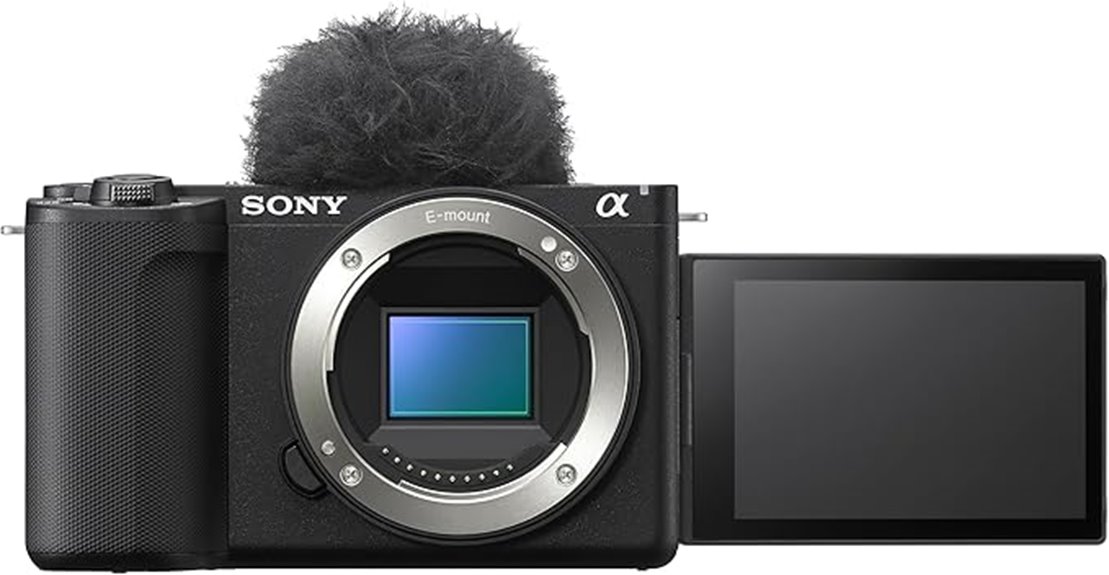
If you shoot both stills and video, the Sony Alpha ZV‑E10 II gives you a compact, lightweight mirrorless body with strong Real‑time Eye AF, AI tracking, and 26MP APS‑C image quality that beats phones in low light and dynamic range. You’ll get 4K/60p, slow‑motion HD, a flip vari‑angle touchscreen, and handy vlog presets for fast setup, though battery life and a single SD slot limit long shoots — keep going to see detailed performance, lenses, and alternatives.
Some Key Takeaways
- Compact, lightweight APS‑C mirrorless aimed at vloggers and hybrid shooters prioritizing quick setup and handheld convenience.
- 26 MP Exmor R sensor delivers cleaner high‑ISO files, better shadow detail, and natural Sony skin tones.
- Reliable Real‑time Eye AF, AI subject recognition, and 11 fps burst with full AF/AE for run‑and‑gun shooting.
- 4K up to 60 fps, Full HD 120 fps, flip vari‑angle touchscreen, and cinematic presets streamline vlogging workflows.
- Single SD slot, moderate battery life, and broad E‑mount lens compatibility—carry spare batteries and choose stabilized lenses.
Sony Alpha ZV‑E10 II At a Glance: Who It’s For and Why It Matters
While designed for creators who shoot both stills and video, the ZV‑E10 II really shines if you prioritize compactness, fast autofocus, and flexible lens choices. You’ll appreciate its lightweight mirrorless body, E‑mount lens ecosystem, and real‑time Eye AF for reliable portrait storytelling. It’s tailored to vloggers and hybrid shooters who need quick setup, responsive tracking, and simple controls. Lifestyle compatibility is strong: flip screen, quick presets, and in‑camera cinematic modes ease handheld work. You’ll get 11 fps continuous shooting and 4K/60p video for dynamic content, all without carrying bulky gear or sacrificing creative lens options. Perfect for enthusiasts is its compatibility with a wide range of mirrorless camera accessories.
Sensor, Image Quality and Low‑Light Performance Explained
Because the ZV‑E10 II uses a 26 MP APS‑C back‑illuminated Exmor R sensor, you get noticeably better image quality and low‑light performance than on most phones and many compact cameras. You’ll benefit from roughly ten times the sensor area vs. phones, yielding cleaner high‑ISO files and more usable shadow detail. The 14‑bit pipeline and JPEG processing preserve tonal gradations, expanding perceived dynamic range for highlights and midtones. Sony’s color science here leans natural with punchy skin tones; you can tweak Creative Look or My Image Style for mood. Lens choice and optical stabilization further influence sharpness and noise in low light. For the best results, consider using color calibration tools to ensure accurate and consistent hues across shoots.
Autofocus, Tracking and Shooting Speed: Real‑World Performance
Good low‑light files are only part of the story—how the camera finds and keeps focus makes or breaks real‑world shooting. You’ll appreciate the ZV‑E10 II’s Real‑time Eye AF and AI subject recognition: it locks onto faces and eyes quickly, even in mixed lighting, and maintains focus with minimal hunting. Real‑time Tracking holds moving subjects smoothly across the frame, useful for run-and-gun shoots. Burst performance at up to 11 fps with full AF/AE is reliable for decisive moments, though buffer depth depends on card speed. Overall you get responsive, predictable AF that supports both stills and active creators. For on‑camera flash work and synced off‑camera setups, reliable flash trigger compatibility helps ensure consistent exposures.
Video Features for Creators: 4K, Slow‑Motion and Vlogging Tools
When you need pro-level video without a bulky rig, the ZV‑E10 II delivers: it shoots 4K up to 60 fps for detailed, high-resolution footage, Full HD up to 120 fps for slow‑motion, and S&Q mode that simplifies in‑camera slow‑motion creation (for example, 5× at HD 24p playback). You’ll build efficient 4K workflows with clean MP4 files and reliable autofocus during takes. The lightweight body aids gimbal compatibility and run‑and‑gun setups. Explore slow‑motion techniques with frame rates, shutter control and ISO to preserve quality. Vlog framing benefits from the flip screen, touch focus and cinematic vlog presets for quick, polished content. Consider adding an on-camera LED light to improve exposure and color when vlogging in mixed or low-light environments, especially for portrait lighting.
Design, Handling and Connectivity: Flip Screen, Ports and Battery Life
You’ll find the ZV‑E10 II’s compact body keeps the filming conveniences you rely on—like the flip-out 3-inch vari-angle capacitive touchscreen—while packing practical ports and a lightweight battery that suit long handheld shoots. You’ll appreciate flip usability: the screen flips fully for vlogging, offers clear touch controls and a stable hinge that resists drift. The port layout is straightforward—Micro HDMI, USB 3.0 and a single video out—so you can route microphones and chargers without clutter, though only one SD slot limits redundancy. The included NP‑FW50‑style battery is light; expect moderate runtimes but pack spares for extended sessions. If you plan to shoot against a backdrop, a green screen backdrop can make post-production much easier.
Lens Ecosystem and Recommended Lens Pairings for Vloggers and Travel
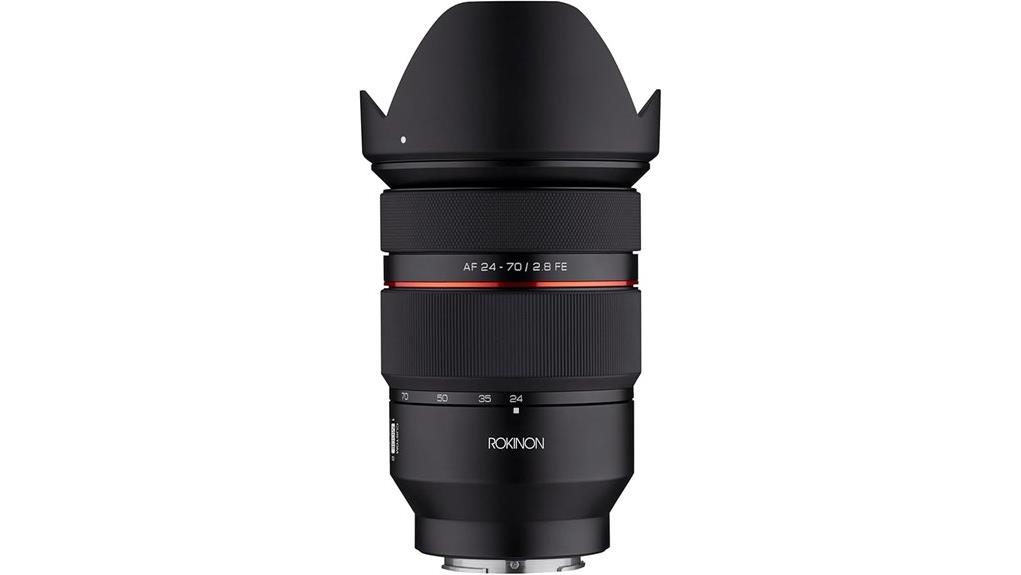
Looking for the right glass to pair with the ZV‑E10 II? You’ll tap the broad Sony E‑mount roadmap: compact wide‑angles and fast primes from Sony’s G and G Master lines plus affordable kit zooms. For vloggers, a 10–18mm or 16–50mm PZ gives flattering wide framing and stabilization; pair with a 35mm or 50mm f/1.8 for travel portraits and low‑light video. Carry a lightweight zoom (16–55mm) for versatility. Consider third party adapters if you already own legacy glass—AF and stabilization vary, so test combinations. Plan lenses around weight, aperture, and focal length for your workflow. Also consider keeping a compact, fast prime for low‑light shooting and shallow depth of field, like fast primes.
Final Verdict and Buying Guidance: Value, Alternatives and Who Should Buy
Although compact and creator‑focused, the ZV‑E10 II punches above its weight, giving you a potent mix of 26MP APS‑C image quality, robust real‑time AF, and 4K/60p video in a lightweight body that’s tailored to vloggers and travel shooters. You’ll get strong value if you want a capable hybrid that’s affordable, easy to carry, and benefits from Sony’s vast accessory ecosystem and E‑mount lens choices. Consider alternatives like the Fujifilm X‑S20 or Canon R100 if you prioritize stabilization or color science. Buy this if you need compact, fast AF, good resale value, and simple expandability. Gear Guide readers will appreciate the ZV‑E10 II’s fit for enthusiast photographers and camera fans looking for a versatile, accessory‑friendly camera.
Some Questions Answered
Does the Zv‑E10 II Support RAW Stills Capture?
No — the ZV‑E10 II doesn’t offer RAW support for stills; it records JPEG as its primary File formats. You’ll get 26 MP JPEGs with 14‑bit processing benefits but the camera outputs stills in JPEG only, limiting post‑processing latitude compared with RAW. If you need RAW capture, you’ll want a different Sony E‑mount model that lists RAW file support, or shoot video frames for higher flexibility though that’s not a true RAW still workflow.
Can the Camera Record External Audio via an External Recorder?
Yes — you can record external audio via an external recorder, but you’ll route audio carefully. The ZV‑E10 II outputs clean line level via its micro HDMI/USB audio passthrough options only with compatible recorders or an external mic linked to the camera’s mic jack. You’ll want a dedicated external recorder with line level input to capture highest quality, and you’ll monitor levels externally since in‑camera control is limited for line inputs.
Is There Built‑In Image Stabilization for Body‑Shaking Correction?
No — you don’t get in body stabilization; the camera relies on electronic steadyshot and lens-based optical stabilization instead. You’ll depend on OSS-equipped E/FE lenses or electronic steadyshot for shake reduction, especially in handheld 4K or slow‑motion shooting. For best results you should use stabilized lenses, gimbals, or in‑camera electronic steadyshot plus careful framing, since the body itself won’t correct sensor shift or offer IBIS.
What Is the Battery Life in Continuous Video Recording Hours?
You can expect roughly 1.5–2 hours of continuous video recording on a single battery charge, depending on settings and usage. That battery longevity varies with resolution, frame rate, and screen use, so higher-resolution 4K/60fps and active screen/Wi‑Fi cut recording runtime. To maximize recording runtime, lower frame rates, disable unnecessary wireless features, and carry spare batteries or a USB power bank for extended uninterrupted recording.
Does the Camera Have Weather Sealing or Dust Resistance?
No, it doesn’t have official weather sealing? or robust dust resistance?. You shouldn’t expect full protection from rain, heavy dust, or splashes. You can use cautionary measures—rain covers, protective housings, and careful lens choices—to mitigate exposure. For outdoor or challenging environments, plan for added protection or choose a weather‑sealed body and lenses. Treat this camera as a lightweight creator tool, not a rugged, sealed workhorse.