You’ll get a compact, stabilized 4K mirrorless that balances stills and run‑and‑gun video without breaking the bank. The 16MP Micro Four Thirds sensor (no low‑pass filter) yields crisp detail and better micro‑contrast, while Dual I.S. steadies handheld 4K and 30 fps 4K Photo extraction. Autofocus is quick in good light but can hesitate in low contrast. Battery and card choices matter for sustained use. Keep scrolling and you’ll find hands‑on tips, limits, and accessory picks.
Some Key Takeaways
- Balanced 4K mirrorless offering steady handheld video thanks to Dual I.S. and a compact, travel-friendly body.
- 16MP Micro Four Thirds sensor (no low-pass filter) delivers crisp detail and improved micro-contrast for stills and 4K frame grabs.
- True 4K/30p recording and 4K Photo (up to 30 fps) provide practical formats for action and vlogging.
- Fast, reliable AF and Eye-Detect in good light, though performance drops in low-contrast or dim scenes.
- Modest low-light headroom and battery life; recommend extra batteries, UHS-II/V30 cards, and optional gimbal for demanding use.
Who This Review Helps and Why the Panasonic LUMIX G85 Fits 4K Mirrorless Needs
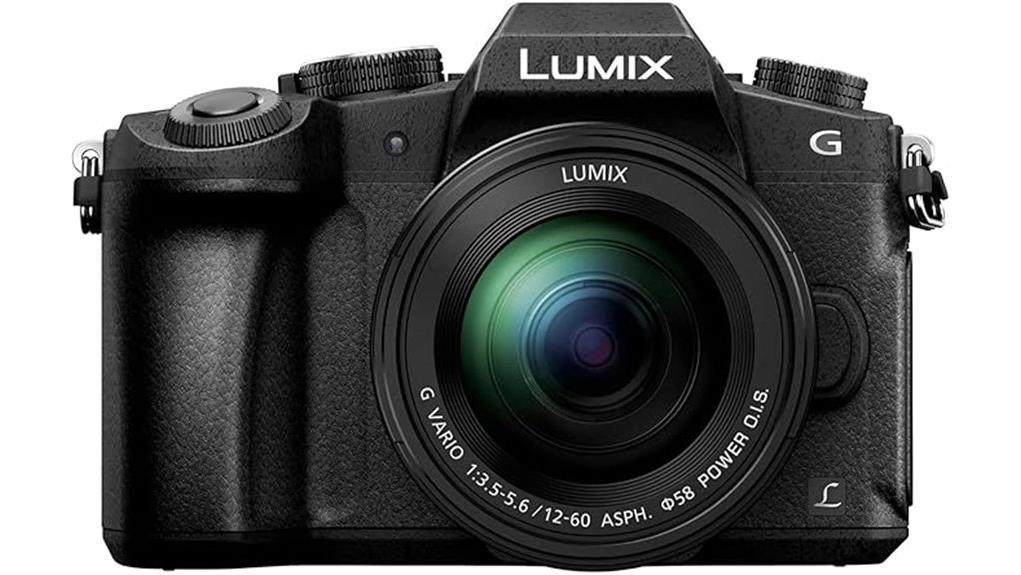
If you want a compact, capable 4K mirrorless that balances stills and video without breaking the bank, the Panasonic LUMIX G85 is a strong contender: it pairs a 16MP Micro Four Thirds sensor (no low-pass filter) with Dual I.S. for steady handheld 4K and stills, offers 4K Photo/30 fps extraction and practical video formats, and supports a wide range of MFT lenses and fast UHS cards—making it ideal for hobbyists, vloggers, and travel shooters who need reliable stabilization, flexible framing, and pro-level video features in a small, affordable package. You'll find it suits budget filmmaking and travel vlogging needs: compact body, robust stabilization, and usable 4K workflows. Expect limits in extreme low light and shallow depth-of-field control, but overall it's a pragmatic, versatile tool for creators prioritizing mobility and steady footage without overpaying. It’s a great fit for photographers who value mirrorless accessories and compact system expandability.
Sensor, Image Quality, and File Options: What 16MP Micro Four Thirds Delivers
Because the G85 uses a 16MP Micro Four Thirds CMOS sensor without a low-pass filter, you'll get a noticeable bump in fine-detail resolving power compared with earlier 16MP MFT bodies—around a near-10% improvement—while keeping noise and file sizes manageable for most shooters. You’ll benefit from crisp rendering and improved micro contrast, especially with sharp glass, though the smaller sensor still trails APS-C and full-frame in shallow depth and ultimate high-ISO headroom. JPEG and 16-bit RAW give flexible tonal gradation and workflow choices; three JPEG quality levels and MP4/AVCHD video cover most needs, but expect modest cropping latitude. Gear Guide for Enthusiast Photographers and Camera Fans highlights this camera’s balance of features for enthusiast photographers.
Lenses and Autofocus in Practice: Kit 12–60mm, Dual I.S., and Eye-Detect AF
Start by putting the 12–60mm kit lens on the G85 and you’ll immediately notice its versatility: covering a 24–120mm equivalent range with 5x optical zoom, solid optical construction (11 elements/9 groups) and 58mm filter threads, it’s a dependable everyday performer that pairs well with the body’s Dual I.S. system. In practice, lens sharpness is respectable centrally, softening slightly at long end and wide apertures. Dual I.S. lets you shoot handheld confidently. Autofocus is fast and reliable for stills; focus tracking and Eye-Detect AF work well in good light but can hesitate in low contrast or dim scenes. The kit and camera combination is a great option for photographers wanting versatile zoom coverage for travel and general shooting.
Video Features You’ll Actually Use: 4K Recording, 4K Photo Modes, and Stabilization
You’ve already seen how the 12–60mm and Dual I.S. make handheld stills more forgiving; that same combination shapes how you’ll shoot video and 4K Photos with the G85. You get true 4K UHD recording and 4K Photo modes that let you extract 8MP frames at up to 30 fps, ideal for action or decisive moments. Dual I.S. reduces micro-shake for smoother clips handheld, but expect some rolling shutter in fast pans. Files suit modest color grading; log-like latitude is limited, so plan conservative exposure and use gentle curves. For run-and-gun vlogging it’s practical and reliable. For better stabilization and mounting options, consider using a camera rig designed for phone and mirrorless setups.
Handling, Viewfinder, and Touchscreen: Ergonomics for Photo and Vlogging Use
Grip the G85 and you’ll notice Panasonic balanced ergonomics that suit both stills and vlog-style shooting: the compact body keeps weight around 1.1 lb while offering a pronounced handgrip, tactile dials, and a well-placed record button that make single-handed framing practical with the 12–60mm kit lens. You’ll appreciate handgrip comfort for longer shoots, though larger hands may find the grip modest. The OLED viewfinder delivers clear framing; eye cup ergonomics are decent but not luxuriant. The 3.0-inch tilting mechanism is ideal for high and low angles, and touchscreen responsiveness aids focus selection and menu navigation efficiently. Perfect Tripods carries accessories that complement camera ergonomics like grips and mini tripods for vlogging and stills tripod accessories.
Performance Limits and Real-World Battery, Card, and Connectivity Considerations
While the G85 delivers impressive stabilization and fast burst modes, you’ll quickly run into real-world limits driven by battery life, card speed, and connectivity choices. You’ll find battery longevity modest: plan for extra packs on long shoots because 4K, IBIS, and EVF use drain cells fast. Card management matters—use U3/V30 or UHS-II for sustained 4K and fast 30 fps bursts, and archive regularly to avoid buffer stalls. Wireless reliability is fine for occasional remote control and transfers but not dependable for heavy video workflows. Port limitations (Micro-HDMI, USB2.0) restrict fast tethering and high-speed offloads. Keep shooting with spare packs and consider a dedicated spare camera battery strategy for longer days.
Buying Advice: Who Should Buy the G85, Alternatives, and Recommended Accessories
If you want a compact, well-stabilized mirrorless camera that handles 4K video and everyday stills without breaking the bank, the G85 is a strong choice. You’ll get reliable Dual I.S., useful 4K tools, solid ergonomics, and Micro Four Thirds lens choice. Buy it if you value stabilization, travel-friendly size, and video features over ultimate low-light high-ISO performance. Consider budget alternatives like older G7/G7 II or entry Olympus PEN models if you need cheaper bodies. Recommended travel accessories: extra battery, UHS-II/V30 SD card, 58mm ND filter, small gimbal or compact tripod, and padded camera bag. Portable photographers often benefit from carrying power banks to keep batteries and accessories charged on long trips.
Some Questions Answered
Does the G85 Have a Microphone Input and Headphone Jack for Serious Vlogging?
Yes — you get an external microphone input but no headphones. You’ll plug in an external microphone for much better audio than the built-in mic, which makes the G85 decent for vlogging. However, you can’t monitor audio via a headphone jack, so you’ll need to trust levels, use external recorders with monitoring, or run camera audio tests. That limitation keeps serious vloggers from full on-camera monitoring.
Can the Camera Shoot Raw+Jpeg Simultaneously and Record During Burst Modes?
Yes — you can shoot RAW+JPEG and you can record during burst modes, but there are limits. RAW+JPEG saves both RAW and JPEG files per frame, so you’ll use more card space and buffer. Burst recording (4K Photo/continuous stills) lets you capture high-speed sequences, yet RAW frame rates and buffer depth drop compared with JPEG-only. Expect shorter continuous RAW bursts and occasional slowing when cards or buffer fill.
Is There In-Body Intervalometer or Built-In Time-Lapse Functionality?
Yes — you’ve got interval shooting and a built in timelapse feature. You’ll set interval shooting to capture frames then use the camera’s built‑in timelapse/interval composite to generate a finished sequence in‑camera. It’s flexible but not as feature‑rich as some dedicated intervalometers: you’ll get reliable results for basic time‑lapses, yet advanced exposure ramping or ultra‑long intervals may require an external intervalometer or post processing.
How Weather-Sealed Is the Body and Kit Lens Against Rain and Dust?
The body and kit lens offer solid weather resistance for casual outdoor use, but they’re not fully waterproof, and you shouldn’t expose them to heavy rain or immersion. You’ll find lens sealing at key joints and gasketed body points that repel dust and light moisture, yet prolonged exposure or spray can breach seals. Treat it as splash-resistant: use rain covers and dry gear promptly to avoid damage and corrosion.
Are Firmware Updates User-Installable and Do They Add Major Features?
Yes — you can install firmware updates yourself; the process is straightforward and well-documented, so firmware ease is good for most users. Updates tend to focus on stability, autofocus tweaks, and new compatibility rather than radical feature additions; occasional firmware does add useful functions (improved AF, menu refinements, or new video options), but don’t expect major hardware-level changes. Still, you’ll appreciate incremental improvements and bug fixes.