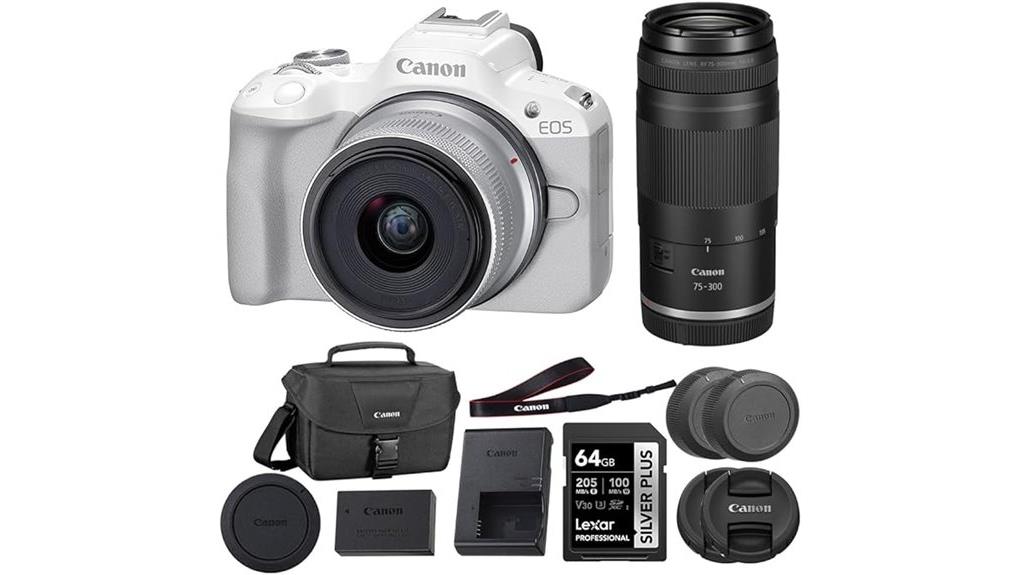

You’ll get a compact, 24.2MP APS‑C R50 with DIGIC X that delivers clean stills to ISO 3200, 6K‑oversampled 4K/30p and 120p Full‑HD slow motion, plus Dual Pixel CMOS AF II across 651 zones for reliable subject tracking. The RF 18–45 and RF 75–300 lenses keep weight and cost down but trade telephoto speed, low‑light IQ and build quality. Battery life is modest; pack spares. Scroll on to see detailed performance, lens options and alternatives.
Some Key Takeaways
- Excellent 24.2MP APS‑C sensor with DIGIC X delivers crisp stills and 6K‑oversampled 4K/30p video for clean detail and reduced aliasing.
- Dual Pixel CMOS AF II (651 zones) provides reliable subject tracking and robust continuous AF, including during 120p slow‑motion.
- Kit includes RF 18–45mm and RF 75–300mm lenses, offering lightweight versatility but with telephoto compromises in speed and low‑light IQ.
- Compact, ergonomic body with vari‑angle touchscreen and good stabilization for gimbals; battery life is modest—carry spares for long shoots.
- Strong value for vloggers, travel, and run‑and‑gun shooters; consider higher‑quality RF telephotos or used R7/R10 bodies if reach or IQ is critical.
Canon EOS R50 Bundle at a Glance: Key Specs and What's Included
While the R50 targets enthusiast photographers and hybrid shooters, its bundle ships as a ready-to-go kit: a 24.2MP APS‑C sensor paired with Canon's DIGIC X processor delivers 6K-oversampled 4K/30p and up to 120p Full‑HD, Dual Pixel CMOS AF II covers nearly 100% of the frame with 651 AF zones and deep‑learning subject detection, and you get the RF 18–45mm and RF 75–300mm lenses, a 64GB card and Canon 200ES shoulder bag—plus built‑in Wi‑Fi/Bluetooth for quick transfers and a 2.36M‑dot EVF with a vari‑angle touchscreen for flexible composition. You’ll appreciate RF lens compatibility across the kit, easy pairing to adapters, and native support for EF optics via adapters; flash support is limited to external units via hotshoe and wireless control, so you’ll plan lighting around off-camera options rather than integrated strobes. The bundle also includes essential accessories favored by mirrorless camera enthusiasts to get you shooting right away.
Real-World Image, Video, and Autofocus Performance You Can Expect
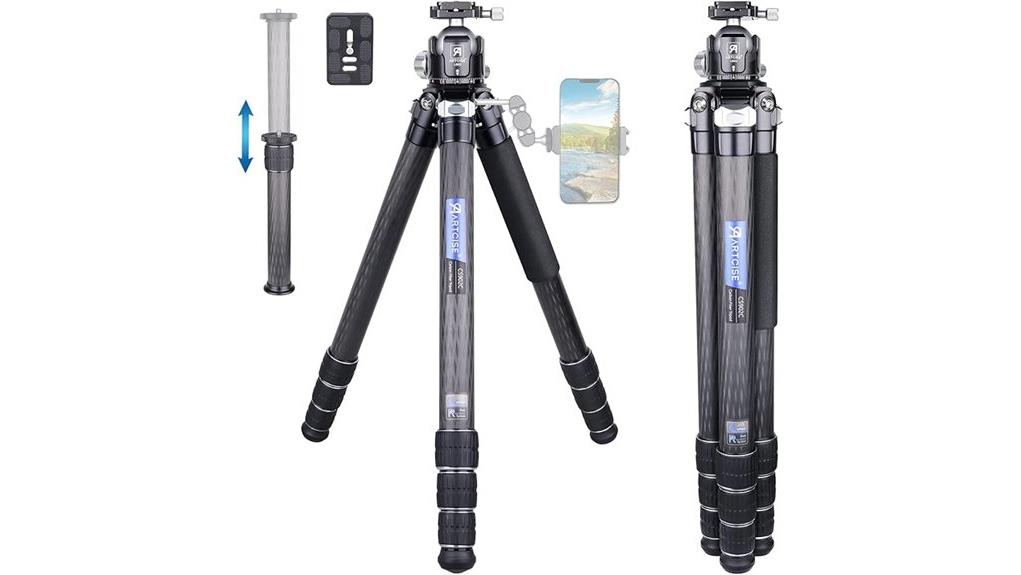
Because the R50 pairs a 24.2MP APS‑C sensor with the DIGIC X engine, you'll get crisp stills with good detail and noise control up to about ISO 3200, and useful results at ISO 6400 in dim scenes where competitors with similar sensors start to falter. Your RAW files hold detail for recovery; JPEGs are clean. Video benefits from 6K oversampled 4K (30p) with minimal aliasing, though in-body processing can introduce motion smoothing on pans. Dual Pixel CMOS AF II tracks reliably across 651 zones; rare front/back errors need focus microadjustment in lens-specific cases. Continuous AF during 120p slow‑motion is robust. Perfect Tripods recommends pairing the R50 with a stable, lightweight tripod for improved sharpness and smoother pans during video capture, especially when shooting at higher ISOs or in slow‑motion modes with lightweight support.
Handling, Battery Life, and Usability for Travel, Vlogging, and Sports
For travel, vlogging, and sports you’ll appreciate the R50’s compact, lightweight design and grippy ergonomics that make long handheld sessions less fatiguing than larger mirrorless bodies. You’ll find grip comfort improved with the pronounced thumb rest and textured front grip, aiding stability during 12–15 fps bursts. Battery longevity is modest: expect a full day of intermittent shooting but pack spares for dense action or extended vlogging. Portability tradeoffs include limited weather sealing and shorter runtime versus heavier pro bodies. Vlogging ergonomics benefit from the vari-angle touchscreen and clear EVF, while connectivity helps offload footage on the move. Consider pairing the camera with a lightweight tripod to maximize stability and portability when shooting on location.
Pros, Cons, and Who Should Buy This RF 18–45 + 75–300 Kit
Having covered handling, battery life, and practicality, let’s assess the RF 18–45 + 75–300 kit’s strengths and weaknesses so you can judge fit. You get lightweight portability with the RF 18–45 for travel and vlogging; it balances sharpness, close-focus, and stabilization for run-and-gun use. The RF 75–300 is a budget telephoto that extends reach without heavy expense but trades autofocus speed and low-light performance versus pricier RF primes. Pros: compact system, versatile focal range, usable AF and 4K video. Cons: limited telephoto speed/low-light, plastic build, optical compromises at extremes. Ideal for enthusiasts seeking affordable, travel-ready reach. Gimbal users will appreciate how the kit’s light weight and balance pair well with gimbal stabilizers for smoother handheld footage.
Value Comparison and Final Buying Recommendation (Alternatives and Best Deals)
While budget-friendly, the R50 kit’s real value depends on how you prioritize reach, image quality, and ergonomics: you’ll get a compact, versatile system with strong AF and usable 4K video, but the RF 75–300’s plastic construction and slower low-light performance mean that photographers needing fast telephoto focus or higher optical fidelity should consider alternatives—either the RF 24–105mm or RF 70–200mm (for IQ and build) or a used R7/R10 body with higher native tele options for better subject tracking and reach. Compare price comparisons and alternative bundles: the R50 kit wins on cost and portability; alternatives win on glass and tracking. The R50 can be a particularly good match for photographers who also record interviews or run-and-gun shoots and want lightweight audio solutions like windscreens for microphones to control wind noise without bulk.
Some Questions Answered
Does the Bundle Include a Camera Body Cap and Rear Lens Caps?
Yes — the bundle includes Lens caps and a Body cap. You’ll get front and rear caps for the RF 18–45mm and RF 75–300mm lenses plus the camera Body cap to protect the mount when no lens is attached. That’s standard compared to kit-only packages that sometimes omit rear caps. You’ll still want to verify seals and fit on arrival and keep spare caps if you swap optics frequently.
Is There a Warranty and Its Duration for the Bundle Items?
Yes — the bundle items carry manufacturer warranty terms: the camera body and lenses get Canon’s standard limited warranty (typically one year, varying by region), while accessories like the memory card and bag may have shorter or retailer warranties. You’ll want to compare documented warranty terms and authorized service centers for repairs or replacements. Keep receipts and register products where available to guarantee streamlined claims and access to local service centers.
Are Spare Batteries or a Charger Hub Included in the Kit?
No — the kit doesn't include spare chargers or battery adapters. You get one OEM battery and the standard charger in most bundles, so you'll need to buy extra batteries or a multi-battery charging hub separately. Compared to higher-tier kits, this bundle focuses on lenses and accessories (64GB card, bag) rather than power extras. If you shoot extensively, you’ll want at least one spare battery and a dual or USB charging adapter for faster turnaround.
Can the Lenses Accept Third-Party Filters and Which Sizes?
Yes — both kit lenses accept third-party filters; filter compatibility depends on front thread diameters. The RF 18–45mm uses 52mm threads (so 52mm filters fit), while the RF 75–300mm uses 58mm threads (use 58mm filters). You can use standard screw-on filters or slim variants to reduce vignetting. Adapter availability exists for step-up/step-down rings and for using larger filters or square systems if you need broader creative or protective options.
Is There Any Bundled Software for Photo or Video Editing?
No, the bundle doesn’t include dedicated editing software, but you’ve got several software options for editing workflows. You’ll typically use Canon’s free Camera Connect for transfers, then switch to desktop tools like Canon’s EOS Utility/DRENU combined with Digital Photo Professional, or third-party alternatives (Adobe Lightroom, Capture One, DaVinci Resolve for video). Compare batch RAW processing, tethered workflows, and GPU-accelerated edits to optimize your photo and video postproduction.