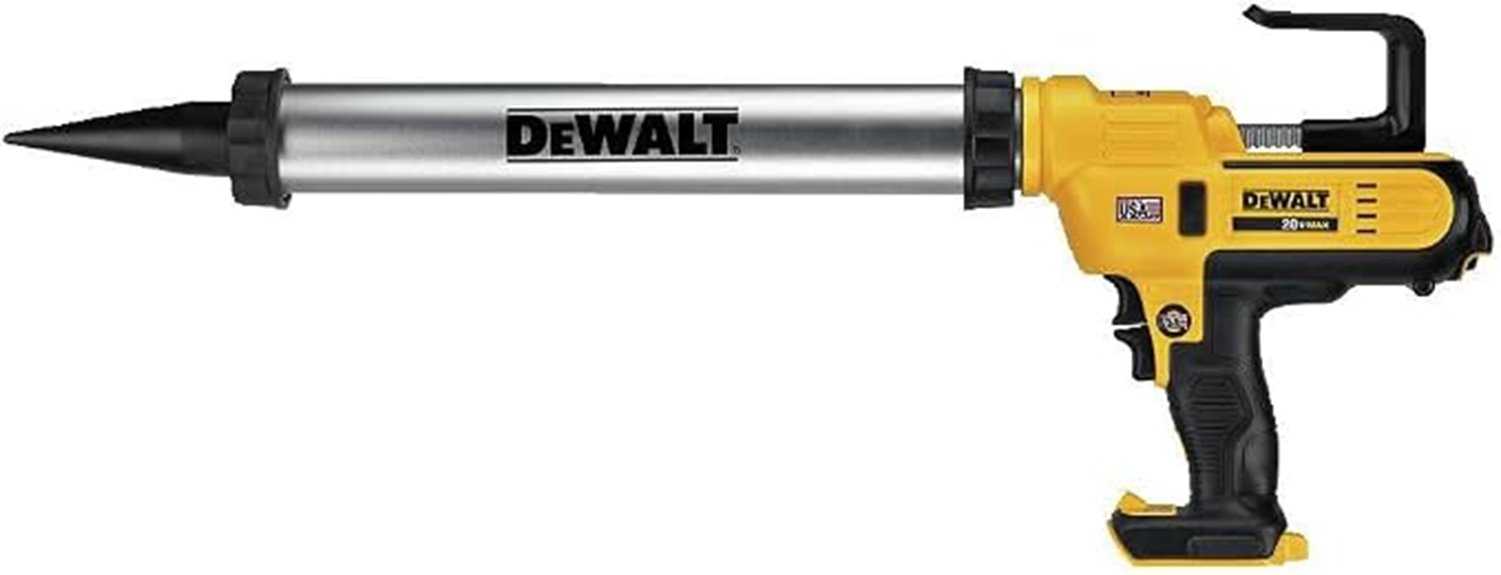

You’ll get fast, consistent cordless caulking with the DEWALT DCE580B thanks to a variable-speed trigger plus a speed dial that controls bead output up to its ~21 in/min rated feed. The anti-drip retraction pulls the plunging rod after release, which cuts tailing strings and reduces cleanup passes versus simpler battery guns. You can also swap quick-connect canister trays for 300–600 ml sausage packs to switch formats mid-job. If you keep going, you’ll see how it stacks up.
Some Key Takeaways
- Provides variable-speed trigger plus speed dial for precise bead control across different materials like ceramic, metal, and wood.
- Delivers fast starts with a rated ~21 in/min speed while supporting lower outputs for slow-cure, viscosity-sensitive adhesives.
- Anti-drip rod retraction reduces tailing, stringing, and mess, improving cleanup speed after releases.
- Uses quick-connect interchangeable canister trays for faster switching between adhesive formats and reduces downtime on job sites.
- Best for frequent format changes and high-output caulking needs; may be overkill for rare monthly beading.
How the DEWALT DCE580B Cordless Caulking Gun Dispenses
To dispense with the DEWALT DCE580B, you control flow with a variable-speed trigger and a separate variable-speed dial that sets the maximum and minimum output rates, so you can match adhesive viscosity and application needs. You get Trigger variability for consistent bead control across materials like ceramic, metal, and wood. The tool’s 21 in/min rated speed supports fast starts, while the anti-drip mechanism retracts the plunging rod after release to reduce stringing. You use precise placement to keep beads uniform, and quick-connect trays let you swap sausage-pack canisters without breaking your rhythm. For gift giving, this kind of cordless caulking convenience makes it an easy win for handy family, friends, coworkers, and contractors who need reliable dispensing on demand.
Dial In Flow Rate and Speed With the DCE580B Controls
Dial in your bead output on the DEWALT DCE580B by pairing its variable-speed trigger with the variable-speed dial, which together let you set both minimum and maximum flow rates for a controlled 300–600 ml sausage-pack load. You calibrate adhesive viscosity by running short test squeezes, then matching bead width to your target. Compare settings: low dial values stabilize slow cure-sensitive applications, while higher maximums reach the tool’s ~21 in/min rated flow faster. You’ll achieve consistent bead control across fabric or glass substrates, and you’ll belong to the crew that measures, not guesses. For handy gifting and everyday project use, this kind of variable speed control is the feature most likely to help friends, family, and contractors dial in professional results.
Does the Anti-Drip Feature Really Reduce Mess?
Yes—DeWALT’s anti-drip system on the DCE580B can reduce mess in a measurable way, because it retracts the plunging rod after you release the trigger. In Practical drip tests, you’ll see post-trigger tailing drop versus fixed-plunger guns: fewer strings cling to the nozzle and the bead ends cleaner. That translates into real cleanup time reduction—less solvent time, fewer wipe passes, and faster reset between runs. In short, anti-drip mechanism helps keep discharge controlled for a tidier finish. In practice, you’ll still get occasional micro-sprockets if you overload flow, but with variable speed you’ll keep discharge controlled and stay part of the cleaner, pro-grade crew.
Sausage-Pack Compatibility and Canister Tray Swaps on the DCE580B
Sausage-pack users get a practical advantage with the DEWALT DCE580B because its quick-connect interchangeable canister trays let you swap between feed setups without retooling—so you keep output consistent when you change adhesive formats (300–600 ml sausage pack capacity). In practice, you match sausage fitment specifics to the tray geometry, then run a fast Tray swap process: detach, seat the new tray, and lock it firmly before dispensing. Compared with fixed-cartridge guns, you reduce downtime between adhesive runs, while the variable speed dial and trigger maintain uniform flow across formats you switch mid-job. These tray swaps make the tool especially convenient for garage cabinet projects where adhesives and sealants may vary by job.
Who Should Buy the DEWALT DCE580B and When To Skip It
If you already like switching adhesive formats during a job, the DCE580B makes sense: its quick-connect interchangeable canister trays and 300–600 ml sausage-pack capacity let you keep output consistent while you swap setups, then dial in flow with a variable-speed trigger and speed dial (rated 21 in/min). You should buy it if you’re a DIY hobbyist or contractor running occasional projects needing controlled flow, anti-drip retraction, and 3-year reliability. Rotary hammer gifting is a great fit for handy lifestyle enthusiasts who want a practical upgrade beyond basic tools. Skip it if you mainly bead once per month, want corded consistency, or only compare cost comparisons against cheaper manual guns. For frequent professional sealants, it’s a strong fit.
Some Questions Answered
Which Sausage Pack Sizes Are Compatible With the DCE580B Without Leaking?
You can use sausage packs from about 300–600 ml in the DCE580B, as long as they fit the included quick-connect canister tray for your size. To keep it leak-free, match the nozzle/rod length to the pack, seat the tray fully, and tighten the carriage until pressure is even. Use oil resistant packing and follow leakage prevention tips: clean the rod, inspect seals, and avoid overfilling.
What Battery and Amp-Hour Ratings Work Best for Long Dispensing Sessions?
For long session runtime, you’ll get the best results with a 20V MAX* battery in the 4.0–6.0Ah range. A 4Ah pack usually covers moderate runs, while a 6Ah pack extends continuous dispensing with less frequent swaps. Compared to 2Ah packs, higher amp-hours maintain more consistent trigger-fed flow before voltage sag. If you chase belonging, stock one spare 6Ah for seamless workflow.
How Do I Load and Unload Cartridges or Sausage Packs Safely and Quickly?
Load a sausage pack by retracting the rod, inserting the sealed pack centered on the tray, then aligning the nozzle before you latch. Use Safe cartridge loading to keep your hands off the adhesive end. For speed, set your dial mid-range, pull the trigger briefly to seat flow, and cap any excess. To unload, release pressure, engage the quick release unlatch, slide the empty pack out, and store it sealed.
Can the DCE580B Dispense Silicones, Urethanes, or Only Specific Adhesive Types?
Yes—you can dispense silicones and urethanes with the DCE580B, as long as the material fits the gun’s 300–600 ml sausage-pack format. For best results, you’ll need Material compatibility testing because flow, cure chemistry, and viscosity vary. Use nozzle diameter effects to predict bead size and pumpability: smaller nozzles increase pressure demand, while larger ones reduce backpressure and improve consistency. You’ll get reliable output when the tube diameter and viscosity match.
Does the Retracting Rod Affect Pressure When Restarting After a Brief Pause?
Yes, the retracting rod usually doesn’t hurt pressure consistency after a brief pause. When you restart, the anti-drip retracts the plunging rod to reduce oozing, then you re-engage it under your dial-set maximum flow. In practice, you’ll see minimal re-priming delays, so retracting rod resistance creates small, momentary pressure consistency effects rather than major drops. Use the variable speed trigger smoothly to stay aligned with your desired output.