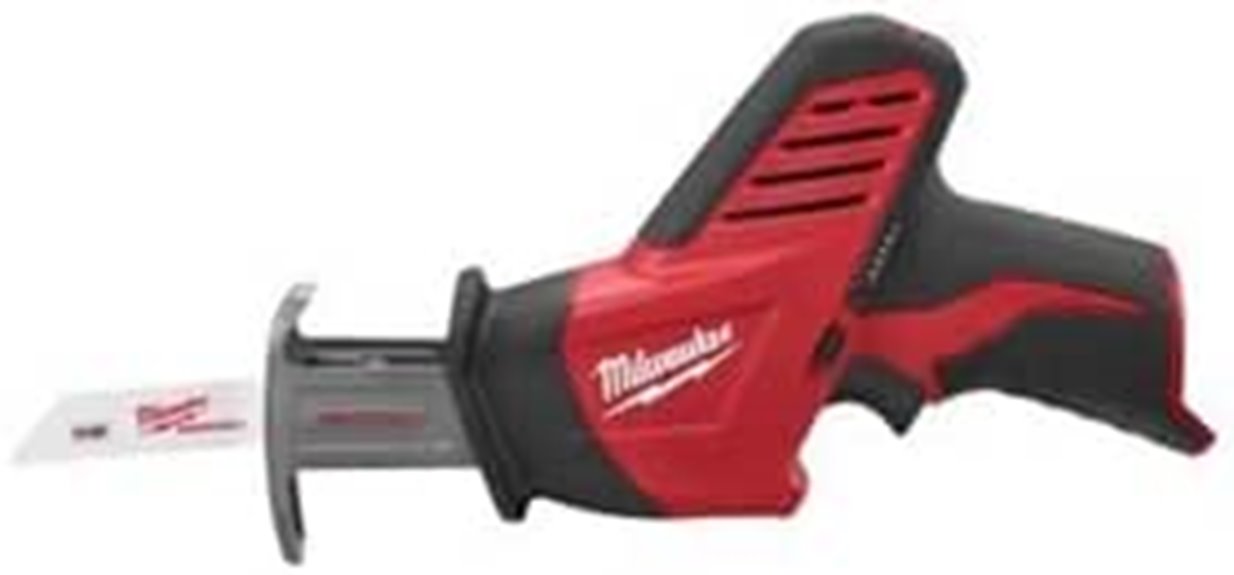

You’ll get a tool-only Milwaukee 2420-20 Hackzall: a 12V M12 reciprocating saw rated up to 3000 SPM with a 1/2 in stroke, featuring Quik-lok keyless blade changes, LED light, and variable speed. Your results on drywall, wood, and PVC mainly depend on using the right HACKZALL/SAWZALL blade, fully seating it, and controlling speed to prevent binding or overheating. Wear PPE, clear debris from the clamp, and confirm you’ve got compatible M12 batteries/chargers—then keep going to nail smarter setup.
Some Key Takeaways
- Milwaukee 2420-20 is a 12V cordless reciprocating saw sold as a tool-only unit.
- It requires separate Milwaukee M12 batteries and an M12 charger (no battery or charger included).
- The saw delivers up to 3000 SPM with a 1/2 in stroke and supports HACKZALL/SAWZALL blades.
- It features Quik-lok keyless blade changes, plus LED lighting and variable-speed control for better cutting control.
- Blade and speed selection guidance helps achieve cleaner cuts in drywall, wood, and PVC while reducing binding and kickback.
Milwaukee 2420-20 Hackzall Specs, Key Features, and What’s Included
Meet the Milwaukee 2420-20 Hackzall, a 12V lithium-ion cordless reciprocating saw built for fast, controlled cuts in tight spaces—and it ships as a tool-only unit, so you won’t get a battery or charger in the box. You’ll stay safer by verifying you own compatible M12 battery and M12 charger. With up to 3000 SPM and a 1/2 in stroke, you get predictable action for DIY work, including within tight drywall clearance. You also benefit from Quik-lok keyless blade changes, LED lighting, and variable speed control. Its 2.6 lb weight supports compact storage. It accepts HACKZALL/SAWZALL blades and includes HSS blades only. This makes it a practical gift idea for DIYers, contractors, and coworkers who already use M12 tools.
How the 12V Milwaukee 2420-20 Performs on Drywall, Wood, and PVC
How well does the 12V Milwaukee 2420-20 Hackzall cut when you’re working with drywall, wood, or PVC—and what should you watch out for? On drywall, you’ll get fast, controlled reciprocation up to 3000 SPM, but manage Dust management by keeping the work area ventilated. In wood, variable speed helps you stay in spec and protect edges for cut cleanliness. For PVC, your success depends on steady trigger control; avoid overheating and verify stable clamp alignment. Always wear eye and respiratory protection, and use compatible HACKZALL/SAWZALL blades to reduce kickback risk. You’ll feel more confident. For gift ideas, random orbital sanders can be a practical option for DIYers and contractors alike.
Choosing the Right Blade for the Milwaukee 2420-20 Tool Only Setup
To get reliable cuts—and reduce the risk of binding, kickback, or poor finish—you should match the blade type and length to the Milwaukee 2420-20’s intended use and its 1/2 in stroke. For drywall, choose a short HACKZALL-style HSS blade to prevent overtravel and keep control. For wood, use a longer blade that fully clears the material thickness, but don’t exceed the listed 2-inch length shown for the setup. For PVC, pick fine-tooth HSS blade matching to avoid cracking and heat buildup. Follow blade selection basics, confirm compatibility, and stay compliant with rated PPE. If you’re looking for a practical gift for a DIYer, a drill bit set can be a useful addition to the toolbox.
Using the Quik-Lok Clamp and Variable Speed for Cleaner Cuts
Once you have the right HACKZALL/SAWZALL-compatible blade installed, the Milwaukee 2420-20’s Quik-Lok keyless clamp and variable-speed trigger become your best tools for cleaner, safer cuts. You stay safer by fully seating the blade, then giving it a firm tug before cutting. Use Quik lok maintenance tips: keep the clamp area clean, dry, and free of debris so the grip stays consistent. Practice Variable speed technique—start low to score, then increase to match material density. This reduces chatter, minimizes bind, and helps you stay compliant with workplace cut-control expectations. For gift ideas, paint edgers can also be a practical option for family, friends, and pros who value clean finishing work.
What to Buy With the Milwaukee 2420-20: Batteries and M12 Chargers
Because the Milwaukee 2420-20 ships as a tool-only unit, you need an M12 battery and an M12 charger that match Milwaukee’s platform to avoid unsafe operation from incompatible power sources. For battery compatibility basics, choose any Milwaukee M12 battery pack; the tool is rated for 12V and explicitly supports all M12 batteries. Then focus on M12 charger selection: buy a charger meant for M12 packs and follow charging instructions. Map run time planning by using the battery fuel gauge and your cut length, so you stay productive and compliant with manufacturer guidance. For a practical setup, consider battery inverter gear that can support home projects and other gift-worthy uses.
Some Questions Answered
What M12 Batteries Provide the Best Runtime for the 2420-20?
For the 2420-20, you’ll get the best runtime with M12 high capacity packs—prioritize higher amp hour comparison like 6.0Ah and 9.0Ah options over 1.5Ah/2.0Ah. Your fuel gauge guidance should help you decide when to switch packs, but don’t skip runtime testing: actual cutting load changes results. If you care about belonging on real jobs, choose the biggest compatible Ah you’re comfortable carrying and charging.
Does the 2420-20 Include a Battery or Charger?
No—the 2420-20 ships as a tool-only unit, so it doesn’t include a battery or charger. You must supply compatible M12 power for safe operation. Check your M12 battery and charger fit before using, since blade compatibility depends on pairing the right setup and correct blade type. For peace of mind, review warranty coverage: it includes a 5-year limited manufacturer warranty, assuming you use the tool as intended.
How Long Do Blades Typically Last When Cutting PVC?
Blade life on PVC varies, but you’ll typically see modest wear after several short sessions. Your cutting speed drives most blade wear: faster cutting increases heat and dulling. Expect clean cuts to decline when the blade starts grabbing or melting edges, especially on thicker material thickness. Use light pressure, let the blade do the work, and replace blades promptly to avoid binding, kickback risk, and compliance issues from damaged cuts.
Is This Saw Compatible With Standard SAWZALL Bi-Metal Blades?
Yes—you can use standard SAWZALL bi-metal blades in this saw. It accepts HACKZALL and SAWZALL-style blades, so you’ll get compatible fittings without adapters. For risk control, verify the blade’s shank style matches the reciprocating clamp and use proper blade type for PVC/metal to protect blade durability. If you feel resistance or see abnormal vibration, stop cutting and re-seat the blade to stay compliant with safe tool use.
What’s the Recommended Blade Size for Best Drywall Cutting Control?
For best control in drywall, use a compact 2-inch blade length with a fine-tooth HSS reciprocating blade. Follow a drywall scoring technique: lightly score the surface first, then increase pressure to finish the cut. Keep the guard aligned, use variable speed, and avoid forcing to reduce kickback and blade binding. You’ll get cleaner edges and safer handling, especially in tight spaces where stability matters.