
If you’re chasing a cozy, high-heat propane setup, the COSIEST Outdoor Fire Pit Table delivers about 50,000 BTU with a magnesium-oxide, heat-resistant base and a stainless burner bowl designed for steady, clean combustion. You’ll enjoy easier ignition thanks to push-button lighting, and lava rocks help spread warmth. Place it on a level nonflammable surface with proper clearance, use a wind guard when needed, and wipe/dry stainless after storms. Keep reading for setup and tuning tips.
Some Key Takeaways
- Describes a spacious 56″ x 28″ x 12″ fire pit table with a 36″ x 9″ stainless burner bowl for strong backyard warmth.
- Claims about 50,000 BTU heat output, delivering noticeable glow across typical distances with adjustable flame via a control knob.
- Highlights lava rocks spreading heat, improving flame coverage and heat distribution depending on placement.
- Covers propane setup safety for a 20 lb tank, including proper hose inspection, leak checks, and push-button ignition confirmation.
- Recommends weather protection with a waterproof cover and wind guard, plus stainless care and seasonal lava rock cleanup.
Cosiest Outdoor Fire Pit Table Specs and Build Quality
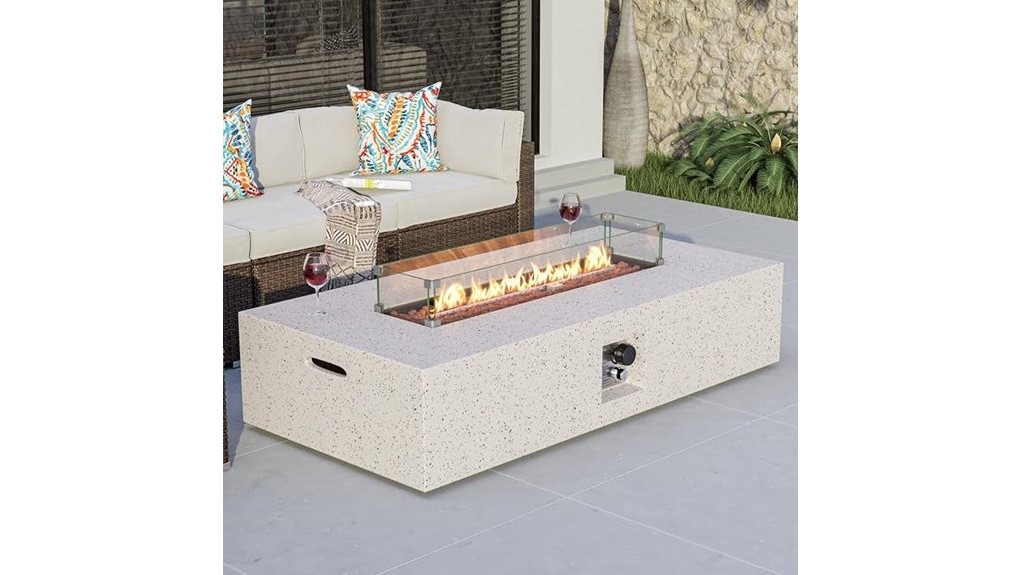
When you’re shopping for a rectangular outdoor fire pit table, you want the specs to match the way you’ll actually use it, and the COSIEST model delivers a clear build: it measures 56″ wide x 28″ deep x 12″ high, with a 36″ long x 9″ wide fire bowl that sits inside a tabletop ledge for serving food or drinks. You’ll appreciate the rectangular dimensions and the concrete like finish, which visually anchors gatherings. The magnesium oxide base resists heat, while the stainless burner bowl supports steady, clean-burning performance. Push-button ignition and a turn knob make operation consistent, and side handles help you move it safely. With heat-resistant construction that’s designed for outdoor use, it’s easier to feel confident during longer evenings by the fire.
How to Set Up the Cosiest Fire Pit With a Propane Tank
Setting up the COSIEST propane fire pit table takes only a few steps, but you should do them in order for safe, reliable ignition. First, place the table outdoors on a level, nonflammable surface, leaving clearance around the sides and lid. Follow propane tank safety: check the 20 lb tank’s valve, regulator hose, and connections for damage, then tighten by hand, no tools. Next, position the tank in the dedicated outside area, keeping the hose clear of heat. Using the correct propane regulator helps ensure the burner receives steady, safe gas pressure for consistent flame output. Load the burner bowl with the included lava rocks, then remove slack from lines. Finally, use the push-button ignition and confirm stable flow.
Heat Output and Flame Performance Expectations
Once you’ve connected your propane tank and confirmed ignition works, you’ll want to understand what that heat output actually feels like in real outdoor conditions. With this COSIEST table, you should expect BTU output expectations around 50,000, so seated users feel noticeable warmth across typical backyard distances. Still, heat delivery isn’t perfectly uniform: lava rocks help spread it, but placement changes your experience. You’ll also notice flame height variability as gas pressure, knob position, and rock coverage shift. In practice, run the knob medium at first, then dial in for a steady, comfortable glow. Propane tanks and burner design are key factors that influence both how consistent the flames look and how efficiently the heat is delivered.
Weather Protection: Cover, Wind Guard, and Maintenance Tips
To keep your COSIEST outdoor fire pit table performing consistently, use the included heavy-duty waterproof rain cover whenever you’re not using it—especially after windy or rainy days that can drive moisture into the burner area. You should also keep the included wind guard in place during breezy conditions to reduce flame disruption and better protect the burner bowl from stray moisture. For rust prevention, wipe any water off stainless steel components after storms, then dry fully. When you move into seasonal storage, clean out lava rock, check for residue, and store the table covered in a dry, ventilated spot. Waterproof fire pit covers help block rain from reaching the burner area, supporting better performance over time.
Pros and Cons of the Cosiest Outdoor Fire Pit Table Review
You’ll likely appreciate the COSIEST rectangular outdoor fire pit table because it blends real heating performance with practical entertaining features, but you should also weigh a few tradeoffs before buying. Pros: strong 50,000 BTU output warms groups, clean gas burn reduces soot, and push-button ignition supports ignition reliability. Safety checks matter: verify proper tank placement, use the wind guard, and keep the waterproof cover for damp nights. You’ll also like fueling access—external propane placement saves hassle. Cons: it’s heavy at 86 lbs, limiting portability convenience, and only fits a 20 lb tank setup.
Some Questions Answered
Does the Fire Pit Require Any Special Tools for Propane Hookup?
You won’t need special tools for propane hookup, but you should have a properly sized propane hose/regulator if you’re not using the included tank connection hardware. First, make sure all fittings are clean and hand-tight, then check for leaks with soapy water before lighting. Do a safety shutoff inspection every time, and confirm the weatherproofing considerations are met by keeping the connection protected when rain cover is on.
What Propane Regulator Type Is Compatible With This COSIEST Model?
You’ll need a standard propane regulator that matches a 20‑lb tank system—look for a “low-pressure” Type/adjustable-regulator set for outdoor gas appliances. Use one that outputs the table’s required pressure (typically 11″ water column for most fire pits). Check for a regulator with the correct tank-fitting (the usual POL/ACME connection) and follow the manufacturer’s hose end compatibility. Confirm your hose connection options fit the table’s inlet fitting before you light up.
How Long Does a 20 Lb Propane Tank Typically Last at 50,000 BTU?
A 20 lb propane tank usually lasts about 5–8 hours at 50,000 BTU, depending on temperature, regulator flow, and how steady your flame control stays. For safety, use the correct Safety hose and keep length considerations in mind so the connection stays secure and untangled. To stretch runtime, start high briefly, then dial down for a consistent flame; avoid frequent on/off cycles. Always check for leaks.
Is the Tabletop Heat-Safe for Plates, Drinks, or Cookware Directly?
Yes, but only for indirect use: the tabletop isn’t meant for direct heat exposure with hot cookware, plates, or drinks sitting right over the burner area. You should use the serving ledge, keep items centered away from the flame, and use heat-safe coasters or trays. Concrete-like surfaces can get hot from radiant heat, so test before routine use. If you notice scorching, stop immediately.
Can the Natural Lava Rocks Be Replaced With Other Lava Rock Types?
Yes, you can replace the included natural lava rocks with alternative lava, but you should choose similar size and porosity. For rock selection, match the burner bowl fill level so airflow and flame dispersion stay consistent. Avoid crushed stone or non-lava rocks that trap heat unevenly. Use compatibility guidance from your fuel burner manual, then test carefully outdoors. The right lava type improves heat retention and keeps your fire pit’s glow even and clean.