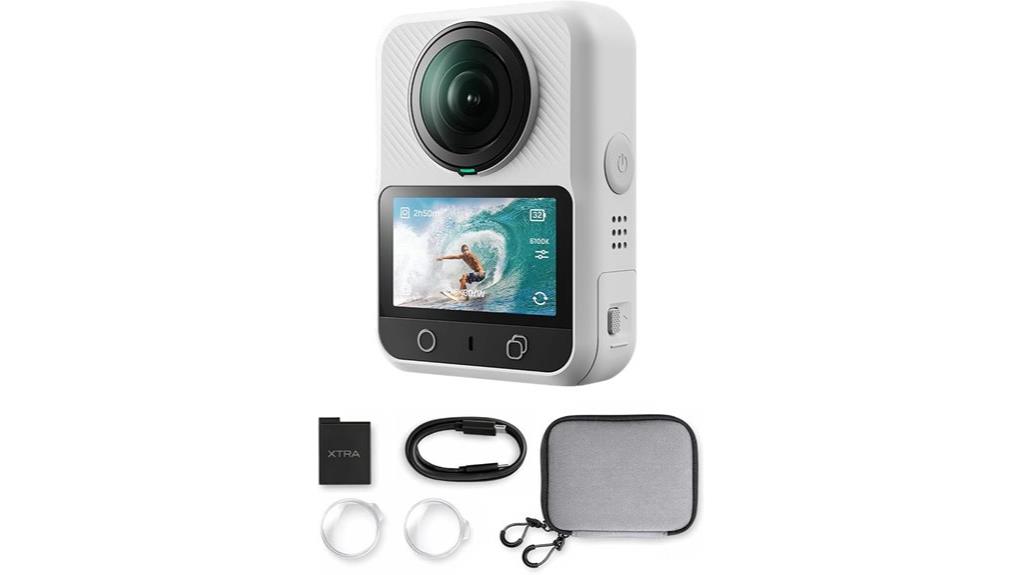
The Xtra 360 gives you true 8K panoramic video and 100MP stills from a compact 150 g body, prioritizing detail and stabilization over modularity. You’ll get punchy imagery, improved low‑light performance, and solid POV stabilization, though fast pans can blur and wind can muffle onboard audio. Battery life is modest at ≈1.5 hours but internal 105 GB storage plus microSD helps workflow. It’s ideal for action, travel, and drone pairing — keep going to see full specs and caveats.
Some Key Takeaways
- True 8K panoramic MP4 video and 100MP stills (effective 120MP) from a 1‑inch‑equivalent sensor deliver exceptional detail.
- f/1.9 fisheye optics with fast AF, dynamic stabilization, and 4K downsampling produce stable, punchy POV footage.
- Compact 150 g weather‑sealed body with magnetic quick‑release mounting and transparent lens protector suits rugged, portable use.
- Built‑in 105 GB storage, microSD expansion, and V60 write support ease workflow; runtime ≈1.5 hours per Xtra 1900 battery.
- Strong low‑light performance and immersive output, but limited codecs (MP4), single fisheye lens, and modest battery life are tradeoffs.
What the Xtra 360 Is and Who It’s For
As a compact, rugged 360º shooter, the Xtra 360 packs a 1-inch-equivalent CMOS sensor, true 8K panoramic video, and 100MP (effective 120MP) stills into a handheld 150 g body designed for action use. You’ll see it as a purpose-built action tool: waterproof, magnetic quick-release mounting, and lightweight for POV work. Compared with bulky mirrorless rigs, it trades interchangeable lenses for streamlined fisheye optics and superior stabilization tailored to motion. Prospective users include adventure vloggers and travel shooters; creative pros will value high-resolution panoramas and efficient workflows. It’s optimized for dynamic sports, immersive storytelling, and compact studio setups. It’s an excellent match for enthusiasts who capture aerial and travel footage with high-resolution drones.
Key Specs at a Glance: 8K Video, 100MP Stills, Battery, and Storage
Moving from who the Xtra 360 suits to what it delivers, here’s a tight summary of the hardware that matters: you get true 8K panoramic video (MP4, X‑log) and 100MP stills with an effective 120MP output from a 1‑inch‑equivalent CMOS sensor and f/1.9 fisheye optics, plus dynamic stabilization for smooth POV and action shots. You’ll appreciate 4K downsampling options, fast autofocus, and V60-class write performance. Power relies on the included Xtra 1900 cold-resistant battery (≈1.5 hours) with C-battery backup; the firmware supports battery optimization. Built-in 105GB plus microSD slot gives clear storage expandability for long shoots. Consider pairing the camera with an external monitor for improved framing and realtime exposure control with external camera monitors.
Real-World Performance: Image Quality, Low-Light, Stabilization, and Audio
While the Xtra 360 excels at delivering punchy, high‑resolution imagery, you’ll notice its strengths and limits in real-world shooting: the 1‑inch‑equivalent CMOS sensor and f/1.9 fisheye produce crisp, detailed 100MP panoramas and true 8K video with clean highlight retention, but fine‑detail and shadow recovery vary versus larger‑sensor rivals; low‑light scenes benefit from improved light gathering and reduced noise, yet you’ll still see some luminance grain in extreme low light. You’ll get solid dynamic stabilization for POV moves, though fast panning can introduce motion blur. Audio is usable for run‑and‑gun work but watch wind noise; external mics improve clarity. If you want accessories and mounting options tailored for immersive shooting, check out our 360 camera gear recommendations.
Design, Durability, Mounting, and Everyday Use Cases
Because it’s built for active use, the Xtra 360 balances a compact, lightweight form with rugged construction so you can grab it for surf, snow, or travel without second‑guessing durability. You get a 150g handheld body, weather sealing, and transparent lens protector that outperform bulkier rivals for rough conditions. Mounting is versatile: magnetic mounts and standard action interfaces snap on quickly, and the quick‑release system beats fiddly screws. Pocket portability is genuine—fits most jacket pockets—so you’ll carry it daily. For daily vlogging and POV shots it’s more convenient than larger rigs, offering easy swap batteries and solid ergonomics. It also pairs well with accessory systems designed to protect rotating parts like propeller guards when shooting near drones.
Final Verdict: Pros, Cons, and Who Should Buy the Xtra 360
You’ll appreciate how the Xtra 360’s compact, rugged design and easy mounting make it a daily go‑to for action and POV shooting, but the real decision comes down to what you prioritize: unparalleled 8K panoramic video and 100–120MP stills in a pocketable 150 g body, or whether you need features like swappable lens options, longer battery life, or broader codec support. Pros: exceptional detail, strong low‑light, dynamic stabilization, integrated 105 GB storage, solid accessory ecosystem. Cons: modest ~1.5‑hour runtime, limited codecs (MP4), single fisheye lens. Buy it if you value portability and image quality; skip if you need modularity. Consider battery recycling for responsible replacements. Portable power banks can extend shooting sessions for on‑the‑go photographers, so pairing the Xtra 360 with a reliable portable power solution is a smart move.
Some Questions Answered
Does It Support Live Streaming Directly From the Camera?
No — it doesn’t natively support direct live broadcasting from the camera. You can transfer recorded MP4 files via USB-C or use a connected device to stream, but true live broadcasting requires a tethered workflow. Compared to action cams with built-in RTMP/USB webcam modes, you’ll face added steps and potential wireless latency if you try wireless relay via a phone or hotspot. That makes setup less seamless for real-time streaming.
Can I Use External Microphones via USB-C?
Yes — you can use an external mic via USB C. You’ll plug an External mic into the camera’s USB C port or use an adapter compatibility dongle for TRS/TRRS or XLR mics. Expect better audio than the onboard mic, especially with wind protection like a furry windshield. Compare adapters for latency and power needs; some mics need phantom power or dedicated interfaces, so choose one that matches your mic’s requirements.
Is RAW Photo Capture Available for Editing?
No — RAW capture isn’t supported; you’ll get high-res JPEG panoramas (100–120MP) and X‑log MP4 for grading. Compared to cameras offering RAW, you’ll have less latitude for extreme exposure recovery, but X‑log plus the camera’s dynamic range still lets you do effective Color grading. If you need true RAW flexibility for heavy retouching, you’ll want a different rig; for streamlined post and panoramic workflows, this keeps things efficient.
What Firmware Update Process and Frequency Should I Expect?
You should expect a regular firmware cadence of minor fixes every 1–3 months and major feature releases every 6–12 months. Update methods include over the air for convenience and manual flashing for full control or recovery. OTA is faster and user-friendly; manual flashing is more technical but offers rollback and diagnostics. You’ll get update notifications via the companion app or USB-C connection, and release notes will compare changes and known issues.
Are Replacement Parts (Batteries, Lenses) Sold Separately?
Yes — you can buy replacement batteries and lenses separately; battery availability is good through the manufacturer and resellers, and lens pricing varies. You’ll find the Xtra 1900 cold-resistant battery sold alone and third-party C batteries compatible. Lenses (protectors or fisheye modules) are offered as replacements or accessories; compare warranty, cost, and OEM vs aftermarket options to balance longevity, performance, and price.