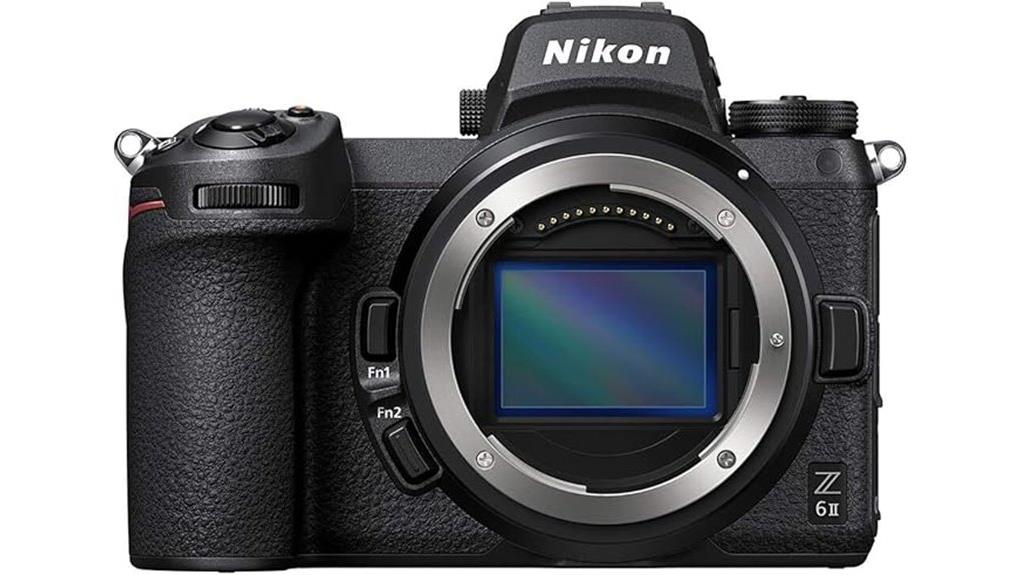
You get a balanced full‑frame hybrid: a 24.5MP BSI sensor with dual EXPEED 6 engines for full‑pixel readout, 273‑point AF with stronger AF‑C tracking, and a 3.5× larger buffer sustaining 14 fps bursts. True 4K60, 10‑bit HDMI output, IBIS that pairs with stabilized lenses, and improved high‑ISO handling make it solid for stills and pro‑grade video. Dual cards, USB‑C power, and FTZ compatibility round it out — keep going to see detailed comparisons and workflow notes.
Some Key Takeaways
- 24.5MP full‑frame BSI sensor with dual EXPEED 6 processors delivers clean images, fast processing, and full‑pixel readout for sharp stills and video.
- 273‑point hybrid AF with improved AF‑C tracking offers reliable low‑light performance and accurate subject tracking for photo and video.
- Sustained 14 fps bursts and a ~3.5x larger buffer suit action and event shooting without frequent slowdowns.
- True 4K60 video with 10‑bit HDMI output, USB‑C power/streaming, and grading‑friendly codecs makes it a strong hybrid video tool.
- IBIS plus lens stabilization, dual card slots, and robust ergonomics position it as a versatile, marathon‑ready full‑frame hybrid.
What This Review Helps You Decide About the Nikon Z 6II
What will this review help you decide about the Z 6II? You’ll assess whether its hybrid full-frame design, 24.5MP sensor architecture, dual EXPEED processors, IBIS, and 4K60 capability match your shooting needs. You’ll weigh purchase timing against platform longevity and firmware roadmap, and judge budget fit versus alternatives (Z7 II, competitors) considering dual card slots and video features. You’ll get concise performance-to-price comparisons, ergonomics notes, battery and connectivity implications, and upgrade paths with Z-mount lenses. You won’t get deep sensor/AF tech here; instead you’ll leave with a practical buy-or-wait recommendation tied to workflow and value. The site also offers curated accessories and essential gear for mirrorless users, from bags to batteries, to help round out your kit and workflow with mirrorless essentials.
Core Image and Autofocus Performance: Sensor, Processors, and AF System
Although the Z 6II keeps the same 24.5MP BSI full‑frame sensor as its predecessor, dual EXPEED 6 processors and a full‑pixel readout give you noticeably faster handling, larger buffer capacity (about 3.5x), and improved noise management at high ISOs. You’ll benefit from Dual processors that sustain 14 fps bursts and quicker write throughput to CFexpress/XQD. The Hybrid readout preserves detail for stills while enabling cleaner high‑ISO performance. Autofocus uses a 273‑point Phase detect + contrast architecture; AF-C tracking is markedly better than the original, and Low light AF performance is reliable down to practical shooting thresholds. This makes the Z 6II an excellent choice for photographers who need fast, reliable portable storage workflows with portable SSDs for field work.
Video Capabilities and Workflow: 4K60, Outputs, and Live‑Shoot Features
When you need professional video features in a compact body, the Z 6II delivers. You get true 4K60 with full pixel readout and dual EXPEED 6 processors, a solid 4K workflow for clients who demand detail. HDMI monitoring via Type‑C outputs clean 10‑bit signals to external recorders; USB‑C supports constant power for prolonged shoots. Live streaming is straightforward over USB or network with reliable AF and dual cards for backup. Files are grading‑friendly—14‑bit RAW stills plus high‑quality video codecs—so your color grading latitude rivals dedicated cinema cameras while keeping a nimble hybrid package. For shooters who also want better on-set visibility and critical focus checking, pairing the camera with an external monitor designed for photographers can significantly improve framing and exposure decisions, especially in bright conditions and when using external camera monitors.
Stabilization, Low‑Light Use, and Real‑World ISO Performance
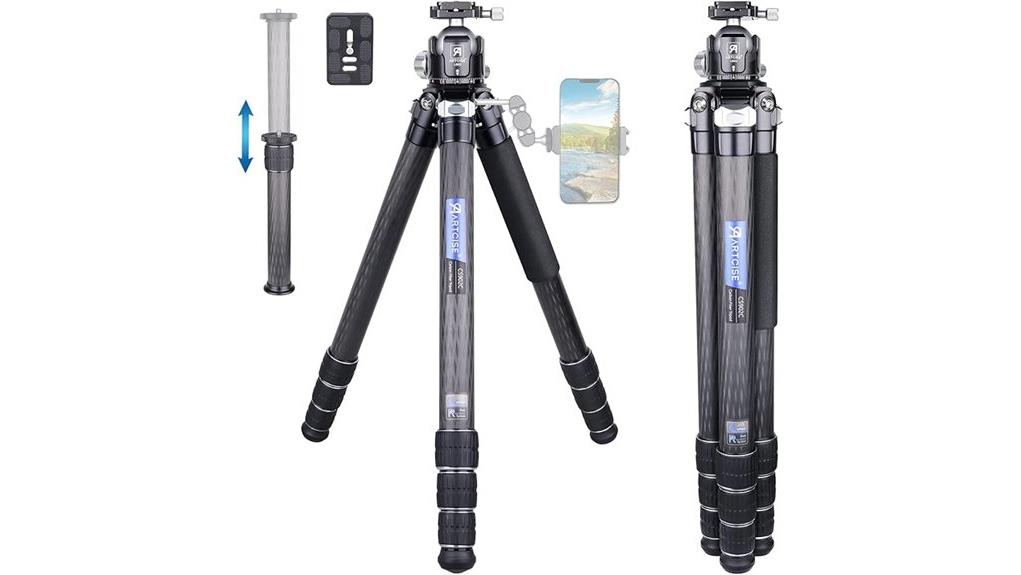
Frequently, the Z 6II’s in‑body image stabilization (IBIS) is the single biggest reason you’ll get usable shots in low light without cranking shutter speed or ISO; its sensor‑shift system pairs with lens stabilization to deliver up to several stops of shake reduction in real shooting, letting you handhold slower shutter speeds for static subjects. You’ll notice sensor stabilization outperforms many rivals at moderate focal lengths. Combined with full‑frame BSI readout and dual EXPEED 6 processors, high iso behavior is clean up to ISO 6400, usable to 12800 with conservative noise reduction. Faster primes still yield best shadow detail. For those who shoot handheld landscapes or slower-paced subjects, pairing the camera with a sturdy tripod can further improve sharpness and composition while still taking advantage of the Z 6II’s sensor‑shift stabilization.
Ergonomics, Battery Life, and Storage Expandability for Heavy Use
Because Nikon refined the Z 6II’s controls and balance, you’ll find it comfortable for long shoots and demanding hand‑held work: the deep grip and well‑placed dials let you change exposure quickly without shifting your hand, the tilting 3.2‑inch touchscreen gives reliable framing and AF control at awkward angles, and the viewfinder’s 0.8x magnification offers a roomy, distraction‑free preview. You’ll appreciate handgrip comfort during marathon sessions; weight distribution beats many competitors. Battery life is adequate for a day but add the vertical grip or USB‑C power for extended runs. Dual CFexpress/XQD plus UHS‑II SD slots provide robust storage and workflow flexibility; thermal management holds up during long 4K captures. If you need to carry your gear comfortably between shoots, choose a well-padded camera bag designed for photographers.
Lens Ecosystem and Accessories: Z Mount, FTZ Adapter, and Vertical Grip
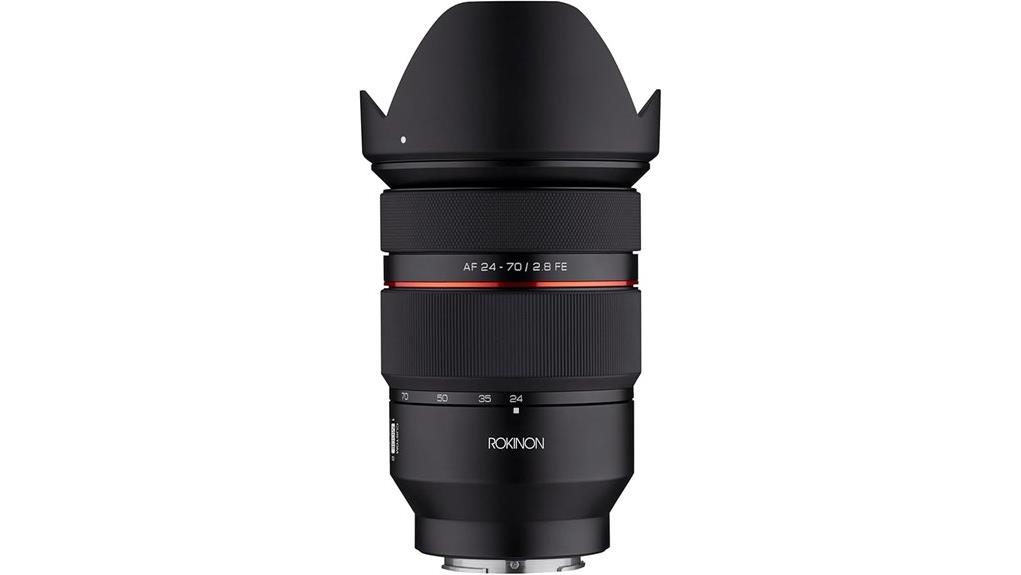
Having covered ergonomics and endurance, you’ll want to match the Z 6II’s handling to a lens and accessory strategy that maximizes its performance. You get a growing native Z mount lenses lineup offering fast primes and stabilized zooms that exploit the 24.5MP sensor and in-body stabilization for sharp stills and 4K60 video. Use the FTZ adapter to tap into roughly 360 F‑mount glass with maintained autofocus, though some legacy lenses lack full AF speed. The optional Vertical grip extends runtime and adds ergonomic vertical controls for pro workflows. Evaluate third party lenses for cost and optical trade-offs. Consider using lens mount adapters to expand creative options and mix native and legacy glass.
Who Should Buy the Z 6II and How It Compares to Alternatives
Who needs the Z 6II? You do if you want a balanced full-frame hybrid: 24.5MP BSI sensor, dual EXPEED 6, 14 fps, and IBIS for stills and 4K60 video. If you’re a travel photographer who needs weather-sealed ergonomics, long battery life and USB-C power, it fits. Compare to higher-res rivals (Sony A7R series) — lower pixel count but better low-light and buffer; versus faster-sport bodies (Sony A9/Canon R3) — less speed but more affordable. For budget shooters it’s a premium-value pick: dual card slots, strong AF, extensive lens compatibility via Z and FTZ. It’s also an excellent choice if you value a compact but capable system with dedicated DSLR accessories.
Some Questions Answered
Does the Z 6II Have Built-In Stereo Microphones and Headphone Jack for Monitoring?
Yes — you get built in microphones, but they’re mono on the Z 6II, so they’re fine for reference audio but not ideal for professional stereo capture. You also get a headphone jack for live monitoring and audio level checks, which is a strong plus versus entry-level bodies. For true stereo or higher-fidelity sound you’ll want an external stereo mic or XLR adapter; the headphone jack lets you verify levels in real time.
Can the Camera Tether Directly to Smartphones for Remote Shooting and Transfers?
Yes — you can wirelessly tether the camera to smartphones for Mobile remote control and file transfers. You’ll use Nikon’s SnapBridge/Wireless tethering over Bluetooth/Wi‑Fi to remote-trigger, change basic settings, and pull JPG/RAW previews; speeds aren’t as fast as USB-C wired tethering and full-frame video offload, but it’s convenient for quick shots and metadata sync. For high-speed transfers or professional tethering, prefer USB-C wired solutions.
What Weather-Sealing Level Does the Z 6II Offer for Harsh Environments?
You get robust weather sealing: a magnesium alloy chassis with thorough gasket protection and sealed port covers, giving strong resistance to dust and moisture in harsh environments. Compared to prosumer bodies, sealing is on par with flagship mirrorless models, though not fully submersible. You’ll still avoid heavy rain, sand, and snow with confidence; long-term exposure or underwater use requires additional housing. Maintenance and lens seals remain critical for overall ingress protection.
Is In‑Camera Focus Stacking or Interval Shooting Supported Natively?
No, the Z 6II doesn’t offer native focus stacking, but it does support interval shooting. You can set interval shooting in-camera for timelapses and capture sequences, then perform focus stacking later in software. Technically, in-camera stacking would require automated microstep focus control and stacking algorithms—which the Z 6II omits—so you’ll rely on manual focus shifts or third-party firmware/remote controllers plus post-processing for true stacked depth-of-field results.
Which Batteries and Chargers Are Recommended for Air Travel and Spares?
Use genuine EN-EL15c batteries and the MH-25a charger for regular use; carry spare EN-EL15c cells in your carry-on with charge under Lithium limits and Spare protection (terminal covers, original cases). For extended shoots, add an optional vertical-grip battery pack or a USB-C power bank rated for camera charging. Compare capacities: stock EN-EL15c vs higher-cycle third-party — OEM wins reliability, third-party wins price/extra capacity but risks warranty issues.