The DJI Mini 4K gives you a compact, travel-ready 4K/UHD drone with a 3-axis gimbal that yields steady footage for vlogs and scouting while keeping weight under 249 g. You’ll get sharp daytime stills and smooth pans, but low-light noise and occasional fine jitter show up in action shots. Real-world sorties run 22–26 minutes and transmission falls back in urban or wooded areas. Keep batteries and props spare, and keep going to learn detailed tips and comparisons.
Some Key Takeaways
- Lightweight under 249 g and foldable, ideal for travel with relaxed regulatory requirements.
- 12 MP 1/2.3″ sensor shoots 4K/30 stabilized by a 3-axis gimbal for smooth, usable footage.
- Specified 31-minute flight time realistically yields 22–26 minutes in typical wind and payload conditions.
- Transmission works several kilometers in open line-of-sight but degrades in urban or wooded environments.
- Best for vloggers and casual creators seeking portability; pros may prefer Air/Pro models for larger sensors and obstacle avoidance.
Best Use Cases for the DJI Mini 4K (Travel, Vlogging, Beginners)
Because it’s under 249 g, foldable, and packs a 4K camera with a 3-axis gimbal, the DJI Mini 4K is ideally suited for travel and vlogging where weight, portability, and steady footage matter. You’ll value its compact footprint for city exploration and solo travel: quick deploy, reliable transmission, and automated shots reduce setup time. For family events and beach adventures, the stable gimbal and intelligent modes deliver usable clips with minimal post. Battery life and 10 km link support longer outings, though wind limits apply. Overall, it’s a pragmatic choice for on-the-go creators prioritizing size, stability, and straightforward operation. Consider pairing it with a drone landing pad to protect takeoff and landing spots and improve shot consistency.
Image, Video, and Stabilization Performance With Sample Scenarios
Evaluating the Mini 4K’s imaging and stabilization shows it delivers reliable, compact performance: the 1/2.3″ CMOS sensor and 12 MP stills produce well-exposed images with balanced color and usable detail at base ISO. You’ll get crisp 4K/30 video stabilized by a 3-axis gimbal that minimizes motion blur during slow pans and tracking. In bright daylight landscapes the sensor holds dynamic range; in windier action shots the gimbal compensates but fine jitter can remain. Low light noise rises noticeably above base ISO, so you’ll prefer golden hour or manual exposure limits. Overall, predictable, portable imaging for travel and vlogging. For photographers who travel often, pairing the Mini 4K with a portable SSD can streamline offloading and backing up your footage in the field.
Flight Time, Range, and Transmission Reliability in Real-World Tests
Image and gimbal performance set expectations for how the Mini 4K behaves in the air, but flight time, range, and transmission directly determine what you can actually capture on a mission. You’ll see close to the specified 31 minutes in calm conditions; realistic sorties drop to 22–26 minutes when accounting for wind, payload, and battery degradation over repeated cycles. Transmission held solid to several kilometers in open areas, with the 10 km spec reachable only under ideal line-of-sight. Urban or wooded environments introduced occasional frame drops from signal interference. Overall, plan conservative flight durations and maintain visual line-of-sight for reliable data capture. This drone is ideal for those who enjoy photography and want high-resolution drones for stunning aerial photos.
What’s Included, Portability, and Practical Packing Tips
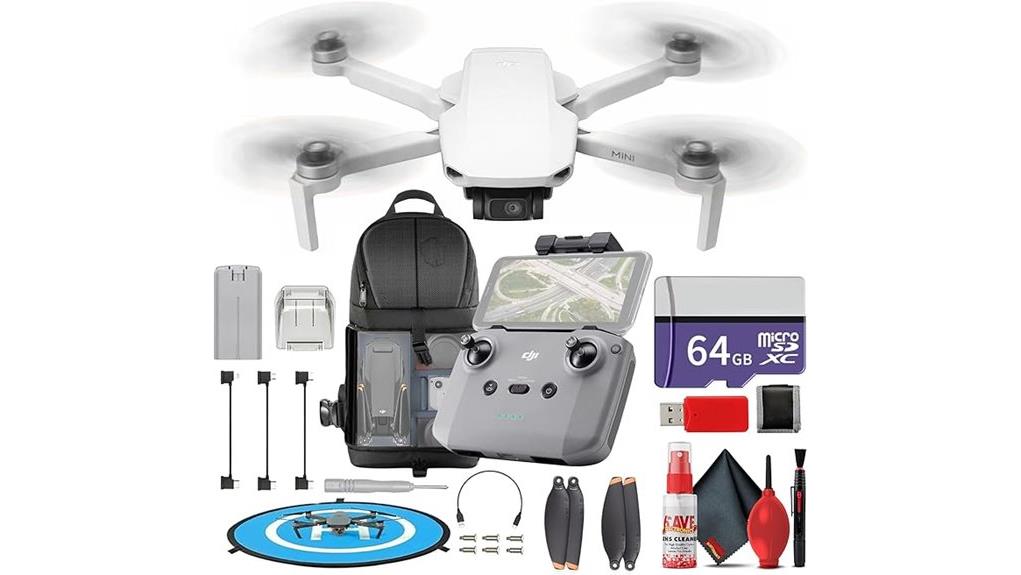
While compact and light enough to stay under the 249 g threshold, the Mini 4K package gives you more than just the aircraft and controller. You get a Micro Extreme Pro 64GB card, memory card reader, cleaning kit, memory card wallet, landing pad and a pro sling backpack—practical for transport and quick deployment. Assess capacity: bring extra batteries and spare propellers; the included bag fits them without strain. Add a small weather kit and cable organizers to protect electronics and tidy leads. Pack for efficient access, balance weight front-to-back, and secure the gimbal for transit. Consider pairing the included pro sling backpack with rolling cases to protect gear during travel and quick field setups.
Value Verdict : Who Should Buy the DJI Mini 4K and Alternatives to Consider
Now that you’ve got packing and transport nailed, let’s look at who actually benefits from the Mini 4K. You’ll appreciate its sub-249 g class, 4K/30fps, 3-axis gimbal, and 31-minute endurance if you travel, vlog, or need a reliable lightweight scout drone. It balances image quality and portability with intuitive DJI Fly controls. If you need cheaper options, consider budget alternatives like older Mini models or entry-level knockoffs—expect compromises in sensor and transmission. For pro use, evaluate premium upgrades (Air/Pro series) offering larger sensors, higher bitrate, and obstacle avoidance. Choose based on sensor needs, range, and regulatory limits. The website specializes in selling drone camera gear for photography enthusiasts.
Some Questions Answered
Is This Drone Legal to Fly Without Registration in My Country?
Possibly — you’ll need to check your country’s registration rules and local exemptions. Since the drone is under 249 g, many jurisdictions exempt it from registration, but technical criteria (max takeoff weight, operational limits, geofencing rules) and pilot requirements can vary. Verify local aviation authority guidance, confirm any age, remote ID, or operational restrictions, and guarantee compliance with no-fly zones. Don’t assume exemption without reading specific national regulations.
Can I Use Third-Party Batteries and Chargers Safely?
You can, but you shouldn’t casually. Aftermarket batteries and third party chargers may fit and power the drone, yet they often lack the exact cell chemistry, protection circuits, and firmware integration DJI designs. That raises risks: reduced flight time, incorrect voltage, fire, or lost telemetry. If you choose aftermarket options, verify certified specifications, balanced-cell protection, and reputable testing; monitor temperature, avoid unattended charging, and keep firmware updated to minimize hazards.
How Durable Is the Drone in Windy or Rainy Conditions?
You’ll find the drone moderately durable: wind resistance handles light to moderate gusts but you shouldn’t fly in strong winds or gust fronts. Flight stability, aided by the 3-axis gimbal and flight algorithms, compensates for turbulence up to a point. Water sealing is minimal — it’s not waterproof — so avoid rain, heavy mist, or salt spray. Overall, you’ll rely on careful weather assessment and landing early if conditions worsen.
Does It Support RAW Photo Capture and Advanced Color Profiles?
Yes — you’ll get RAW support and selectable Color profiles for greater post-processing control. The camera captures 12 MP JPEG plus RAW (DNG), letting you extract more dynamic range and correct exposure. Color profiles offer standard, vivid, and flat-like options for grading; flat yields conservative contrast for colorists. Overall, the features are competent for hobbyists and prosumers, though sensor size limits extreme grading latitude compared to larger-sensor drones.
Are Firmware Updates Frequent and Easy to Install?
Yes — firmware cadence is regular and updates are straightforward. You’ll get periodic releases addressing stability, camera tuning, and flight performance; frequency varies but averages several times yearly. Install simplicity is high: the DJI Fly app detects updates, downloads them to the controller, and walks you through the firmware flashing with clear prompts. You’ll need charged batteries and a stable connection, but the process is fast and reliable for most users.