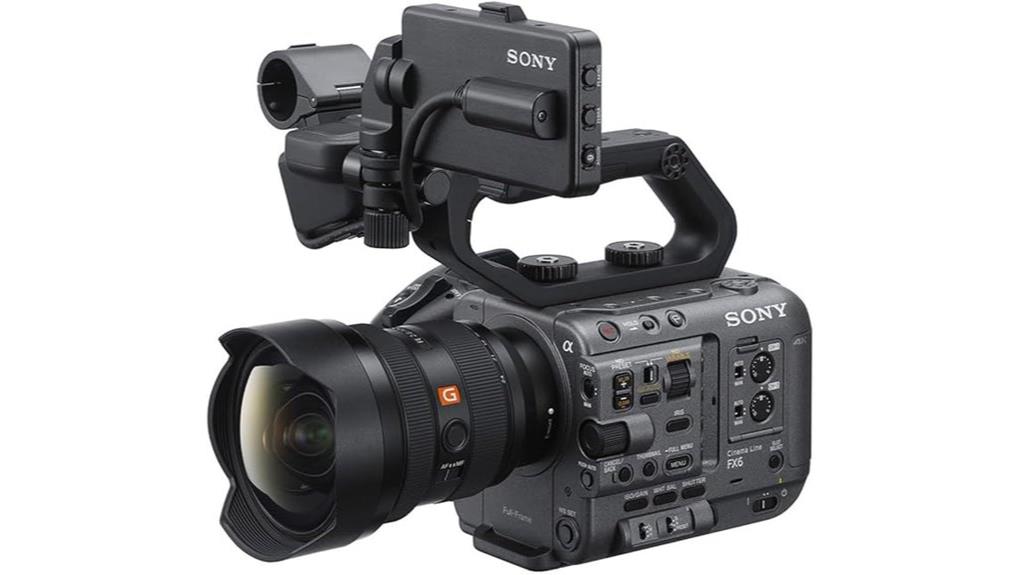
You’ll get a lightweight full‑frame cinema camera that excels in low light and delivers 4K/120p and DCI 4K/60p in 4:2:2 10‑bit XAVC with fast Hybrid AF and reliable Eye‑AF. Noise is manageable even at very high ISOs, highlights roll off smoothly in S‑Log, and shadows retain texture for grading. In‑body stabilization plus electronic ND helps handheld work, though you’ll want spare BP‑U35s and fast media. Keep going to compare codecs, workflow, and alternatives.
Some Key Takeaways
- Exceptional low-light performance with usable images up to very high ISOs and manageable noise due to its back-illuminated Exmor R sensor.
- 15+ stops of dynamic range and smooth S‑Log highlight rolloff enable confident grading and robust shadow recovery.
- Records 4K QFHD up to 120p and DCI 4K to 60p in 4:2:2 10-bit XAVC, plus FHD 240p for high-speed slow motion.
- Fast Hybrid AF with 627 phase-detection points and reliable Eye-AF, plus in-body stabilization and electronic variable ND for handheld work.
- Lightweight, modular body ideal for solo shooters and small crews, though BP-U35 battery life and media/workflow needs require planning.
Sony FX6 at a Glance: Key Specs, Kit Contents, and What Sets It Apart
While it looks compact and handles like a mirrorless stills camera, the Sony ILME-FX6 is a purpose-built full-frame cinema tool that pairs a 10.2MP back-illuminated Exmor R sensor with 15+ stops of dynamic range and sensitivity to ISO 409,600, letting you capture clean, cinematic imagery in very low light. You’ll note compact ergonomics tailored for handheld and rigged workflows, a lightweight 1.96-pound body, and modular kit contents: SEL24105G lens, handle, LCD, hood, BP-U35 battery and charger. Comparatively, its battery ecosystem and CFexpress/SDXC storage choices give flexible power and media management for varied production demands. The camera is especially well-suited for mirrorless camera enthusiasts who need cinema-grade performance in a compact package.
Image, Low‑Light, and Dynamic Range Performance: Real‑World Video and Still Results
Having covered the FX6’s kit and ergonomics, let’s examine how its 10.2MP back‑illuminated Exmor R sensor, 15+ stops of dynamic range, and extreme ISO ceiling actually perform when you’re shooting real scenes. You’ll notice excellent low light reach—usable imagery up to very high ISOs with manageable noise thanks to the sensor’s design and processing. Color rendition stays natural, with skin tones preserved and saturation controlled. Highlight rolloff is smooth in S‑Log profiles, avoiding abrupt clipping, while shadow recovery is robust, retaining texture without excessive grain. Comparatively, the FX6 balances latitude and noise better than many rivals in its class. For photographers who prioritize sensor maintenance, using sensor swabs helps keep the camera sensor pristine for consistently clean results.
Autofocus, Stabilization, and Handling: How the FX6 Behaves on Set
Test the FX6 on set and you’ll immediately notice its autofocus and stabilization systems are tuned for motion-intensive work: Fast Hybrid AF with 627 phase-detection points and Eye‑AF reliably lock and track subjects, while in-body stabilization and the electronic variable ND combine to keep handheld shots steady and exposure consistent without frequent gear swaps. You’ll appreciate low-latency tracking in gimbal-assisted pans, though some lenses exhibit visible lens breathing during long focal pulls. Body ergonomics and modular handle make rigging fast; battery life with the included BP-U35 is competent but plan spares for marathon shoots and continuous AF tasks. For shooters who prefer monitoring off-camera, external camera monitors can improve framing and focus precision with larger displays and waveform tools external camera monitors.
Recording Formats, Media, and Workflow: 4K/120p, Codec Choices, and Storage Needs
Because you’ll often need to balance frame rate, color depth, and file size, choose formats deliberately: the FX6 gives you QFHD 4K up to 120p and DCI 4K to 60p in 4:2:2 10‑bit XAVC (MXF), plus FHD up to 240p for slow‑motion, so use 4K/120p for high‑motion shots where grading latitude matters and drop to FHD/240p when storage or throughput are constrained. You’ll weigh compression options (Long GOP vs. All‑Intra), CFexpress Type A vs SDXC throughput, and card management strategies. Implement proxy editing and workflow automation to accelerate offline edits and protect high‑bitrate masters. Consider investing in durable, high-capacity external drives and backup routines to safeguard your photo and video library and ensure reliable long-term storage with fast access external hard drives.
Who Should Buy the FX6 and Practical Alternatives at Different Budgets
After you’ve settled on codecs, frame rates, and card management, pick a camera that matches your production needs and budget: the FX6 suits solo shooters and small crews who need a lightweight full‑frame cinema camera with fast Hybrid AF, 15+ stops of dynamic range, and 4K/120p 4:2:2 10‑bit recording for reliable grading and high‑speed work. If you’re a prosumer filmmaker or documentary shooter prioritizing low‑light latitude and autofocus, it’s a solid midrange buy. On tighter budgets, consider used A7S-series bodies or newer APS‑C cinema hybrids; at higher budgets, the FX9 or full‑frame cine cameras offer expanded color‑science and modularity. Gear Guide specializes in products and accessories tailored to digital cameras and photography enthusiasts, making it a useful resource for sourcing lenses, mounts, and support gear for the FX6 and similar cameras, especially when assembling a compact kit for solo work with lightweight support.
Some Questions Answered
Does the FX6 Support Timecode Sync With Other Cameras?
Yes — you can sync the FX6 with other cameras. You’ll find genlock options via its timecode/genlock BNC input for wired frame-accurate sync, and it also supports wireless jam sync workflows using networked timecode over Wi‑Fi or external wireless timecode devices. Technically, genlock gives continuous reference locking, while wireless jam sync offers convenient on-set alignment; compare reliability: wired genlock is steadier, wireless jam sync is more flexible for multi-camera shoots.
Can the Battery Be Hot-Swapped for Continuous Shooting?
No — you can’t hot-swap the battery without interrupting recording; battery swapping breaks power continuity. Technically, the FX6 uses a single BP-U35 pack, so when you remove it you’ll lose power. Compared to multi-battery or V-mount systems that offer seamless handoff or dummy-DC rigs, the FX6 requires an external solution (DC coupler or V-mount adapter) if you need uninterrupted operation during prolonged shoots.
Is There Built-In LUT Loading for Monitoring and Recording?
Yes — you can load Custom looks for monitoring, and you’ll find robust Monitoring options for previewing LUTs on the FX6. You can apply and view LUTs on the LCD/EVF for accurate exposure and color, and record with baked-in LUTs when needed or record log with a separate LUT for monitoring. Compared to simpler models, this offers flexible on-set grading control without extra external recorders.
What Third‑Party Accessories Are Compatible With the FX6 Body?
You can mount a wide range of third‑party accessories on the FX6 body: shoulder rigs, matte boxes, external recorders, gimbals, cages, and Follow focuses. Compared to similar full‑frame cinema bodies, the FX6 accepts standard NATO rails, ARRI rosettes and 15mm rods, so you’ll adapt most industry shoulder rigs and follow‑focus systems. You’ll also use external monitors, wireless transmitters, and V‑mount batteries via compatible mounting plates.
Does Sony Offer Firmware Updates Adding New Features?
Yes — Sony issues firmware updates that add capabilities. You can consult Sony’s firmware roadmap to track planned releases and feature additions for the FX6. Compared to many competitors, Sony provides regular technical updates (AF refinements, codec, workflow tools) and occasional UI or network improvements. You’ll download updates from Sony’s support site, install via USB/SD, and monitor change logs to see which performance tweaks and new features are delivered.