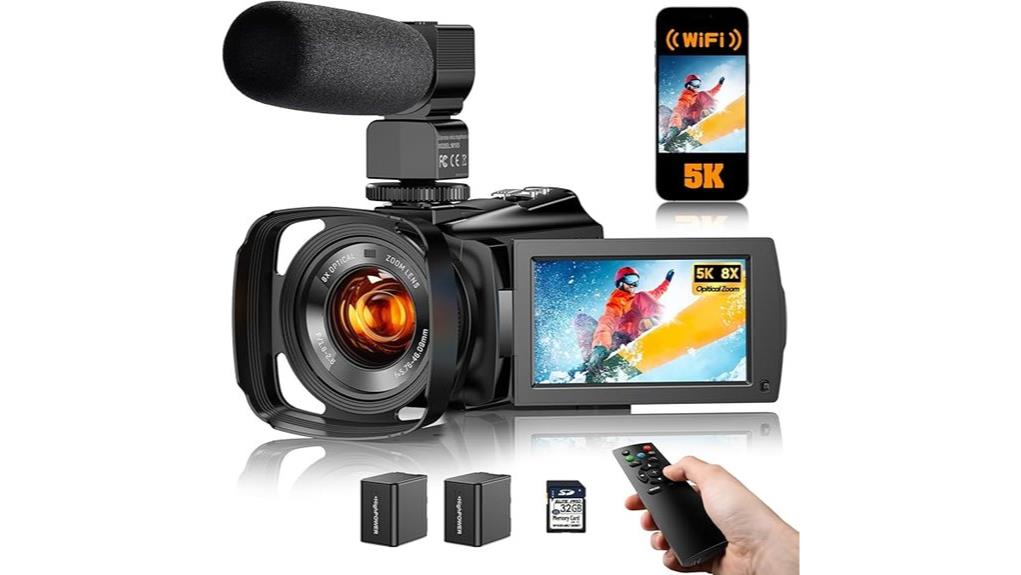
You’ll get true 5K video, 64MP 16:9 stills, and an 8× optical zoom that keeps mid-range detail intact while digital zoom softens textures. Low-light shooting benefits from full-color night vision and TOF laser assist, though high ISO brings aggressive denoising that blurs fine detail. 6-axis EIS steadies handheld pans with occasional micro-jitter; motion smoothing can cause haloing. The compact touchscreen and Viipulse app aid workflow, but battery, storage, and ports are key considerations if you want more specifics.
Some Key Takeaways
- True UHD 5K recording with a 64 MP stills mode delivers high-resolution video and 16:9 JPEG photos for creators needing detail.
- 8× optical zoom (5.76–46.09 mm, 9G4P) maintains image detail better than digital zoom across mid-range focal lengths.
- Aperture f/1.8–2.6 and TOF laser-assisted full-color night vision enable usable low-light capture, though high ISO denoising softens texture.
- 6-axis EIS stabilizes handheld pans effectively, but occasional micro-jitter and frame-interpolation haloing can appear during motion smoothing.
- Good connectivity (Wi‑Fi Viipulse app, webcam/HDMI out) and dual batteries support field workflow, but 5K files demand UHS/U3 cards and offload plans.
What the HDV284K Offers at a Glance (5K Video, 64MP Stills, 8X Optical Zoom)
Discover what the HDV284K delivers: true UHD 5K video recording, 64 MP stills, and an 8× optical zoom housed in a 434 g handheld body. You get a compact system that records MP4 5K footage and captures 64MP JPEGs with a 16:9 aspect ratio. The 9G4P lens, 5.76–46.09 mm focal range and f/1.8–2.6 aperture prioritize versatility across distances. Autofocus options and TOF laser assist support reliable focus. Manufacturers applied lens coatings to reduce flare and improve contrast, while the camera’s color science aims for neutral, repeatable skin tones and accurate hues for efficient postproduction. This model pairs well with essential mirrorless accessories for enthusiasts.
Real-World Image and Video Performance: Low Light, Stabilization, and Zoom Tests
Testing low-light sensitivity, stabilization, and zoom reveals how the HDV284K performs in real shooting conditions rather than on paper. You’ll find low light capability competent: full-color night vision and TOF assist keep subjects usable, though shadow detail softens. Noise handling is balanced — aggressive denoising reduces speckle but blurs fine texture at high ISO. Stabilization via 6-axis EIS keeps handheld pans steady; you’ll notice occasional corrective micro-jitter but overall usable footage. Motion smoothing applies to frame interpolation and can introduce haloing on edges; disable it for critical work. Zoom maintains sharpness up to mid-range; at 8X optical you retain detail better than digital. Proper storage and humidity control in a camera dry cabinet help preserve camera performance over time.
Usability and Connectivity: Touchscreen, Controls, Streaming, and App Workflow
While the HDV284K packs a 3.6-inch 270° IPS touchscreen that’s responsive and clear, you’ll quickly notice its small size limits complex menu navigation and framing precision compared with larger-camera displays. You’ll use touch gestures for quick exposure, focus, and playback, but deep settings feel cramped; physical buttons and a logical remote layout compensate for finer control. Viipulse app pairing is straightforward over Wi‑Fi, offering remote preview and file transfer, yet stream latency varies by network and device. Webcam and HDMI options reduce reliance on the app for live output, keeping workflows flexible for on-the-go streaming. For shooters who also prioritize audio, pairing the camcorder with dedicated audio recorders can significantly improve sound quality and simplify post-production.
Battery Life, Storage, Accessories, and Portability for Field Use
Because you’ll often be shooting away from power, battery performance and onboard storage shape how the HDV284K behaves in the field: the camcorder ships with two rechargeable (nonstandard) batteries that let you swap for extended sessions, but exact runtime depends on resolution, stabilization, and streaming use—expect shorter life when recording 5K or using Wi‑Fi live streaming—and plan to carry spares or a USB power bank adapter for longer shoots; onboard 32 GB microSD is fine for short projects but 5K files fill it fast, so you’ll need high‑speed UHS/U3 cards and a workflow for offloading footage. Assess Battery endurance and Carry options before long days. For photographers who rely on long shoots, consider keeping a selection of compatible spare batteries and chargers to extend shooting time.
Who Should Buy the HDV284K : Ideal Use Cases and Final Verdict
If you need a portable camcorder that balances high-resolution capture with versatile low-light performance, the HDV284K is worth considering; it’s aimed at content creators who prioritize 5K video and detailed 64 MP stills but also rely on features like full‑color night vision, TOF laser assist, and 6‑axis EIS for usable footage in challenging conditions. You should buy it if you’re a budget filmmakers looking for pro-style features without heavy gear, a solo streamer needing webcam and live-streaming tools, or an enthusiast documenting low-light scenes. It’s also suitable for basic nighttime surveillance, though it’s not rugged or weatherproof. Consider pairing it with on-camera LED lights for improved illumination in dim environments and more consistent color rendition on-camera LED lights.
Some Questions Answered
Does the Camcorder Support External Microphones With Plug-And-Play Compatibility?
Yes — you can use an external mic; it’s effectively plug and play via the camcorder’s microphone input. You’ll want to run compatibility tests with your specific microphone models, since nonstandard batteries and accessories sometimes affect grounding and power. Try a wind muff during outdoor shoots to check noise rejection and mounting. You’ll confirm functions like audio level control, live monitoring, and stable connection before critical recordings.
Is There Any Dust or Splash Resistance Despite Not Being Water Resistant?
No, it isn’t weather sealed, so you shouldn’t expect dust or splash resistance. You’ll need to treat it as non-waterproof gear: use maintenance tips like keeping caps on ports, storing it in the included bag, using silica packs, and cleaning with a soft brush and blower. For dusty or damp environments, add a protective cover or external housing. Regular inspections and prompt cleaning will reduce contamination and prolong reliable operation.
Can the Batteries Be Charged Inside the Camera via USB?
No — you can’t charge the batteries inside the camera via USB. The camcorder uses two nonstandard rechargeable batteries that you remove for charging, which preserves internal charging circuitry and helps monitor battery health externally. You’ll recharge batteries in an external charger or replace them with charged spares. This approach reduces in-camera heat and extends battery health, but means you won’t get convenient USB internal charging for field top-ups.
Does the Camera Accept Larger microSD Cards Beyond 32 GB?
Yes — the camera supports microSD compatibility beyond the installed 32 GB card. You can use larger cards as long as they meet the specified flash memory classes (C10, UHS U3, V60) and the camera’s capacity limits. For reliable 5K recording and continuous streaming, stick to V60-rated cards and formatted microSD types up to the manufacturer’s maximum (check manual for exact GB/TB cap). Always format in-camera before use.
Are Firmware Updates Available Through the Viipulse App?
Yes — you can get app only updates via Viipulse; the app delivers firmware patches and feature updates directly to the camera when connected. You’ll use the Viipulse interface to check, download, and apply updates over Wi‑Fi or USB. If you prefer manual firmware, the manufacturer provides firmware files and manual firmware installation instructions in support documents. You should follow official steps to avoid bricking the device and keep backups.