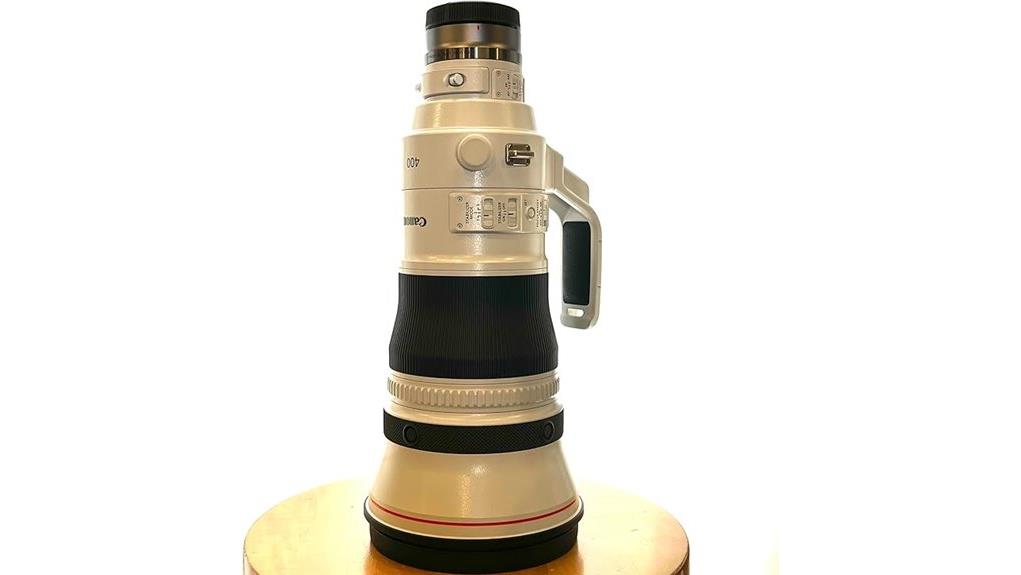
You’ll get pro-grade f/2.8 optics with stellar center sharpness and excellent edge resolution, plus fast, predictable AF that tracks low‑contrast targets on EOS R bodies. IS delivers up to 5.5 stops with dedicated panning mode, though the ~15.5 lb mass favors monopod or gimbal support for extended handheld work. RF 1.4x/2x extenders keep AF but trade some contrast and diffraction; overall it’s a specialist sports/wildlife tool—keep going to see detailed tests and comparisons.
Some Key Takeaways
- Exceptional center sharpness at f/2.8 with excellent edge resolution and minimal chromatic aberration.
- Fast, predictable AF with reliable tracking on EOS R bodies, including low‑contrast subjects.
- Optical IS provides up to 5.5 stops with three modes; Mode 2 excellent for panning.
- Native RF mount optics match EF 400mm III; compatible with 1.4x/2x extenders at some IQ cost.
- Heavy (~15.5 lb); monopod, gimbal, or sturdy tripod recommended for prolonged use.
Performance Summary: Image Quality, Sharpness, and Autofocus With Sample Use Cases
When you need razor‑sharp results at long distance, the RF 400mm f/2.8 delivers: optics identical to Canon’s EF 400mm f/2.8L IS III produce consistently high center and excellent edge resolution across the frame at f/2.8, with minimal chromatic aberration and well‑controlled coma for point highlights. You’ll notice tight motion compression that flattens perspective, helping isolate subjects in sports and wildlife. Autofocus is fast, predictable, and tracks low-contrast targets reliably. Color rendition is neutral with good skin and plumage tones straight from camera; you’ll still want subtle tweaks for saturation and contrast in demanding lighting. For those building a prime lens kit, this lens exemplifies why prime lenses are prized for superior sharpness and subject isolation.
Stabilization and Handling: IS Performance, Weight, Ergonomics, and Tripod Use
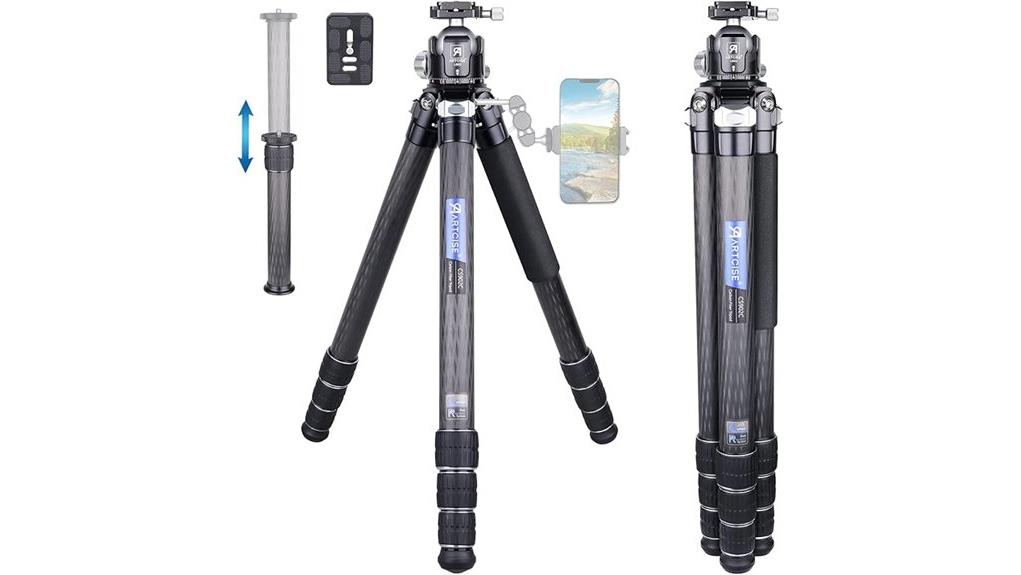
Although heavy, the RF 400mm f/2.8’s stabilization makes handheld shooting practical in many situations: Canon’s Optical Image Stabilization delivers up to 5.5 stops of shake correction with three selectable IS modes, letting you prioritize tripod‑style steady framing, panning for sports, or general use. You’ll find IS effective at moderate shutter speeds, but weight (15.5 lb) imposes balance tradeoffs; prolonged handheld work demands monopod support or shoulder harnesses. Ergonomics are purposeful: robust tripod collar, large focus ring, and well-placed controls aid handling techniques like gaited panning and quick repositioning. Use a gimbal head or sturdy tripod for static shoots. For photographers seeking support options and accessories tailored to long lenses, check out our tripod and gimbal selection.
Optical Features Explained: Coatings, Aperture, Angle of View, and Extender Compatibility
Having covered handling and IS, let’s examine what actually forms the image: the RF 400mm f/2.8’s optics. You’ll find Super Spectra and Air Sphere coatings reduce ghosting and flare, delivering tangible coating benefits in high-contrast scenes; they don’t eliminate veiling but improve microcontrast. The fixed f/2.8 provides shallow depth and consistent exposure; aperture dynamics favor subject isolation and faster shutter speeds but demand precise focus. The real angle of view is roughly 1.5°, so composition requires distance management. Both RF 1.4x and 2x extenders retain autofocus and sharpness reasonably well, though diffraction and contrast loss are measurable with the 2x. Keeping the sensor clean is important to fully realize these optical benefits, especially when shooting subtle microcontrast and fine detail, so consider using sensor swabs to maintain pristine images.
Real-World Shooting Tests: Sports, Wildlife, and Low-Light Results With Sample Settings
Because you’ll be using this lens in fast, dynamic situations, the RF 400mm f/2.8’s performance needs to be judged by actionable results—sharpness at distance, AF consistency, stabilization under panning, and low-light usability. You’ll get crisp central resolution at f/2.8 across sports and wildlife, slight edge falloff stopped by f/4. AF is fast and trackable on EOS R bodies; backlit flare is controlled by ASC. IS in Mode 2 handles panning well. For night sports, raise ISO to maintain 1/1000–1/2000s; expect usable files to ISO 6400. Telephoto portraits render subject isolation with creamy bokeh; focus hold is reliable. For handheld motion shots, pairing the lens with a gimbal stabilizer can further improve subject tracking and reduce shake.
Who Should Buy It and Alternatives: Ideal Users, Value Vs EF 400MM III, Extenders, and Buying Recommendations
If you shoot professional sports, wildlife, or any fast-action telephoto work and demand top optical performance with an f/2.8 aperture, this RF 400mm is built for you: it delivers the same optics as the EF 400mm f/2.8L IS III but in an RF mount with native compatibility for Canon’s extenders and mirrorless AF systems, so you’ll get reliable sharpness, fast AF, and effective IS for handheld or panning use. You should buy it if you need uncompromised speed and image quality for pro assignments; pros shooting professional portraiture or using a travel telephoto will find it heavy. Value vs EF III equals native RF benefits; use 1.4x/2x extenders cautiously. Consider used EF III with an adapter if budget constrained. This model is also ideal for photographers focused on wildlife and sports who need reach and low-light capability.
Some Questions Answered
Does It Come With a Tripod Collar and Foot Included?
No — it doesn’t include a dedicated tripod collar and foot in the box. You’ll get mounting options like the lens’ built-in tripod compatibility via an optional, separately sold Arca-type foot or third-party collars that attach to the lens’ tripod ring area. Technically, the lens accepts external collars for balanced support and smoother panning; you’ll need to purchase a compatible collar/foot to achieve proper mounting options and stable tripod use.
Is the Lens Weather Sealing Sufficient for Heavy Rain?
No — it’s resistant but not guaranteed for heavy rain. You’ll get effective dust and moisture resistance that reduces water ingress risk during light showers, but prolonged exposure and strong downpours can overwhelm seals. You should avoid shooting continuously in heavy rain, dry and inspect seals after use, and consider additional protection (rain cover). Seal longevity depends on maintenance and use; regular care prolongs effective weather sealing.
Can I Use the Lens Handheld for Extended Periods Comfortably?
You can, but you won’t be comfortable handheld for long. The 15.5-pound mass demands disciplined handling technique and active weight mitigation—use proper grip, elbow bracing, and the camera’s shoulder or chest support. Engage IS for up to 5.5 stops, switch to high-ISO when needed, and rotate shooting positions often. Add a monopod, sling strap, or gimbal for extended shoots; otherwise fatigue and reduced stability will limit usable time.
What Are the Compatible Teleconverters’ Effects on AF Speed?
Using a 1.4x will slightly increase AF lag and mildly degrade Tracking performance; you’ll still get usable autofocus with minor speed loss. Using a 2x causes more pronounced AF lag and noticeably worsens Tracking performance, especially on fast-moving subjects and in low contrast. You’ll still focus, but acquisition is slower and hunting increases. For critical sports or wildlife tracking, you’ll want 1.4x or rely on native 400mm for best AF speed.
Is the Filter Holder Compatible With Standard 52MM Screw Filters?
No — the supplied filter holder uses a 52mm drop-in screw filter system and won’t accept standard front-thread 52mm screw filters directly. You’ll need the specific 52(WIII) protector or compatible drop-in elements; don’t assume universal fit. If you require front-thread options, consider aftermarket rear adapter solutions or custom mounts that let you attach standard screw filters or larger holders, but these may affect sealing, balance, and optical spacing—so test before critical use.