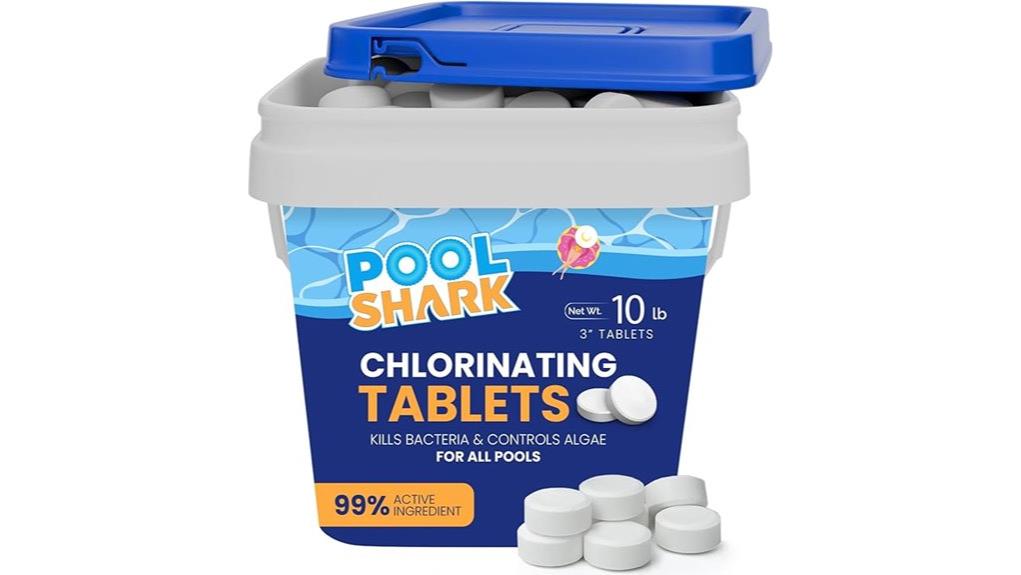
You’ll get steady, low‑maintenance chlorination with Pool Shark’s 3‑inch slow‑dissolving tablets when you follow dispenser guidelines and test regularly. They’re concentrated (about 90% active chlorine) and dissolve predictably to reduce spikes, so you’ll see consistent residuals and clearer water between shocks. Use floaters, skimmers, or feeders as directed, avoid contact with vinyl, and store dry with PPE. They pair well with weekly granular shock for occasional oxidation—keep going to learn practical tips and troubleshooting.
Some Key Takeaways
- High-purity trichloro tablets (≈90% active chlorine) provide steady, slow dissolution for multi-day sanitization.
- Works well in floaters, skimmers, and chlorinators when placed for even water flow and correct dispenser sizing.
- Predictable residuals reduce chlorine spikes and crashes, keeping water clearer with fewer weekly adjustments.
- Requires weekly monitoring of free chlorine, combined chlorine, and cyanuric acid, especially in saltwater systems.
- Handle and store carefully: wear PPE, keep tablets dry and ventilated, and avoid direct contact with vinyl liners.
What Pool Shark 3 Chlorine Tablets Are and How They Work
Often overlooked, Pool Shark 3-inch chlorine tablets are slow-dissolving trichloro-s-triazinetrione tablets (99% purity, ~90% active chlorine) designed to release sanitizer steadily over several days. You’ll rely on tablet chemistry that controls dissolution rate, keeping free chlorine consistent and reducing spikes that stress pool liners and equipment. These tablets act as maintenance sanitizer between shock treatments, preventing cloudiness and microbial growth. You’ll appreciate predictable decay curves that simplify dosing schedules. Consider environmental impact: concentrated chlorine reduces transport volume but demands careful storage and measured use to avoid overdosing and runoff. Use them thoughtfully to balance efficacy and safety.
How to Use These Slow‑Dissolving Tablets in Floaters, Skimmers, and Chlorinators
When you use Pool Shark 3‑inch slow‑dissolving tablets in a floater, skimmer, or automatic chlorinator, place them where water circulates evenly so the tablet dissolves predictably and maintains steady free‑chlorine levels. Put one tablet per dispenser size recommendation; don’t overload floaters or chlorinators. In skimmers, position tablets on the basket lip, not wedged, to avoid flow restriction that speeds dissolution. Check for float loss from worn floaters and replace damaged units. Adjust dispenser size or number of tablets to pool volume and pump runtime. Monitor and tweak tablet placement weekly to sustain consistent chlorine without surprises.
Performance: Sanitization, Clarity, and Scent – What to Expect Week‑to‑Week
Because Pool Shark’s 3‑inch slow‑dissolving tablets release chlorine steadily, you’ll see predictable week‑to‑week sanitization with fewer spikes and crashes in free chlorine levels. You’ll maintain clear water as the tablets continuously oxidize organic load, cutting down cloudiness between weekly shocks. Expect consistent residual byproducts at low, manageable levels; regular monitoring keeps those in check. The scent is mild — a subtle weekly fragrance rather than harsh chemical odor — if you keep levels within recommended ranges. Overall, you get dependable sanitization and clarity with minimal effort, provided you follow dosing guidance and test chlorine and cyanuric acid.
Safety, Pool Compatibility, and Handling Tips for Vinyl, Saltwater, and Inground Pools
Keeping steady chlorine levels with Pool Shark tablets makes handling safety and compatibility more straightforward, but you still need to follow specific precautions for different pool types. You should wear gloves and eye protection when handling tablets, store them dry and ventilated, and never mix with other chemicals. For vinyl precautions, avoid contact between undissolved tablets and the liner—use a floater or chlorinator to prevent bleaching or pitting. With saltwater interactions, monitor combined chlorine and stabilizer levels since trichloro can raise cyanuric acid; adjust as needed. For inground pools, use recommended feeders and test levels weekly to maintain safe, balanced water.
Who Should Buy Pool Shark Tablets and How to Pair Them With Weekly Shock
Pool Shark tablets are ideal for pool owners who want a low-maintenance, steady sanitizer—if you’re after set-and-forget chlorination for inground, above-ground, or salt setups, these slow-dissolving 3″ tablets fit the bill. You should buy them if you manage family pools, want steady residual chlorine between treatments, and prefer minimal daily effort. Use a floater, skimmer, or feeder per label, and measure sanitizer levels regularly. Pair with a weekly shock using chlorine granules: test, adjust pH, broadcast shock at dusk, then let stabilizer and tablets maintain levels. Watch for chemical interactions; never mix products directly.
Some Questions Answered
Do These Tablets Stain Pool Liners or Surfaces Over Time?
No, they won’t normally stain liners or surfaces over time if you use them properly. You’ll avoid chlorine residue build-up and surface discoloration by keeping tablets in floaters, skimmers, or chlorinators (not placed directly on vinyl), maintaining recommended chlorine levels, and shocking as advised. Regular circulation and monitoring prevent concentrated contact points. If you see residue or discoloration, reduce direct tablet contact and test water chemistry to correct imbalances promptly.
Are They Safe for Use With Pool Heaters and Solar Systems?
Yes — you can use them with pool heaters and solar systems. Their slow-dissolving 3″ tablets provide steady sanitizer that won’t spike chlorine levels, so heater compatibility is good when you keep chlorinator placement and flow proper. Monitor for solar corrosion risk on metal components by maintaining balanced water chemistry and routine inspections. Don’t place tablets directly in heaters or near sensitive solar panels; use floaters, skimmers, or feeders as intended.
How Should I Store Leftover Tablets Long-Term?
Store leftover tablets in airtight containers, kept cool, dry, and away from direct sunlight. Use childproof storage like locked cabinets or chemical-proof bins labeled clearly. Don’t mix with other chemicals or metal tools, and avoid humid areas or pool decks. Check seals periodically and discard degraded tablets safely according to local regulations. Keep the storage area well-ventilated and inaccessible to children and pets to prevent accidental exposure.
Can Tablets Be Used in Indoor Pools With Limited Ventilation?
Yes — you can use the tablets in indoor pools with limited ventilation, but you’ve got to manage indoor air quality and consider ventilation upgrades. Use floaters or automatic feeders to control dose, avoid over-chlorinating, and monitor combined chlorine and free chlorine frequently. If you smell strong chlorine or see irritation, stop use and increase air exchange, install mechanical ventilation or dehumidification, and consult a pool professional for safe long-term operation.
Do They Affect Pool pH or Require Additional pH Adjusters?
Yes — the tablets will lower your pH and affects alkalinity over time because they’re trichloro-based and acidic. You should monitor pH and total alkalinity regularly and adjust as needed with alkalinity increaser or pH increaser. Dosing frequency influences how quickly values drift, so keep steady dosing and check levels more often after adding tablets. With routine testing and occasional adjusters, you’ll maintain balanced, safe water.