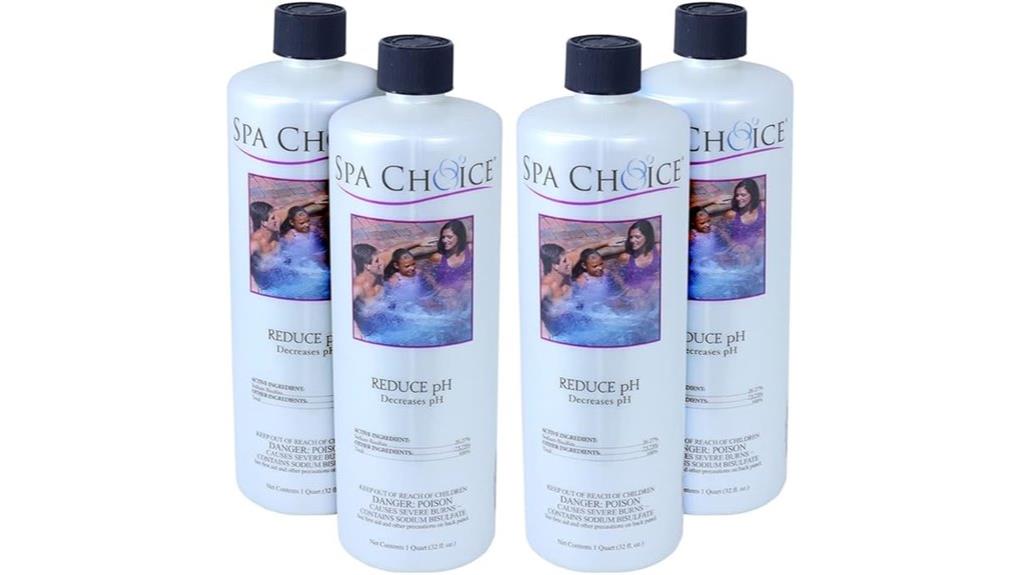
SpaChoice Liquid pH Decreaser is a practical, fast‑acting liquid acid that you’ll use when your hot tub pH is above 7.8 or alkalinity exceeds ~140 ppm. Shake, add 1 oz, run the pump 30 minutes, then retest; repeat in 1 oz increments until pH’s 7.2–7.8. It lowers total alkalinity as it works, so monitor both and wear gloves/eye protection. A 4‑pack fits most 400–500 gallon spas, and the next section covers troubleshooting and dosing tips.
Some Key Takeaways
- Liquid formula quickly lowers spa pH to the recommended 7.2–7.8 range without granular dust.
- Dose 1 oz, run circulation, wait 30 minutes, then retest; repeat in 1 oz increments until balanced.
- Also lowers total alkalinity during dosing, so monitor alkalinity after each 30-minute wait.
- Compatible with bromine, chlorine, and biguanide sanitizers; avoids sanitizer incompatibility issues.
- Wear gloves and eye protection, store upright, and prefer slow, logged adjustments to avoid overcorrection.
How SpaChoice Liquid pH Decreaser Works and When to Use It
Because spa water tends to drift alkaline, SpaChoice Liquid pH Decreaser gives you a quick way to bring pH back into the recommended 7.2–7.8 range; it’s a liquid acid that neutralizes excess hydroxide ions and will also lower total alkalinity as you dose. You’ll use it when tests show pH above 7.8 or alkalinity exceeding 140 ppm. It integrates with common sanitizers and simplifies water chemistry compared with granular acids. For practical use, test frequently, add measured doses, wait, and retest. Follow label instructions to protect user safety and avoid overcorrection that stresses equipment or skin.
Quick Setup: Dosing Steps to Lower pH Safely in Your Hot Tub
Now that you know when to use SpaChoice Liquid pH Decreaser, here’s a straightforward dosing routine to get your spa back in range without guesswork. Test pH and total alkalinity, then run the pump or air blower. For initial mixing, shake the bottle and dilute a small amount in a bucket of spa water if desired. Add 1 ounce directly to the spa, wait 30 minutes with circulation, then retest. Repeat 1 oz increments and 30-minute waits until pH is 7.2–7.8. Follow safety precautions: wear gloves and eye protection, keep kids and pets away, store upright.
How It Affects Total Alkalinity and Sanitizer Compatibility
When you lower pH with SpaChoice Liquid pH Decreaser, you’ll also bring total alkalinity down, so monitor both and adjust slowly; reducing pH by 0.1–0.2 units can measurably affect alkalinity, especially in softer water. You should test alkalinity interaction after each 1 oz dose and wait 30 minutes, because repeated dosing can push alkalinity below the 80 ppm target. That impacts water buffering and can cause pH bounce. SpaChoice is compatible with common sanitizers—bromine, chlorine, biguanide—so sanitizer compatibility isn’t a concern if you maintain recommended ranges. Adjust alkalinity separately if it drops too low.
Real‑World Performance: What to Expect From a 1‑Quart 4‑Pack
Having to monitor both pH and alkalinity after each ounce means you’ll want to know how long a 1-quart bottle set will last and how it behaves in real use. You’ll find the 4-pack (128 fl oz) covers many adjustments: typical 400–500 gallon spas need several ounces per full correction, so a bottle lasts multiple small tweaks or one larger correction. Pack lifespan depends on water condition and frequency of testing, but the set is economical for seasonal use. Liquid dosing is quick, minimizes dust, and the quart bottles offer travel convenience—easy to stow and replace as needed.
Troubleshooting Common pH Issues and Retesting Tips
If your pH won’t budge or swings wildly after adding SpaChoice Liquid pH Decreaser, check alkalinity first and make small, measured doses—turn on the blower or filter, add 1 oz, wait 30 minutes, then retest; repeat only as needed to avoid overshooting. You should favor slow adjustments when alkalinity is off or readings jump. Use reliable kits rather than guessing; strip testing is fast but confirm with drop tests if results vary. Note sanitizer compatibility and temperature effects, log each dose and reading, and avoid back-to-back large doses. When in doubt, consult a pro before major corrections.
Some Questions Answered
Is This Product Safe for Acrylic and Inflatable Hot Tub Shells?
Yes — you can use it on acrylic and inflatable hot tub shells if you follow directions. The liquid’s formulation is safe for acrylic compatibility when dosed correctly and won’t harm inflatable durability at recommended pH/alcohol levels. You’ll want to test frequently, add 1 oz, wait 30 minutes, and repeat until pH and alkalinity are in range. Avoid over-dosing and rinse spills promptly to protect shell surfaces and seams.
Can It Be Used in Swim Spas or Plunge Pools?
Yes — you can use it in swim spas and plunge pools, but treat dosing like any larger-volume system. For swim spa compatibility, test pH and total alkalinity frequently and add 1 ounce, wait 30 minutes, retest, repeating until targets (pH 7.2–7.8, TA 80–140 ppm) are met. For plunge pool dosing, calculate water volume and scale ounces accordingly to avoid overshooting; start conservatively and adjust in small increments.
How Long Is Shelf Life Once Opened?
There’s no official shelf-life once opened; you’ll typically get 1–2 years if stored properly. To avoid product degradation, keep bottles tightly sealed, upright, in a cool, dry place away from sunlight and heat. Check for discoloration or odor before use. Inspect caps and containers for container corrosion or leaks and discard if you see them. If in doubt, replace the product to guarantee safe, effective pH control.
Are There Childproof or Tamper-Evident Caps?
No — the bottles don’t feature childproof packaging or tamper evidence seals. You’ll get a standard screw cap on the quart bottles, so treat them as potentially accessible to children. Store them locked and upright, away from kids and pets, and keep the original label. If you want added safety, transfer the bottle into a locked cabinet or use secondary tamper-evident tape or a childproof outer container to prevent accidental access.
Is It Safe to Store Near Other Pool Chemicals?
Yes — but cautiously. You’ll follow chemical compatibility rules: keep the liquid pH decreaser separate from oxidizers and strong bases to avoid reactions. Store it in its original storage container, tightly closed, upright, and away from heat or sunlight. Keep tubs of different chemicals on separate shelves with secondary containment. Label clearly, lock the storage area, and consult product labels or MSDS if you’re unsure about combining with other pool chemicals.