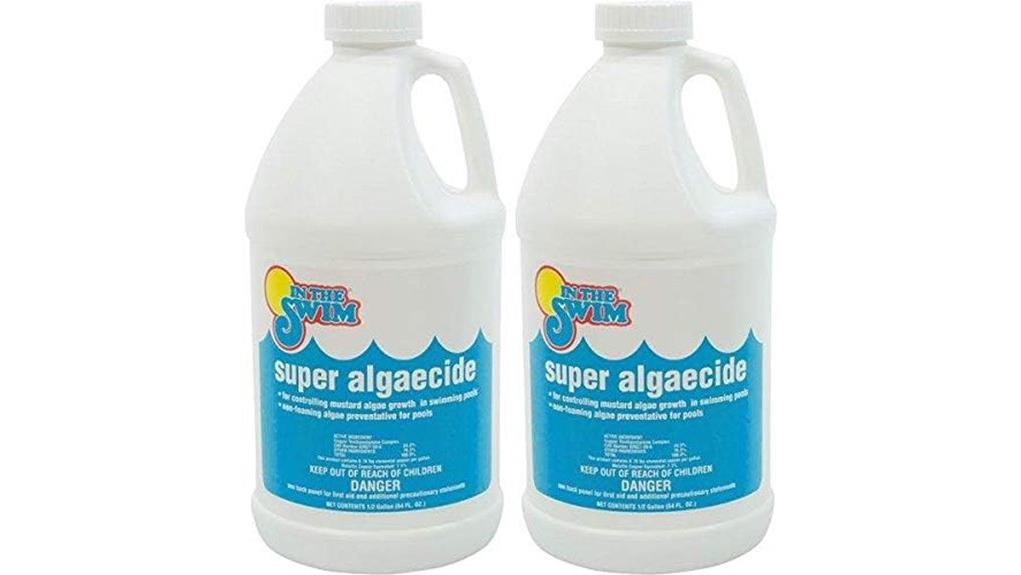
You’ll find In The Swim Super Algaecide is a concentrated, chelated-copper treatment that quickly tackles mustard and filamentous algae with minimal staining and reduced pH sensitivity. It uses copper triethanolamine plus stabilized chelated copper to keep ions active across pool pH, disrupting algal metabolism for visible die-off in 24–48 hours. Apply after shocking and balancing, circulate and brush, and repeat for heavy blooms. Keep kids away during dosing, and read on for full usage and alternatives.
Some Key Takeaways
- Fast, concentrated copper-based algaecide that targets yellow/mustard and filamentous algae.
- Contains 23.5% copper triethanolamine plus 7.1% chelated copper for improved stability and effectiveness.
- Visible die-off in 24–48 hours for small patches; moderate outbreaks clear within a few days.
- Use after shock and water balance, circulate 6–12 hours, brush treated areas, and repeat for heavy infestations.
- Chelated formula reduces staining risk and is compatible with chlorinated pools; avoid if you prefer non-copper chemistry.
Quick Verdict: Should You Buy In The Swim Super Algaecide?
If you want a fast, concentrated algaecide that reliably prevents and treats yellow/mustard algae, In The Swim Super Algaecide is a solid choice. You’ll get a clear value proposition: concentrated copper formula for rapid control, low odor, non-foaming use, and dosages that’re easy to measure. For buying considerations, weigh pool type, frequency of applications, and desire to avoid staining—chelated copper helps. You’ll appreciate immediate swim safety and longer-lasting control versus quarternary options. Buy if you need targeted mustard-algae defense with minimal fuss; skip it only if you prefer non-copper chemistries or ultra-frequent shock protocols.
What’s Inside: Active Ingredients, Concentrations, and How They Work
Having decided whether this algaecide fits your needs, let’s examine what’s inside and how it works. You get 23.5% copper triethanolamine plus 7.1% chelated copper, a concentrated copper-based formulation. Copper ions disrupt algal metabolism and membrane integrity; chelation stabilizes soluble copper, improving copper bioavailability across typical pool pH ranges. Chelation stability reduces free-copper precipitation and lowers staining risk while maintaining biocidal activity. Because the product uses both active forms, you’ll dose less volume for effective control and sustained residual action. The chemistry prioritizes targeted algal suppression with minimized surface corrosion and staining potential.
Real-World Performance: Effectiveness Against Yellow/Mustard Algae and Speed of Action
When you apply In The Swim Super Algaecide to a pool with early-stage yellow/mustard algae, it acts quickly: concentrated copper ions attack algal cells and chelated copper maintains soluble, bioavailable copper across typical pH ranges, so you’ll see visible die-off within 24–48 hours in small, isolated patches and substantial control within a few days for moderate outbreaks. You’ll notice rapid action on filamentous and mustard strains; treated areas clear faster than with quats. Consistent monitoring shows reduced algae recurrence when combined with routine sanitation. In heavy infestations you’ll need repeat treatment cycles for complete eradication; results depend on load and circulation.
How to Use It: Dosing Guidelines, Spring Opening vs Routine Maintenance, and Anti-Staining Tips
Because dosing and timing differ by situation, you’ll follow clear, measured steps for spring openings versus routine maintenance and take precautions to avoid staining. For spring openings, shock and balance water, then apply a higher initial dose per label for rapid control; circulate with surface agitation for 6–12 hours. For routine maintenance, use lower, regular seasonal dosing to prevent mustard algae; add after filtration start and weekly or biweekly as needed. To minimize staining, use chelated-copper formulations, avoid overdosing, maintain pH 7.2–7.6, and brush treated areas. Log doses and inspect fittings, vinyl, and plaster after treatment.
Who It’s Best For: Pool Types, Safety Considerations, and Alternatives to Consider
If you manage an above-ground or inground pool and need a concentrated, fast-acting solution for yellow/mustard algae—especially at spring openings or as part of routine maintenance—In The Swim Super Algaecide is a strong fit. You’ll find it works on pool liners and hard surfaces, with chelated copper reducing staining risk. It’s suitable for standard chlorinated systems; verify salinity compatibility before using in saltwater pools. Follow dosing precisely and keep children away during application for child safety. Alternatives include quat-based algaecides for foam-prone situations or enzyme blends for preventative maintenance with lower copper accumulation.
Some Questions Answered
Will This Algaecide Affect Salt Water Chlorine Generators?
Yes — it’s generally compatible with saltwater chlorine generators and won’t stop electrolysis, but you should monitor copper levels. Copper-based algaecides can deposit copper in the system; elevated copper can foul electrodes and reduce cell efficiency over time. You’ll want to dose per instructions, maintain free chlorine and pH, and test copper regularly. If copper climbs, pause additions and clean the cell to prevent long-term electrolysis effects.
Can Pets Swim Immediately After Treatment?
Yes — you can let pets swim immediately after treatment. The formula’s low-odor, non-foaming, copper-based actives don’t require a waiting period, so you won’t need to delay pet bath or playtime. Rinse pets if you’re concerned about fur residue; a quick freshwater rinse removes any surface traces. Follow label dosing and avoid overapplication to minimize any potential irritation or increased residue on fur.
Does It Interfere With Pool Cover Materials?
No, it won’t harm most covers — the formula is compatible with common pool cover materials and won’t cause pool cover compatibility issues when dosed per instructions. You’ll avoid fabric degradation because the chelated copper and non-foaming, low-odor chemistry minimizes harsh interactions. Still, you should rinse any concentrated spills promptly and test on a small inconspicuous area if your cover uses uncommon coatings or delicate fabrics to make certain long-term material integrity.
Is It Safe for Vinyl Liners Long-Term?
Yes — you can use it long-term on vinyl liners with caution. Its chelated copper formula minimizes vinyl discoloration and reduces surface etching risk compared with unchelated copper algaecides. You’ll still monitor copper levels, follow dosing precisely, and avoid overdosing or prolonged high concentrations. Routine testing and occasional shock treatments will keep chemistry balanced, preventing staining, etching, and premature liner degradation while maintaining effective algae control.
How Should I Store Unused Product?
Store unused product in its original, tightly sealed container in a cool, dry place away from direct sunlight. You’ll make certain proper storage by keeping it upright, out of reach of children and pets, and away from incompatible chemicals. Provide UV protection by placing the bottle in a shaded area or opaque secondary container to prevent degradation. Label the container with purchase date and lot number, and follow local disposal regulations when discarding any leftover solution.