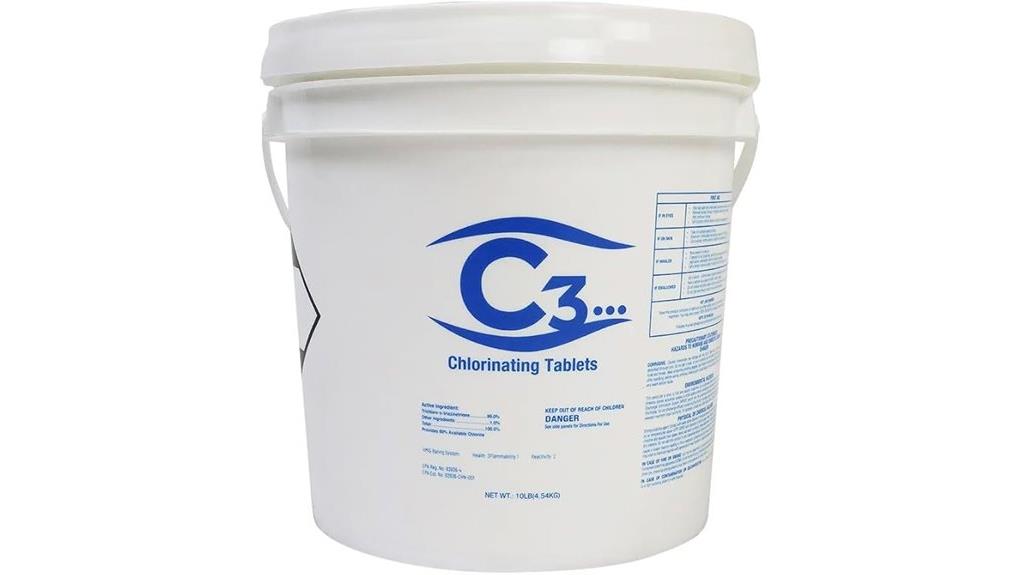
You’ll get predictable weekly sanitation with C3 3″ stabilized chlorine tablets; they’re slow-dissolving, uniformly sized 99% trichloro-s-triazinetrione tablets that deliver about 90% available chlorine and built-in cyanuric acid to cut UV loss. Use measured dosing, compatible feeders or floaters, and personal protective gear; never place tablets in the pump or near vinyl. They simplify maintenance but raise cyanuric acid over time. Continue for dosing specifics, device tips, and alternatives. Clorox Pool&Spa product performance review highlights the importance of regular testing to ensure optimal water quality. Each product is designed to work effectively with existing pool systems, enhancing overall sanitation efforts. Additionally, many users appreciate the ease of application and noticeable improvements in water clarity.
Some Key Takeaways
- Concentrated 3″ tablets (99% trichloro-s-triazine) provide predictable, slow-dissolving weekly sanitation with ~90% available chlorine.
- Individually wrapped tablets enable safer handling and consistent dosing for feeders, floaters, and in-line chlorinators.
- Contains cyanuric acid for UV protection, improving chlorine persistence but requiring periodic CYA monitoring.
- Compatible with common devices but avoid placing tablets in pumps, near vinyl, or metal components.
- Pros: steady residuals, fewer shocks, cost-effective; cons: CYA accumulation and brief tablet odor during feed cycles.
What the C3 3 Stabilized Chlorine Tablets Are and Who They’re For
The C3 3″ Stabilized Chlorine Tablets are slow‑dissolving, individually wrapped 3‑inch tablets of concentrated dry chlorine (99% trichloro‑s‑triazine) designed to provide predictable, weekly sanitization for residential and commercial pools. You’ll find these tablets suit recreational pools where stable available chlorine and predictable release matter. Each tablet contains cyanuric acid to reduce UV loss, delivering ~90% available chlorine by weight. You’ll appreciate consistent size for device dosing, compatibility with feeders and floaters, and measurable weekly maintenance that aligns with chemistry basics for free chlorine and stabilizer balance. They’re for pool owners and operators prioritizing practical, reliable sanitization.
How to Use C3 3 Tablets: Dosing, Devices, and Safety Tips
After you’ve identified that C3 3″ Stabilized Chlorine Tablets match your pool needs, you’ll apply them using measured dosing, appropriate devices, and simple safety practices to maintain target free chlorine and cyanuric acid levels. Use a dosing calculator to determine weekly tablet count: 16 ounces treats 10,000 gallons. Install tablets in a floating feeder, in-line chlorinator, or skimmer-compatible feeder per manufacturer instructions; never place tablets directly in circulation pump or near vinyl. Wear safety gear when handling—gloves, goggles, mask. Store sealed tablets in a cool, ventilated area away from organics; follow chemical storage rules and local regulations for pool maintenance.
Performance Breakdown: Chlorine Strength, Dissolve Rate, and Stabilizer Effects
Because C3 3″ Stabilized Chlorine Tablets deliver 99% trichloro-s-triazinetrione with 90% available chlorine, you can expect strong, predictable sanitizer strength per tablet and consistent free chlorine contributions when dosed correctly. You’ll see reliable chlorine persistence due to the high available chlorine and included cyanuric acid, which reduces UV loss. Tablet uniformity yields predictable dissolve profiles in feeders or floaters; slow-dissolving, individually wrapped tablets maintain dosing consistency. Monitor cyanuric acid accumulation to avoid over-stabilization. For precise control, measure residual free chlorine regularly and adjust feed rate based on measured decay and pool volume.
Pros, Cons, and Real-World Results From Pool Owners
If you want predictable sanitation with minimal fuss, many pool owners report that C3 3″ Stabilized Chlorine Tablets deliver consistent free-chlorine levels with weekly dosing when used in feeders or floaters. You’ll appreciate reliable available chlorine (90%) and slow-dissolve geometry for steady residuals and improved algae control versus sporadic liquid dosing. Pros: predictable dose, long shelf life, individually wrapped handling. Cons: added cyanuric acid accumulates over season; some users note a brief tablet odor during feed cycles and caution with metal components. Real-world results: fewer shock treatments, stable ORP readings, and simpler maintenance schedules when you follow dosing guidance.
Should You Buy C3 3 Stabilized Chlorine Tablets? Cost, Alternatives, and Final Recommendation
Weighing cost, alternatives, and performance, you’ll find C3 3″ Stabilized Chlorine Tablets are a practical choice when you want predictable weekly sanitation with minimal intervention. You’ll pay competitively per tablet versus granular chlorine; a straightforward cost comparison favors tablets for routine dosing and reduced waste. If you need cyanuric-free control, consider unstabilized options or liquid chlorine; salt systems and mineral purifiers are higher upfront but lower chemical frequency. For long term maintenance, these slow-dissolving, 90% available chlorine tablets simplify dosing and storage. Buy them if you prioritize predictable, low-effort sanitation and consistent chlorine residuals.
Some Questions Answered
Are These Tablets Safe to Store Near Other Pool Chemicals?
No — you shouldn’t store them near incompatible pool chemicals. For storage compatibility, keep these stabilized chlorine tablets separate from acids, swim spa bromine, organic materials, and reducers to prevent hazardous reactions and chlorine release. Store in a cool, dry, well-ventilated area in original sealed containers, away from heat and direct sunlight. For emergency handling, have neutralizing agents, PPE, and procedures ready and follow local regulations and product instructions. In the swim chlorinefree pool products offer a safer alternative for those looking to maintain their pools without the harsh effects of traditional chlorine. These innovative options help in promoting clear water while being gentle on both skin and the environment. When considering maintenance, always choose products that align with your health and safety standards. Clorox Pool&Spa product specifications provide important guidelines for safe usage and storage. Understanding these specifications can help prevent accidents and ensure the effectiveness of the products. Always refer to the specific instructions for the product you are using to maintain optimal safety and performance.
Can They Be Used in Saltwater Chlorinated Pools?
Yes — you can use them in saltwater compatibility systems, but you shouldn’t add tablets directly to the chlorinator cell. You’ll avoid electrolysis effects and premature cell corrosion by dosing in a floater or feeder, not the salt cell. Monitor cyanuric acid buildup and chlorine levels, and follow manufacturer guidance to prevent scale and reduced cell efficiency. Regularly test salt and free chlorine to maintain proper balance and protect equipment. Hth 42055 pool care review indicates that maintaining proper salt levels is crucial for ensuring the longevity of your pool’s chlorinator. Regular maintenance can greatly enhance the efficiency of the system, leading to a more enjoyable swimming experience. Additionally, many users have reported that following the product guidelines helps in minimizing any potential issues related to chemical imbalances.
Do They Affect Pool pH Significantly Over Time?
They’ll cause modest pH drift downward over time because trichloro-s-triazinetrione releases acidic byproducts. You’ll need to monitor pH routinely and dose alkalinity increaser as required. Also watch for stabilizer buildup (cyanuric acid) from continued use, since that can reduce chlorine efficacy and prompt higher dosing, indirectly affecting chemical balance. Maintain weekly testing, adjust total alkalinity to buffer pH, and replace or reduce tablet use if stabilizer rises too high.
Are the Individual Wrappers Biodegradable or Recyclable?
No — the individual wrappers aren’t labeled as biodegradable; they’re typically polyethylene or similar plastic film, so they won’t readily biodegrade. You should check the packaging for specific material codes, but recycling options are limited: if they’re clean plastic film, you can collect them and take them to a grocery-store film-plastic drop-off for recycling. Otherwise, dispose of them as non-biodegradable household waste per local regulations.
Is There a Suggested Shelf Life for Unopened Tablets?
There’s no rigid expiration, but manufacturers provide expiration guidance: unopened tablets remain effective about 2–3 years if you follow proper storage conditions. Store in a cool, dry, well-ventilated area away from sunlight, heat, moisture and incompatible chemicals; keep original sealed packaging and avoid temperature extremes. You should periodically inspect for clumping, discoloration or strong odor; if any appear, dispose safely per local regulations and replace to guarantee predictable dosing.