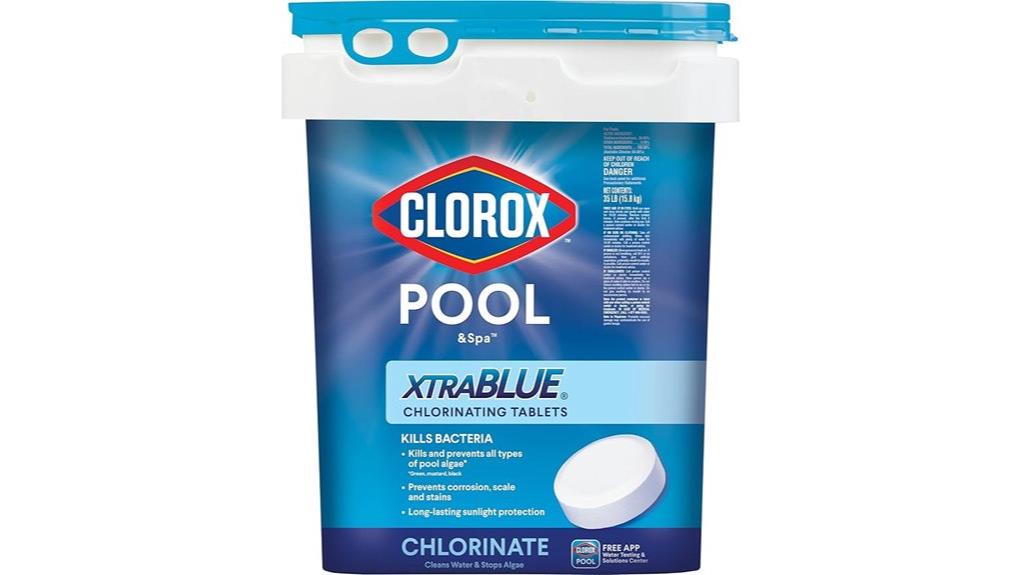
You’ll get stabilized, slow-release trichloroisocyanurate tablets that deliver steady free chlorine (HOCl/OCl-) and reduce photolytic loss via bound cyanuric acid. They dissolve predictably for long-lasting residuals, suppress common algae, and lower shock frequency when you monitor free chlorine and stabilizer levels. Use floating dispensers or compatible feeders, inspect for residue buildup, and store tablets cool and dry with PPE. Dosage is about two 3″ tablets weekly per 10,000 gallons—keep going to learn practical tips and comparisons. Pool shark chlorine tablet effectiveness can vary based on water chemistry and environmental factors. Regular testing of your pool’s chemical balance is essential to ensure optimal performance of these tablets. Additionally, consider pairing them with other sanitization methods for enhanced clarity and cleanliness.
Some Key Takeaways
- Stabilized trichloroisocyanuric acid tablets provide steady, slow-release chlorine with cyanuric acid to reduce sunlight loss.
- Recommended dosing: about two 3″ tablets weekly per 10,000 gallons, adjusted for bather load and temperature.
- Provides long-lasting, consistent free chlorine residuals and effective suppression of common algae.
- Suitable for vinyl, plaster, fiberglass, and tile; use floating dispenser or compatible feeder to avoid surface contact.
- Store dry, use PPE when handling, and inspect feeders for residue to prevent pump strain and equipment issues.
What This Review Covers and Who Should Consider Clorox Pool & Spa XTRABLUE 3 Chlorinating Tablets
While this review evaluates formulation, dosing, compatibility, and real-world performance of Clorox Pool&Spa XTRABLUE 3″ chlorinating tablets, it focuses primarily on sanitation efficacy, algae prevention, and equipment impact in residential pools up to 10,000 gallons. You’ll get precise guidance on who benefits: owners of vinyl, plaster, fiberglass, or tile pools seeking long‑duration chlorination and reduced maintenance. The analysis addresses dosing (2 tablets weekly per 10,000 gallons), compatibility, and common chlorine misconceptions affecting application and monitoring. It also covers safe handling and seasonal storage to preserve stabilizer effectiveness and tablet integrity, minimizing corrosion and inconsistent residuals.
How Clorox Pool & Spa XTRABLUE 3 Tablets Sanitize Pools and Prevent Algae
Having reviewed who benefits from XTRABLUE tablets and how to dose them, let’s examine how they sanitize and stop algae at a chemical and practical level. You rely on stabilized slow-release trichloroisocyanuric acid: it delivers free chlorine (HOCl/OCl-) to oxidize organics and destroy bacteria and algal cells. Stabilizer chemistry (cyanuric acid bound in the formulation) reduces photolytic loss, preserving active chlorine under sunlight. Controlled tablet dissolution ensures steady available chlorine residuals, minimizing spikes and gaps that allow algae proliferation. You’ll maintain sanitizer residuals by consistent tablet replacement and monitoring; steady dosing plus stabilizer chemistry guarantees all common algae types efficiently.
Real-World Performance: Dosing, Longevity, Water Feel, and Equipment Protection
If you follow the recommended dosing—about two 3″ tablets per 10,000 gallons weekly as a baseline—and adjust based on bather load, temperature, and rainfall, XTRABLUE delivers a stable, long-lasting chlorine residual that minimizes sanitizer swings and keeps algae suppression consistent. You’ll see dosing consistency in routine use; tablet dissolution is steady, reducing shock events. Monitor water chemistry to avoid stabilizer depletion over intense sun exposure. Inspect for residue buildup in feeders and skimmers to prevent pump strain. Over long term, material compatibility with vinyl, plaster, and fiberglass limits corrosion and scale when balanced maintenance is practiced. Clorox pool & spa effectiveness review highlights the importance of incorporating trusted products into your maintenance routine. Many users report enhanced clarity and sanitation in their pools after regular application. Understanding the product’s effectiveness can transform your approach to pool care, ensuring a pristine swimming environment.
Safety, Compatibility, and Best Practices for Using XTRABLUE 3 Tablets
Because pool chemistry and equipment longevity depend on proper handling, you should follow specific safety, compatibility, and dosing practices when using XTRABLUE 3″ tablets. Wear chemical-resistant gloves and eye protection; avoid inhaling dust or fumes. Store tablets in a cool, dry, well-ventilated area away from organic materials and acids. Use a floating dispenser or automatic feeder to prevent tablet contact with pool surfaces. Verify equipment compatibility with tablet use—these tablets are safe for vinyl, plaster, fiberglass, and tile—but confirm feeder materials resist chlorinated compounds. Follow dosing: 2 tablets weekly per 10,000 gallons, adjust based on free chlorine and stabilizer levels.
Where to Buy, Cost Per Treatment, and How XTRABLUE Compares to Alternatives
Available from major retailers and pool-supply stores, XTRABLUE 3″ tablets are sold online (Amazon, Home Depot, Lowe’s) and in-store at pool specialty shops and big-box chains; you’ll find the 35 lb container listed under CLOROX Pool&Spa Model 24235CLXW (ASIN B00PZZFHDU, UPC 810821021470). For retail locations, check stock and bulk discounts. Cost per treatment: at typical retail pricing (~$120–$160 per 35 lb) you’ll pay about $0.04–$0.06 per tablet; dosing two tablets weekly for 10,000 gallons yields roughly $0.08–$0.12 per treatment. In price comparison and efficacy, XTRABLUE’s stabilized tablet longevity and conditioner content justify mid-range cost versus unstabilized options. Clorox Pool&Spa xtrablue reviews highlight its effectiveness in maintaining clear and balanced pool water. Many users appreciate the convenience of the 3-inch tablets, which dissolve slowly for extended use. Regular feedback indicates that long-term users often notice a significant reduction in pool maintenance time.
Some Questions Answered
Are These Tablets Safe for Saltwater Pools?
Yes — you’re compatible: these tablets work in saltwater pools, but monitor carefully for saltwater compatibility and electrode corrosion. You’ll use stabilized chlorine tablets to maintain free chlorine without harming vinyl, plaster or fiberglass. However, when you run a salt chlorinator, you should control tablet placement and chlorine levels to avoid accelerated electrode corrosion in the cell. Test regularly and follow dosage to protect equipment and maximize sanitizer life. Clorox Pool&Spa Active99 tablet benefits include not only effective sanitation of your pool but also a simplified maintenance routine. These tablets dissolve slowly, releasing chlorine consistently over time, which helps maintain crystal-clear water. Additionally, using them can reduce the need for frequent testing and adjusting of chlorine levels.
Do Tablets Dissolve Faster in Warmer Water?
Yes — dissolution rate increases with temperature impact: warmer water speeds tablet breakdown. You’ll notice faster chlorine release and higher available chlorine in hot conditions, so you’ll need to reduce tablet count or frequency to avoid over-chlorination. Conversely, cold water slows dissolution, lowering sanitizer delivery. Monitor free chlorine and adjust dosing based on measured levels and pool volume; use the Clorox Pool App to refine temperature-based dosing recommendations.
Can Tablets Be Used in Floater Cloches or Skimmers?
Yes — you can use the tablets in a floater or skimmer, but you’ll want controlled floater placement to avoid concentrated chlorine residue against surfaces. Position the floater so tablets circulate freely and dissolve steadily; don’t trap tablets in skimmers where high local chlorine residue can damage liners, seals, or equipment. Monitor free chlorine and stabilize levels per dosage guidelines, and adjust floater placement to maintain even distribution and protect pool materials.
Do Tablets Affect Pool pH Significantly?
No, tablets won’t dramatically alter pH by themselves, but they can cause alkaline drift over time if you overuse them. You’ll see minor pH increases as chlorination reactions consume acid; counter with muriatic acid or sodium bisulfate as needed. Also monitor stabilizer depletion—cyanuric acid levels change with tablet use and can indirectly affect free chlorine effectiveness. Test weekly and adjust alkalinity and pH to maintain stable water chemistry.
Are Individual Wrappers Recyclable?
No — the individual wrappers aren’t typically recyclable. You’ll treat them as packaging disposal waste because they’re often multi-layer or laminated plastics without clear recycling codes. Check the wrapper for resin identification; if it lacks a recycling code you’ll discard it with trash. If it shows a recyclable resin (e.g., code 1 or 2) confirm local program acceptance first. Consider bulk refill options to reduce single-use packaging.