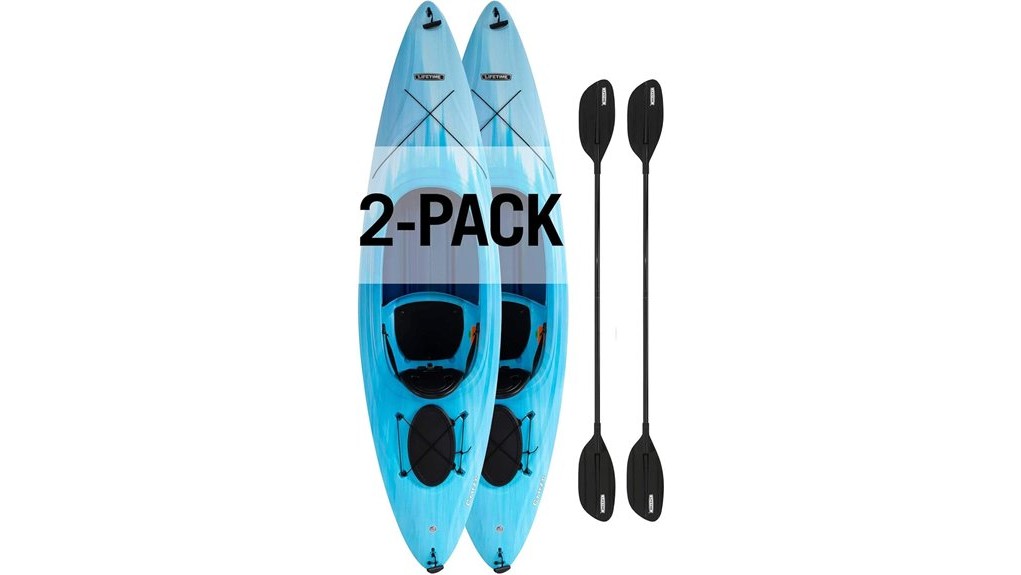

You’ll find the Lifetime Cruze 100 a no-frills, stable sit-in kayak that’s great for beginners, smaller paddlers, and calm-water outings. It’s got a flat-bottom hull and chine rails for steady primary stability and predictable turns, an adjustable quick-release seat and padded cushion for basic comfort, plus multiple footrest positions. Storage is modest with an oval hatch and included paddle; transport is easy with carry straps and toggles. Keep going to get full specs, handling notes, and alternatives.
Some Key Takeaways
- Stable, flat-bottom hull with chine rails offers excellent primary stability for calm lakes and slow rivers, ideal for beginners and casual paddling.
- Adjustable quick-release seat back and padded cushion provide upright support and short-trip comfort for smaller paddlers.
- Deep hull channels and pronounced chines aid straight tracking and predictable turning without twitchiness.
- Limited storage (small oval hatch, modest bow space) and low secondary stability make it unsuitable for long tours or rough water.
- Good value for simplicity and easy transport, but skip if you need speed, expedition capacity, or extended-trip performance.
Quick Verdict: Who the Cruze 100 Is Best For and Buy-or-Skip Summary
If you want a stable, no-frills sit-in kayak for casual paddling on calm lakes and slow rivers, the Lifetime Cruze 100 is a solid pick — especially for beginners and smaller paddlers who value comfort and easy handling. You’ll find it suits beginner anglers who need stability for casting and casual commuters who want low-maintenance transport. The flat-bottom hull and chine rails keep you steady; the oval hatch gives basic dry storage. It’s not for long touring or rough water; tracking is adequate but not performance-grade. Buy if you prioritize simplicity, stability, and value; skip for speed or extended trips. For safe outings, don’t forget essential gear like basic life jackets when heading onto the water.
Comfort & Fit: Seat, Footrests, Cockpit, and Paddling Ergonomics
While you’re paddling the Lifetime Cruze 100 you’ll notice the seating and cockpit prioritize basic, usable comfort over luxury: the quick‑release, adjustable seat back lets you set upright support or lean back for casual cruising, and the padded seat cushion reduces pressure on short outings. You’ll find multiple footrest positions that accommodate different leg lengths and help you brace. The adjustable backrest and well-arranged cockpit ergonomics keep controls and thigh contact predictable, though support isn’t plush for long trips. Access to the oval hatch sits forward of the cockpit; overall fit is practical, straightforward, and user-friendly. The boat pairs well with common kayak cradle accessories for safe transport and storage.
Stability, Hull Design, and Tracking Performance on the Water
Because the Cruze 100 uses a flat‑bottom hull with pronounced chine rails and deep hull channels, you’ll notice immediate primary stability and surprisingly straight tracking for a recreational sit‑in kayak. You sit low, feel secure during paddling strokes, and the flat bottom resists tipping in calm to moderate conditions. Chine rails bite into turns without making the boat twitchy, and hull channels guide water flow aft to maintain tracking efficiency. You should expect modest secondary stability in chop; it’s not a touring hull. Overall, the design favors predictable, efficient straight-line paddling for casual lake or slow‑river use. Pelican Kayak Gear offers a range of accessories and replacement parts to keep your kayak outfitted and ready for adventure, including replacement parts for common wear items.
Storage, Transport, and On-Land Handling (Hatches, Handles, Included Paddles)
You’ll find the Cruze 100 practical to handle on land and decent for short stows on the water. The oval hatch gives modest under-deck space for small gear; don’t expect large loads, but it keeps essentials dry. Front and rear toggle handles let you shoulder or cradle the kayak; they’re sturdy and positioned for one- or two-person lifts. Integrated carry straps ease short carries from vehicle to shore. The included paddle is basic but serviceable for casual outings. Overall, on-land handling is straightforward, bow storage is limited, and the setup favors simplicity over expedition-ready capacity. If you’re assembling a starter kit, pairing the kayak with essential gear can make a big difference in safety and comfort.
Final Buying Guide: Price-Value, Alternatives, and Maintenance Tips
If you’re weighing the Cruze 100 as a first kayak or a casual weekend boat, consider how its price matches the features you’ll actually use: comfortable adjustable seating, stable flat-bottom hull, and simple storage with an oval hatch. For price comparison, compare similar sit-in models with adjustable seats, chine rails, and included paddles; factor in warranty and retailer shipping. Alternatives include beginnerfriendly kayaks with deeper hull channels for tracking or compact tandems if you want capacity. Create a maintenance checklist: rinse after use, inspect hull and hatch, lubricate toggles, store dry and protected, and repair scratches promptly to extend service life. Also consider how the Cruze 100 fits your typical paddling environments and skill level by comparing stability and tracking features and specs.
Some Questions Answered
Is the Cruze 100 Suitable for Fishing With Rod Holders?
It can work for casual fishing, but it’s not optimized for rod holders. You’ll have decent rod storage under the oval hatch and some space for a rod while paddling, yet dedicated mounted rod holders aren’t included. You’ll need to add aftermarket holders and assess casting space—flat deck and stable hull give good balance and room to cast, but limited built-in accessory mounts mean customization’s required for serious anglers.
Can This Kayak Be Used in Saltwater Without Corrosion Issues?
Yes — you can use it in saltwater, but you’ll need corrosion prevention and regular saltwater maintenance. Rinse the kayak, hardware and paddles with fresh water after each outing, dry thoroughly, and lubricate metal fittings with corrosion-inhibitor. Inspect quick-release seat hardware and toggle handles for salt deposits. Store inside or covered. These steps won’t make it immune to corrosion, but they’ll greatly reduce wear and extend service life.
What Is the Maximum User Weight Capacity?
The maximum capacity (weight limit) for this kayak is 275 pounds. You’ll find that weight limit covers a typical adult plus minimal gear; you shouldn’t exceed it to maintain safe stability and tracking. If you plan longer outings, add gear weight into your calculations and stay well below the maximum capacity for better performance. Distributing weight low and centered helps preserve the kayak’s stability and handling characteristics.
How Long Does Assembly or Initial Setup Typically Take?
You’ll typically need about 15–30 minutes for assembly time; initial steps involve unpacking, attaching toggles and paddles, and fitting the seat and footrests. Start by laying out parts, snap or bolt any handles, install the adjustable quick-release seat back and seat pad, then set your preferred footrest positions. Finish by checking hull fittings and hatch closure. The process is straightforward, tool-free, and practical for one person.
Is There a Warranty and How Do I Register a Claim?
Yes—you get a limited warranty; the warranty duration is typically one year from purchase. To register a claim, keep your receipt, note the serial/model, and contact Lifetime customer service via their website or phone. You’ll describe the issue, submit photos and proof of purchase, and follow any return or repair instructions. Keep records of all communication; claims are processed based on warranty terms and verification.