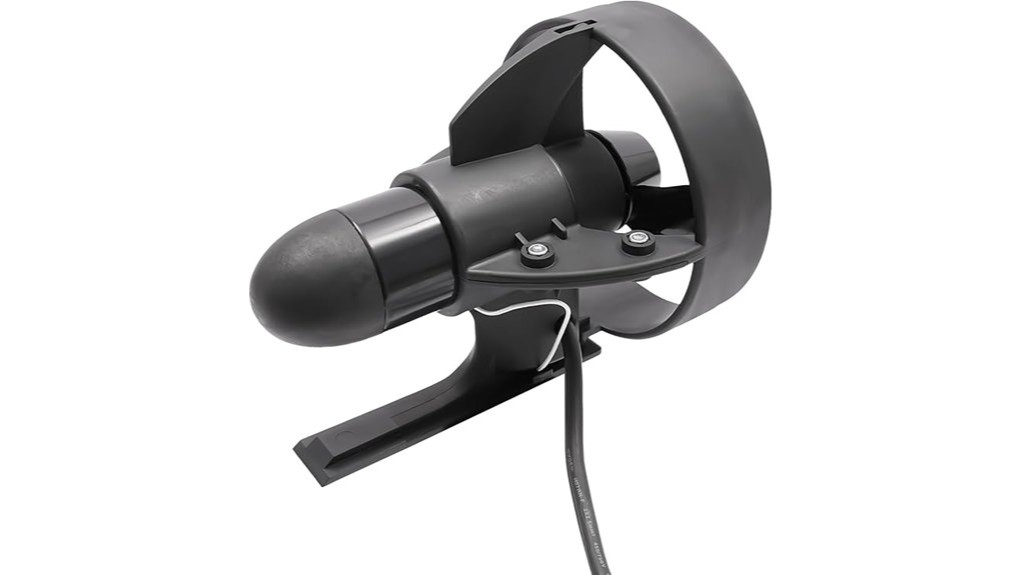
You’ll find the D260 is a compact 12V/288W brushed thruster that gives immediate, predictable low‑speed thrust ideal for solo SUPs, kayaks, and fishing boards. It’s lightweight (3.2 kg), backpackable, and cruises around 4–5 kph under full load, but draws ~24A and runs roughly an hour at max power. Installation is simple with a rectangular base; maintenance is higher due to brushes. Keep a spare battery and safety kit, and if you want more detail, keep going. when evaluating the performance of u5 underwater thruster, it’s crucial to consider its efficiency and reliability in various water conditions. Many users have reported enhanced maneuverability and control, making it a popular choice for marine enthusiasts. The design also prioritizes durability, ensuring it can withstand the harsh environment underwater.
Some Key Takeaways
- Lightweight 3.2 kg, compact footprint (18×24 cm), easy to carry and mount on small watercraft.
- 12V brushed 288W motor draws ~24A, offering immediate thrust and steady low-speed cruise (~4–5 kph).
- Runtime about 1 hour at full power, 1–2 hours mixed use; battery internal resistance affects speed.
- Simple forward-only single-button control; steering relies on body shifts or ruddering for fine corrections.
- Pros: portable and affordable; cons: brushed motor needs frequent maintenance and no battery or warranty included.
Underwater Thruster (Model: D260) at a Glance: Specs, Performance, and Who It’s For
Although compact enough to carry in a backpack, the PSUFURV Underwater Thruster (Model D260) delivers a clear, technical profile: a 12V brushed motor rated 288W and 24A, producing up to 500 kg of thrust-equivalent force and propelling small watercraft at roughly 4–5 kph while running at full power for about an hour (battery-dependent). You’ll assess specs objectively: aluminum/iron/nylon construction, 18×24 cm footprint, 1.9 m cable, 3.2 kg gross weight. You’ll verify battery compatibility with common 12V storage packs and confirm mounting alternatives using the rectangular base or accessory clamps. Target users: solo paddlers seeking compact motorization. This makes it a practical option for kayak portage enthusiasts who need lightweight motor assistance without bulky gear.
How the D260 Performs on SUPs, Kayaks, and Fishing Boards
Having outlined the D260’s specifications and mounting options, let’s assess real-world performance on SUPs, kayaks, and fishing boards. You’ll notice immediate thrust for acceleration and steady low-speed cruise (4–5 kph) that reduces paddle effort. On SUPs, the rectangular base and compact tail preserve board maneuverability but add slight stern drag; use medium mount positions for balance. On kayaks, torque aids tracking; keep weight centered to avoid yaw. Fishing boards benefit from quiet, predictable thrust though prop noise is noticeable at full power. Overall control is intuitive; fine steering still relies on body shifts and ruddering. This makes the D260 a practical choice for paddlers who pair it with kayaks and dry bags during extended water adventures.
Battery, Endurance, and Real-World Speed: What to Expect From 12v/288w Power
When you pair the D260’s 12V/288W brushed motor with a typical 12V storage battery, expect peak thrust and top speed (around 4–5 kph) for roughly an hour under maximum load. You’ll see real world speed fall as load, current draw (≈24A), and battery internal resistance increase. Battery longevity depends on depth-of-discharge, cell chemistry, and thermal management; shallow cycles extend usable life. In mixed conditions anticipate 1–2 hours at cruising throttle, shorter at continuous full power. Plan margin: double-check state-of-charge, carry a spare battery or higher capacity pack, and monitor voltage to avoid abrupt performance drop. For paddlers and water adventurers, consider integrating GPS backup batteries into your gear plan to ensure electronics and safety devices remain powered.
Installation, Controls, and Safe Operating Checklist for Beginners
Before you mount the D260, verify the mounting surface, battery placement, and cable routing to prevent undue stress and water ingress; proper preparation cuts installation time and reduces failure risk. Follow an installation checklist: confirm base alignment, fastener torque, cable length (1.9 m), battery bag location, and waterproof connections. Install the rectangular base so edges minimize drag and prop clearance is clear. Use the single-button pushbutton switch for forward-only operation; practice emergency shutoff. Pre-departure: inspect connectors, secure battery, test run at low thrust, verify no overheating, and carry a spare tow/kill method for contingencies. Always carry an appropriate personal locator beacon and other safety gear when operating on the water.
Pros, Cons, and Buy-or-Skip Decision Guide for Potential Buyers
If you prioritize a compact, backpack-storable propulsion kit that converts paddling into reliable motorized thrust, the PSUFURV D260 deserves close consideration: it delivers 288W at 12V with simple one-button forward control, a rigid rectangular mounting base for stability, and a 1.9 m cable that eases battery placement. Pros: lightweight (3.2 kg), straightforward assembly-free fit, predictable 4–5 kph cruise, economical for short excursions. Cons: brushed motor requires frequent maintenance; endurance ~1 hour at max power; no battery included or warranty. Buy if you value portability and low-cost upgrade; skip if you need long range, low maintenance, or high resale value. Maintenance tips: regular brush inspection. Bright strobe lighting is a useful accessory for water safety, especially for paddlers and kayakers navigating low-light conditions with this thruster, so consider adding strobe lights to your gear.
Some Questions Answered
Is the D260 Saltwater-Corrosion Resistant?
No — it isn’t fully saltwater-corrosion resistant out of the box. You’ll need marine coatings and regular anode maintenance to mitigate corrosion on the aluminum, iron, and exposed metal. Apply approved marine-grade paint or sacrificial anodes before use, inspect electrical connections and replace anodes periodically. With those measures you’ll extend service life, but expect higher upkeep versus purpose-built stainless or sacrificial-coated thrusters designed for continuous saltwater exposure.
Can I Legalize This Motor for Regulated Waterways?
You probably can, but it depends on local rules and whether the unit meets required safety certifications. Check registration procedures with your maritime authority—many require horsepower, tamperproof ID, and battery safety compliance. You’ll need to document motor specs (12V, 288W, thrust) and provide proof of certifications or testing; if none exist, you may need third-party inspection or modification. Always verify battery carriage and electrical safety before registration.
Is the Unit Compatible With Lithium Versus Lead-Acid Batteries?
Yes — you can use lithium or lead-acid, provided battery chemistry and voltage range match the thruster. It requires a 12V supply (nominal) and up to 24A draw; stay within that voltage range and make certain the battery’s C-rate supports peak current. Lithium offers lighter weight and higher discharge; lead-acid is heavier with lower usable capacity. Use proper wiring, fusing, and battery management to prevent overheating or voltage sag.
Are Replacement Propellers or Spare Parts Available?
Yes — spare propellers and maintenance kits are available through the manufacturer or authorized dealers. You’ll order OEM spare propellers matched to the D260’s hub and blade profile to preserve thrust and balance. Maintenance kits typically include seals, fasteners, and nylon components for routine servicing. You should verify part numbers and compatibility before purchase, and keep spares on hand to minimize downtime during field operations.
Does the Thruster Come With Theft-Prevention Mounts?
No, it doesn’t include dedicated anti theft mounts. You get the thruster and a battery bag; mounting options are limited to the supplied rectangular base and standard fasteners. You’ll need to retrofit lockable hardware or tamper-resistant bolts for theft prevention. Technically, add a keyed padlock or stainless steel security cable anchored to the base, and verify load ratings to avoid compromising thrust or hull attachment integrity during use.