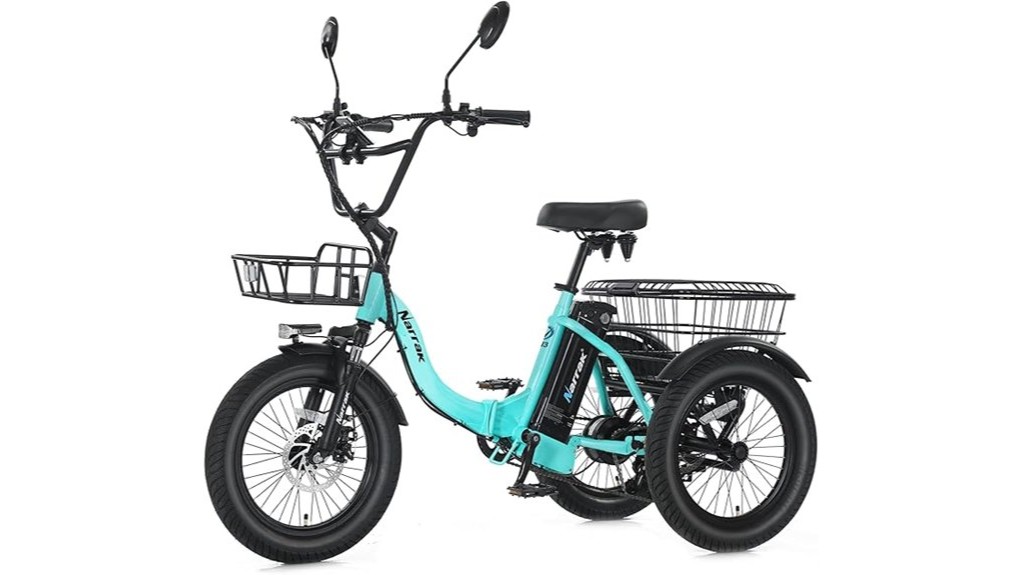
You’ll find the NARRAK electric tricycle is a stable, cargo-ready ride with a 350W rear-hub (700W peak) and Shimano 7-speed gearing that boosts torque about 30% for confident hill assist up to its 16 MPH limit. Fat tires, a step-thru frame, wide memory-foam seat with backrest, and dual baskets make errands comfortable and steady. The removable battery reliably delivers 30–40 miles in mixed use, and the fold-away seat eases swaps—keep going for full details. With an electrifying ride with narrak fat tire, you can easily navigate through city streets or tackle rugged trails without breaking a sweat. The powerful motor combined with the sturdy design ensures a smooth journey, whether you’re commuting or enjoying a leisurely ride. Experience the freedom and versatility that this tricycle offers, making every outing enjoyable and effortless.
Some Key Takeaways
- Stable, comfortable fat-tire electric trike with step-thru frame, upright cruiser bars, and wide memory-foam seat with backrest.
- 350W rear hub motor (700W peak) plus ~30% transmission boost, limited to a 16 MPH top speed.
- Removable protected battery delivers 30+ miles per charge; real-world range ~35–40 miles depending on PAS use.
- Shimano 7-speed drivetrain and responsive cadence sensor provide prompt hill assistance and wide gear coverage.
- Two large detachable baskets, low rear platform, and 95% pre-assembly make it highly practical for errands and cargo.
Quick-Spec Snapshot and Who This Etrike Is For
While the NARRAK Electric Tricycle looks bulky, it packs practical specs: a 350W brushless rear hub motor (700W peak) with a transmission that boosts output ~30%, Shimano 7-speed drivetrain, removable protected battery offering 30+ miles (up to 40 in PAS), and a 16 MPH top speed. You’ll appreciate clear strengths: stable fat tires, differential turning, and a foldable seat for battery access. Evaluate battery lifespan claims against real cycles, but expect modest gains over standard 36V packs. Target user demographics include suburban commuters, older riders seeking stability, and caregivers needing cargo capacity without sacrificing ease of use. Designed for outdoor enthusiasts, it complements other electric trike accessories commonly found in adventure-focused ebike stores.
Battery, Range, and Real-World Endurance Tested
Because NARRAK pairs a removable, protected battery with a conservative motor tune, you can expect reliable daily range rather than headline-grabbing figures: the pack is rated for 30+ miles per charge and hit roughly 35–38 miles in mixed urban/paved-road testing, stretching to about 40 miles when you stick to PAS-only riding. You’ll appreciate the certified protections and fold-away seat for easy swapping. Real world charging cycles showed consistent amp draw and minimal voltage sag; projected battery degradation looks modest versus standard 36V packs. Routine top-ups after 20–50% discharge keep longevity high and daily use predictable. For riders who take their ebikes into the backcountry, following battery care best practices helps preserve range and pack health.
Motor, Gearing, and Hill-Climb Performance on Routes
Having seen the battery sustain realistic ranges, you’ll notice how the NARRAK’s drivetrain turns that endurance into usable performance on hills and varied routes. You get a 350W hub with peak surge that, paired with the transmission boost, delivers confident motor torque for starts and moderate climbs. The Shimano 7-speed lets you dial an effective gear ratio range; lower gears keep cadence manageable on steep pitches while higher gears preserve range on flats. Hill assistance is prompt in PAS mode, aided by a responsive cadence sensor that reduces lag. Overall, climbing feels controlled, not overpowering, for urban and light off-road use. For sustained braking performance on those descents, choosing the right ebike brake pads like resin and sintered pads can make a noticeable difference.
Comfort, Stability, Cargo Capacity, and Daily Usability
When you hop on the NARRAK, the step-thru frame, extra-wide memory-foam seat with backrest, and relaxed cruiser bars put you in a comfortable, upright position that reduces fatigue on longer rides. You’ll appreciate seat ergonomics: adjustable height and 90° fold make battery access and mounting simple. Steering responsiveness feels predictable thanks to fat tires and differential turning; you’ll notice reduced twitchiness at low speeds. Load distribution across two large detachable baskets and the low rear platform keeps the center of gravity stable under cargo. Daily convenience shows in easy folding, 95% pre-assembly, and straightforward controls for routine errands. Riders can increase hauling flexibility with cargo rack extensions to carry more gear on outdoor adventures.
Value Verdict: Pros, Cons, and Who Should Buy This Trike
If you need a stable, comfortable cargo trike for errands and moderate commutes, the NARRAK delivers strong value. You get a sturdy step-thru frame, wide memory-foam seat, fat tires, Shimano 7-speed gearing, removable protected battery with 30–40 mile range, and dual cargo baskets—features that justify the asking price against similarly equipped trikes in a tight price comparison. Pros: stability, comfort, folding seat for battery access, PAS range, US support. Cons: 16 MPH limit, weight, fit for riders 48″–58″. Buy if you prioritize safe cargo hauling and range; resale value should stay reasonable. This model is well suited to riders who enjoy outdoor activities and need to carry gear on short to moderate rides.
Some Questions Answered
Does the Trike Come With a Warranty and What Does It Cover?
Yes — you get a warranty; the warranty duration typically covers the frame and electronics for a specified period and includes battery replacement under certain conditions. You’ll want to confirm exact terms, as coverage often excludes wear items and accidental damage. Check for requirements like registration and proper charging. If you follow maintenance guidelines, the warranty should protect major defects and give you recourse for battery replacement during the covered timeframe.
Can I Charge the Battery off the Trike and How Long to Fully Charge?
Yes — you can remove the battery and charge it off the trike. Battery removal is simple: fold the seat 90° for access and unplug the pack. Charging time is typically 4–6 hours to reach a full charge from empty, depending on charger and battery state. You’ll get up to 30+ miles per charge (about 40 miles in PAS), and the removable pack includes built-in protections for safe charging. the ancheer eflan11 electric trike features a robust design tailored for urban commuting. Its lightweight frame, combined with a powerful motor, ensures a smooth ride on various terrains. Additionally, the integrated lighting system enhances visibility and safety during evening rides.
Is the Trike Legal for Sidewalk or Bike-Lane Use in Cities?
Mostly no — sidewalk legality depends on local ordinances, and many cities ban motorized vehicles on sidewalks. For bike-lane use, check your area’s lane classification: if classified as an e-bike/trike permitted class (often Class 1–3), you can ride in bike lanes; if not, you’ll be restricted to roads or prohibited from certain lanes. Always verify local rules, speed limits, and whether three-wheeled e-trikes are explicitly allowed.
Are Replacement Parts and Accessories Readily Available?
Yes — you’ll find replacement tires and common parts fairly accessible. The fat 18 x 3.0 tires are standard enough for local shops or online, and the Shimano 7-speed components are widely available. Aftermarket batteries exist, but you’ll want certified units matching voltage and connector specs to preserve protections and range. Expect OEM baskets, seats, and driveline parts through the seller; generic accessories are easy to source independently.
What Tools Are Needed for Full Assembly Beyond the 95% Pre-Assembled State?
You’ll need basic hand tools beyond the provided kit: a hex wrenchset for bolts on handlebars, seat post and baskets, plus a torque screwdriver to tighten stem and brake clamp bolts to specified torque. Include adjustable wrench, Phillips and flat screwdrivers, needle-nose pliers, and cable cutters for final cable adjustments. A pump for 18×3.0 tires and grease for threads help. Double-check torque specs in the manual.